HomeMCPWorkbenchSkills
HomeWorkbenchNotificationsMe
llms.txt · MCP GuidePrivacy Policy · Terms of Service · Supportv1.8.3
  1. Home
  2. /Reaction

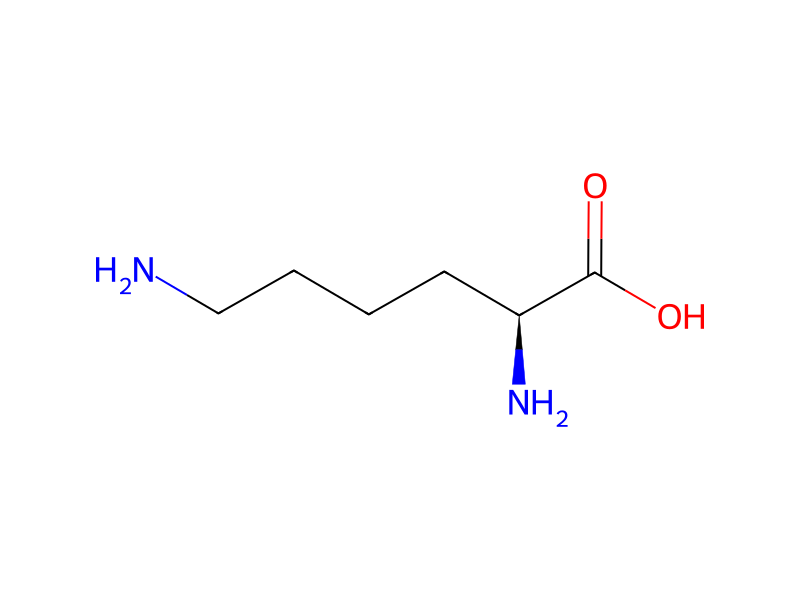
L-Lysine → (S)-2-Amino-6-benzamidohexanoic acid

HRID 1085050
Print

Reaction equation

HRID 1085050 reaction equation
[NH2:1][C@H:2]([C:8]([OH:10])=[O:9])[CH2:3][CH2:4][CH2:5][CH2:6][NH2:7].[C:11](Cl)(=[O:18])[C:12]1[CH:17]=[CH:16][CH:15]=[CH:14][CH:13]=1.C(=O)(O)[O-].[Na+].C(N(CC(O)=O)CC(O)=O)CN(CC(O)=O)CC(O)=O>O.C1COCC1.C(=O)([O-])[O-].[Cu+2]>[C:11]([NH:7][CH2:6][CH2:5][CH2:4][CH2:3][C@@H:2]([C:8]([OH:10])=[O:9])[NH2:1])(=[O:18])[C:12]1[CH:17]=[CH:16][CH:15]=[CH:14][CH:13]=1
ParticipantsConditionsProcedureWorkupSources & evidenceReaction notes

Participants

8

Reactant 4

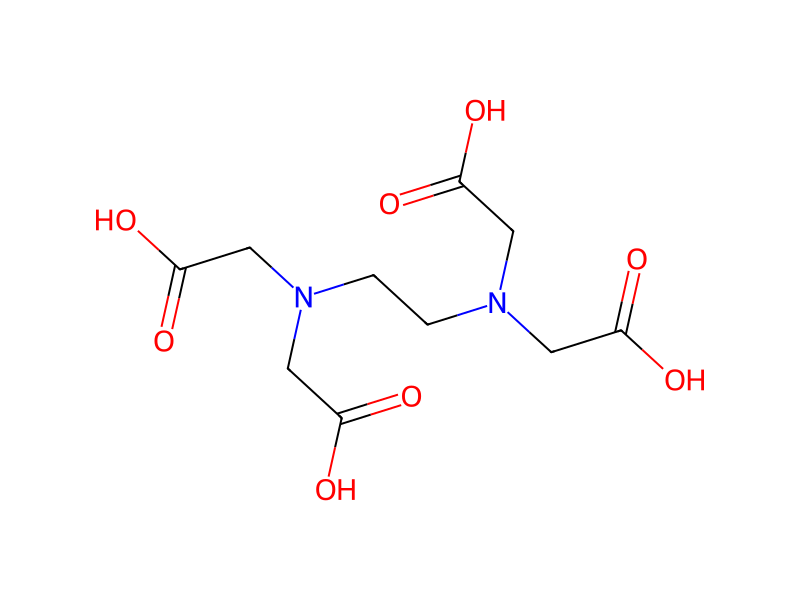
HCID 5962L-Lysine2×HCID 6049Ethylenediaminetetraacetic AcidHCID 7412Benzoyl chlorideHCID 516892Sodium Bicarbonate

Product 1

HCID 1550543(S)-2-Amino-6-benzamidohexanoic acidYield 69.5%

Reagents, catalysts & solvents 3

HCID 14452
Copper carbonate
Catalyst
HCID 962WaterSolvent
HCID 8028TetrahydrofuranSolvent

Conditions

Temperature
5 °C

Procedure

This compound was synthesized by a modified procedure of Kurtz et al.93. Copper (II) carbonate, basic (16.3 g, 74.0 mmoles) was added to a hot (80° C.) solution of L-lysine (15 g, 82.0 mmoles) in distilled water (250 mL). Excess copper carbonate was removed by gravity filtration while the mixture was still warm. The epsilon amino group of L-lysine was benzoylated by the dropwise addition of benzoyl chloride (14 g, 99.0 mmoles) in THF (35 mL) to the above solution after being cooled to 5° C. Sodium bicarbonate was added in small portions (total 14 g, 167.0 mmoles) to maintain the pH of the aqueous solution above 7 (pH was monitored with neutral litmus paper). The cold solution was maintained at 5° C. for 4 h and 2 d at room temperature. A hot (80° C.) solution (1 L) of EDTA (14.6 g, 0.25 moles) was added to the reaction mixture, stirred for 1 h and cooled to 10° C. The precipitate collected by vacuum filtration was washed with water and 30 mL of 95% ethanol. The powder, containing the product was purified by first adding the powder to 1×10⁻¹M hydrochloric acid (300 mL) and filtering off the sediment. The filtrate was slowly neutralized with 0.01N sodium hydroxide and the precipitate collected by gravity filtration. The latter was then air-dried to give 13 g (57 mmoles) (69.5% yield) of a white powder, mp 232°-234° C. (lit.93 mp 230°-233° C.). 1H-NMR (DMSO-d6) δ 1.36-190(6Ha,m); 3.20(2Hb,m); 4.20-4.53(1Hc,m); 7.16(1Hd,m, rotamer of amide -NH); 7.43(2He,e', app. dd, Jef =8Hz, Jee,=2Hz); 7.63(1Hf, app. dd, Jfe =8Hz, Jfg =2Hz); 8.03(2Hf,f', app dd, Jge =8Hz, Jgf =2Hz); 9.50(1Hh,s)ppm. IR (Nujol) 3330, 3030, 1687, 1270, 735, 695 cm-1.

Workup

  1. customThis compound was synthesized by a modified procedure of Kurtz et al.93
  2. customExcess copper carbonate was removed by gravity filtration while the mixture
  3. temperaturewas still warm
  4. temperatureto maintain the pH of the aqueous solution above 7 (pH was monitored with neutral litmus paper)
  5. temperatureThe cold solution was maintained at 5° C. for 4 h and 2 d at room temperature
  6. temperaturecooled to 10° C
  7. filtrationThe precipitate collected by vacuum filtration
  8. washwas washed with water and 30 mL of 95% ethanol
  9. additionThe powder, containing the product
  10. customwas purified
  11. additionby first adding the powder to 1×10⁻¹M hydrochloric acid (300 mL)
  12. filtrationfiltering off the sediment
  13. filtrationthe precipitate collected by gravity filtration
  14. customThe latter was then air-dried

Sources & evidence

ORD record
ord-4a8b45930ff44db1a24efa6656c08ca5
Source dataset
uspto-grants-1991_04
DOI
10.6084/m9.figshare.5104873.v1
Patent number
US05008245

Reaction notes

On this pageParticipantsConditionsProcedureWorkupSources & evidenceReaction notes