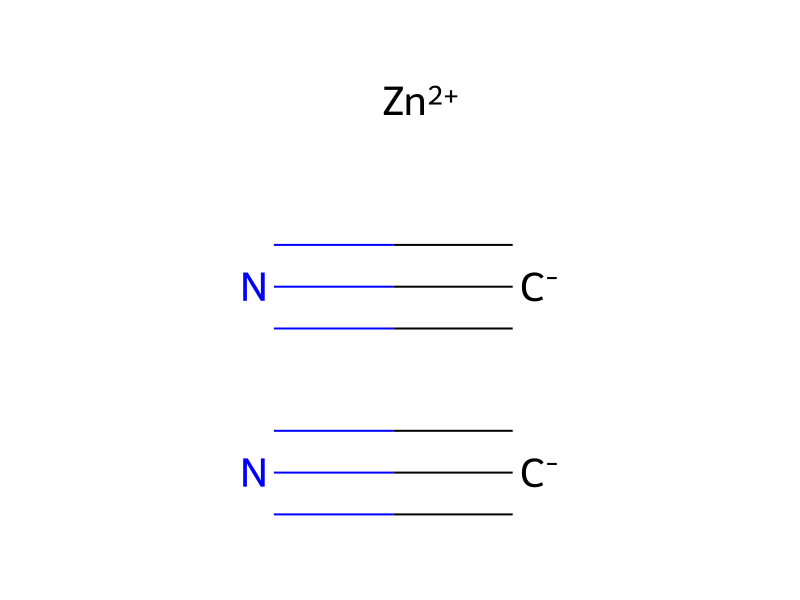
Cl[C:2]1[C:11]2[C:6](=[C:7]([F:13])[CH:8]=[C:9]([F:12])[CH:10]=2)[N:5]=[CH:4][CH:3]=1.[CH3:14][N:15](C=O)C>[C-]#N.[Zn+2].[C-]#N.C1(P(C2C=CC=CC=2)C2C=CC=CC=2)C=CC=CC=1.C1(P(C2C=CC=CC=2)C2C=CC=CC=2)C=CC=CC=1.C1(P(C2C=CC=CC=2)C2C=CC=CC=2)C=CC=CC=1.C1(P(C2C=CC=CC=2)C2C=CC=CC=2)C=CC=CC=1.[Pd]>[F:12][C:9]1[CH:10]=[C:11]2[C:6](=[C:7]([F:13])[CH:8]=1)[N:5]=[CH:4][CH:3]=[C:2]2[C:14]#[N:15]A mixture of 4-chloro-6,8-difluoroquinoline (APOLLO) (1000 mg, 5.01 mmol), zinc cyanide (1180 mg, 10.0 mmol) and palladium (0) tetrakis(triphenylphosphine)(579 mg, 0.501 mmol) in dry DMF (15 ml) was treated at room temperature with stirring for 12 hours. Then, the reaction was quenched with saturated aqueous sodium bicarbonate solution and ethyl acetate. The organic layer was separated and the crude product was purified by column chromatography on silica gel (ca. 250 g) with hexane-ethyl acetate (3:1) to give the title compound (787 mg, yellow solid). 1H NMR (270 MHz, CDCl3) 5 ppm 7.37-7.50 (1H, m), 7.65-7.75 (1H, m), 7.83-7.90 (1H, m), 9.05-9.10 (1H, m).
Loading…