Reaction equation

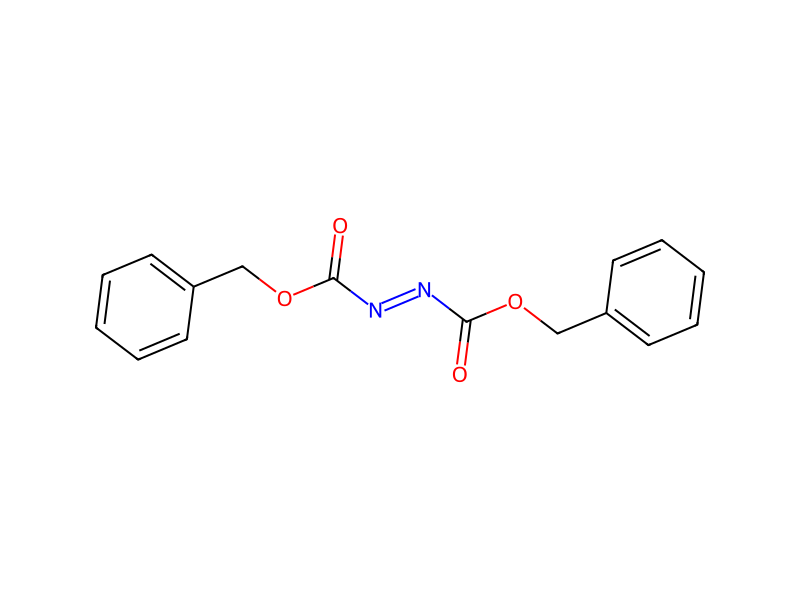
[CH2:1]([N:6]1[C:14]2[N:13]=[C:12]([Cl:15])[N:11]([CH2:16][CH:17]=[CH2:18])[C:10]=2[C:9](=[O:19])[NH:8][C:7]1=[O:20])[CH2:2][CH2:3][CH2:4][CH3:5].[NH:21]1[CH:25]=[C:24]([CH2:26][CH2:27][CH2:28]O)[CH:23]=[N:22]1.N(C(OCC1C=CC=CC=1)=O)=NC(OCC1C=CC=CC=1)=O.C1(P(C2C=CC=CC=2)C2C=CC=CC=2)C=CC=CC=1>C1COCC1.O>[Cl:15][C:12]1[N:11]([CH2:16][CH:17]=[CH2:18])[C:10]2[C:9](=[O:19])[N:8]([CH2:28][CH2:27][CH2:26][C:24]3[CH:25]=[N:21][NH:22][CH:23]=3)[C:7](=[O:20])[N:6]([CH2:1][CH2:2][CH2:3][CH2:4][CH3:5])[C:14]=2[N:13]=1Participants
Reactant 4



Product 1

Reagents, catalysts & solvents 2


Procedure
3-Pentyl-8-chloro-7-(2-propen-1-yl)-3,7-dihydro-1H-purine-2,6-dione (5 g, 16.86 mmol) and 3-(1H-pyrazol-4-yl)propan-1-ol (2.12 g, 16.8 mmol) were stirred in dry THF (150 ml) at 3° C. Dibenzyl azodicarboxylate (10.05 g, 33.7 mmol) was added followed by the dropwise addition of triphenylphosphine (8.83 g, 33.7 mmol) in dry THF (70 ml). The mixture was allowed to warm to it and stirred for 18 h. Water (1 ml) was added and the solvents evaporated. The residue was taken up in Et2O (200 ml) from which a white solid, mostly triphenylphosphine oxide, crystallised and was filtered off. The filtrate was concentrated and further by-products crystallised from ether-cyclohexane. The remaining filtrate was concentrated (19.2 g) and purified on a Biotage™ system (400 g) eluting with EtOAc-cyclohexane (2:1) to afford the title compound as a white solid (2.89 g).
Workup
- temperatureto warm to it
- customthe solvents evaporated
- customcrystallised
- filtrationwas filtered off
- concentrationThe filtrate was concentrated
- customfurther by-products crystallised from ether-cyclohexane
- concentrationThe remaining filtrate was concentrated (19.2 g)
- custompurified on a Biotage™ system (400 g)
- washeluting with EtOAc-cyclohexane (2:1)
Sources & evidence
- ORD record
- ord-a351c52f866a4ef3827555a2cc86e10d
- Source dataset
- uspto-grants-2012_03
- Patent number
- US08143264B2
Linked notes
Loading…