HomeMCPWorkbenchSkills
HomeWorkbenchNotificationsMe
llms.txt · MCP GuidePrivacy Policy · Terms of Service · Supportv1.8.0
  1. Home
  2. /Reaction

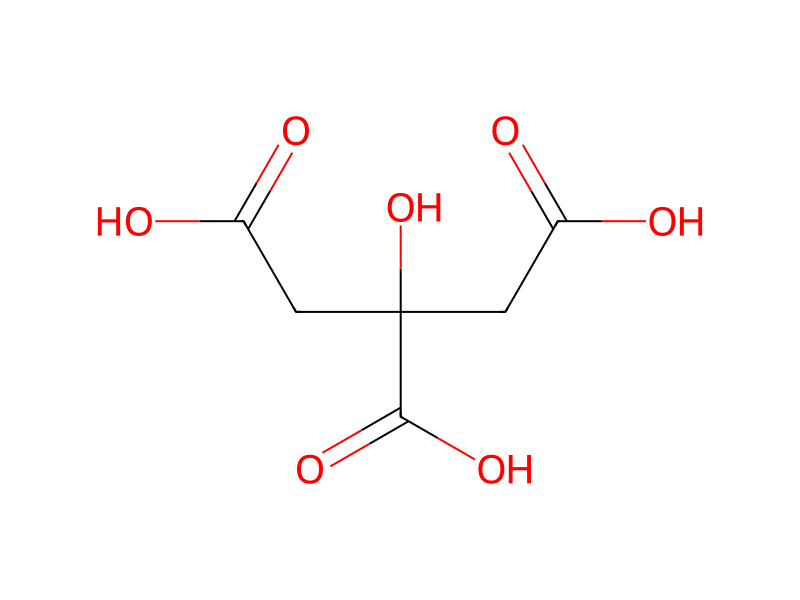
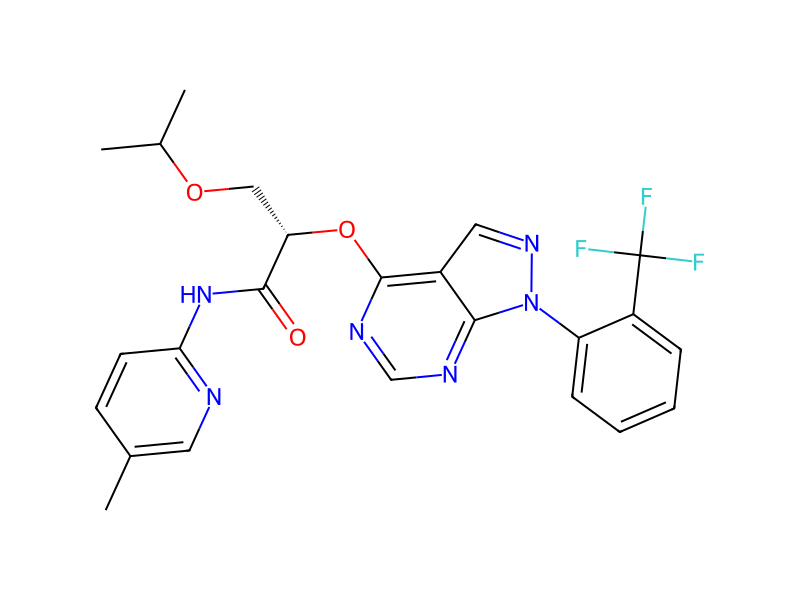
Citric Acid → (2S)-3-isopropoxy-N-(5-methylpyridin-2-yl)-2-(1-(2-(trifluoromethyl)phenyl)-1H-pyrazolo[3,4-d]pyrimidin-4-yloxy)propanamide

HRID 1098019
Notes
Print preview

Reaction equation

HRID 1098019 reaction equation
[H-].[Na+].[OH:3][C@@H:4]([CH2:15][O:16][CH:17]([CH3:19])[CH3:18])[C:5]([NH:7][C:8]1[CH:13]=[CH:12][C:11]([CH3:14])=[CH:10][N:9]=1)=[O:6].O([C:27]1[N:32]=[CH:31][N:30]=[C:29]2[N:33]([C:36]3[CH:41]=[CH:40][CH:39]=[CH:38][C:37]=3[C:42]([F:45])([F:44])[F:43])[N:34]=[CH:35][C:28]=12)C1C=CC=CC=1.C(O)(=O)CC(CC(O)=O)(C(O)=O)O>C1COCC1>[CH:17]([O:16][CH2:15][C@H:4]([O:3][C:27]1[N:32]=[CH:31][N:30]=[C:29]2[N:33]([C:36]3[CH:41]=[CH:40][CH:39]=[CH:38][C:37]=3[C:42]([F:45])([F:44])[F:43])[N:34]=[CH:35][C:28]=12)[C:5]([NH:7][C:8]1[CH:13]=[CH:12][C:11]([CH3:14])=[CH:10][N:9]=1)=[O:6])([CH3:19])[CH3:18]
ParticipantsConditionsProcedureWorkupSources & evidenceReaction notes

Participants

6

Reactant 4

HCID 311Citric AcidHCID 24758Sodium hydrideHCID 57504492HCID 57504492, compound2×HCID 575045144-phenoxy-1-(2-(trifluoromethyl)phenyl)-1H-pyrazolo[3,4-d]pyrimidine

Product 1

HCID 57504386(2S)-3-isopropoxy-N-(5-methylpyridin-2-yl)-2-(1-(2-(trifluoromethyl)phenyl)-1H-pyrazolo[3,4-d]pyrimidin-4-yloxy)propanamide
Yield 54.5%

Reagents, catalysts & solvents 1

HCID 8028TetrahydrofuranSolvent

Conditions

Temperature
0 °C

Procedure

Sodium hydride (10.78 mg, 0.27 mmol) was added to (S)-2-hydroxy-3-isopropoxy-N-(5-methylpyridin-2-yl)propanamide (Intermediate C7) (53.5 mg, 0.22 mmol) in anhydrous THF (50 mL) at 0° C. under nitrogen. The resulting solution was stirred at 0° C. for 10 minutes and then 4-phenoxy-1-(2-(trifluoromethyl)phenyl)-1H-pyrazolo[3,4-d]pyrimidine (Intermediate Z1) (80 mg, 0.22 mmol) was added. The reaction mixture was allowed to warm to room temperature and stirred for 1 hour. The reaction mixture was neutralised with 1M citric acid and the majority of the THF removed in vacuo. The reaction mixture was diluted with water (20 mL) and ethyl acetate (50 mL). The organic layer was separated and the aqueous layer re-extracted with ethyl acetate (2×100 mL). The combined organics were washed with saturated brine (75 mL), dried (MgSO4) and evaporated. The crude product was purified by flash silica chromatography, eluting with 50 to 100% ethyl acetate in isohexane. The residue was purified by preparative HPLC using decreasingly polar mixtures of water (containing 1% ammonia) and MeCN as eluents to afford the product (60.0 mg, 53.4%). 1H NMR (400 MHz, CDCl3) δ 1.17-1.20 (6H, m), 2.30 (3H, s), 3.69-3.75 (1H, m), 4.09 (2H, d), 6.01 (1H, t), 7.52-7.56 (2H, m), 7.69 (1H, t), 7.76 (1H, t), 7.91 (1H, d), 8.10-8.15 (2H, m), 8.42 (1H, s), 8.56 (1H, s), 8.72 (1H, s); m/z (ES+) (M+H)+=501; HPLC tR=2.70 min.

Workup

  1. temperatureto warm to room temperature
  2. stirringstirred for 1 hour
  3. customthe majority of the THF removed in vacuo
  4. additionThe reaction mixture was diluted with water (20 mL) and ethyl acetate (50 mL)
  5. customThe organic layer was separated
  6. extractionthe aqueous layer re-extracted with ethyl acetate (2×100 mL)
  7. washThe combined organics were washed with saturated brine (75 mL)
  8. dry with materialdried (MgSO4)
  9. customevaporated
  10. customThe crude product was purified by flash silica chromatography
  11. washeluting with 50 to 100% ethyl acetate in isohexane
  12. customThe residue was purified by preparative HPLC

Sources & evidence

ORD record
ord-48f084abac0f486ea20306543652b97b
Source dataset
uspto-grants-2012_03
DOI
10.6084/m9.figshare.5104873.v1
Patent number
US08143263B2

Reaction notes

Loading…

On this pageParticipantsConditionsProcedureWorkupSources & evidenceReaction notes