Reaction equation

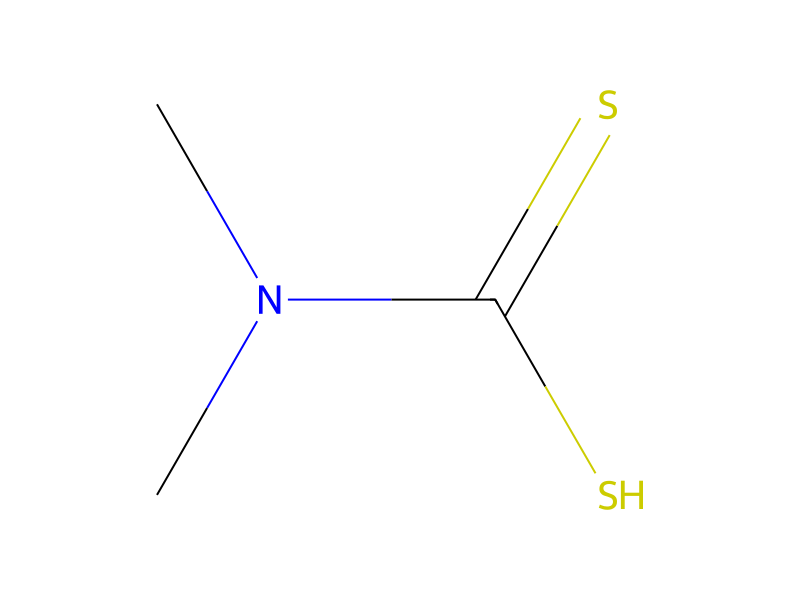
Cl[C:2]1[S:6][N:5]([C:7]2[CH:12]=[CH:11][CH:10]=[CH:9][CH:8]=2)[C:4](=[O:13])[C:3]=1[CH3:14].[CH3:15][N:16]([CH3:20])[C:17](=[S:19])[SH:18].[Na].[I-].[Na+]>C(O)C>[CH3:15][N:16]([CH3:20])[C:17]([S:19][C:2]1[S:6][N:5]([C:7]2[CH:12]=[CH:11][CH:10]=[CH:9][CH:8]=2)[C:4](=[O:13])[C:3]=1[CH3:14])=[S:18]Participants
6





Procedure
To a solution of 4.51 g. (0.02 mole) of 5-chloro-4-methyl-2-phenyl-4-isothiazolin-3-one in 30 ml of warm ethanol was added a solution of 3.58 g. (0.02 mole) of N,N-dimethyldithiocarbamic acid, sodium salt dihydrate in 20 ml of ethanol followed by 0.1 g. of sodium iodide. The mixture was stirred several hours, cooled and filtered. The solid was triturated with water and dried to give 5.3 g. (88%) of the named product, mp 158°-160°.
Workup
- temperaturecooled
- filtrationfiltered
- customThe solid was triturated with water
- customdried
- customto give 5.3 g
Sources & evidence
- ORD record
- ord-14fd87cf8fe5449984c02e859ec68e5d
- Source dataset
- uspto-grants-1982_01
- Patent number
- US04310590
Linked notes
Loading…