HomeMCPWorkbenchSkills
HomeWorkbenchNotificationsMe
llms.txt · MCP GuidePrivacy Policy · Terms of Service · Supportv1.8.0
  1. Home
  2. /Reaction

Maleimide → 6-(3-Hydroxypropyl)-9-methoxy-4-phenylpyrrolo[3,4-c]carbazole-1,3(2H,6H)-dione

HRID 11062
Notes
Print preview

Reaction equation

HRID 11062 reaction equation
Br[C:2]1[CH:7]=[C:6]([N+]([O-])=O)[CH:5]=[CH:4][C:3]=1/[CH:11]=[CH:12]/[C:13]1[NH:14][C:15]2[C:20]([CH:21]=1)=[CH:19][C:18]([O:22][CH3:23])=[CH:17][CH:16]=2.[Si]([O:31][CH2:32][CH2:33][CH2:34]Br)(C(C)(C)C)(C)C.[C:36]1(=[O:42])[NH:40][C:39](=[O:41])[CH:38]=[CH:37]1>CO.Cl.O>[OH:31][CH2:32][CH2:33][CH2:34][N:14]1[C:13]2[CH:12]=[C:11]([C:3]3[CH:4]=[CH:5][CH:6]=[CH:7][CH:2]=3)[C:37]3[C:36](=[O:42])[NH:40][C:39](=[O:41])[C:38]=3[C:21]=2[C:20]2[CH:19]=[C:18]([O:22][CH3:23])[CH:17]=[CH:16][C:15]1=2
ParticipantsProcedureWorkupSources & evidenceReaction notes

Participants

7

Reactant 3

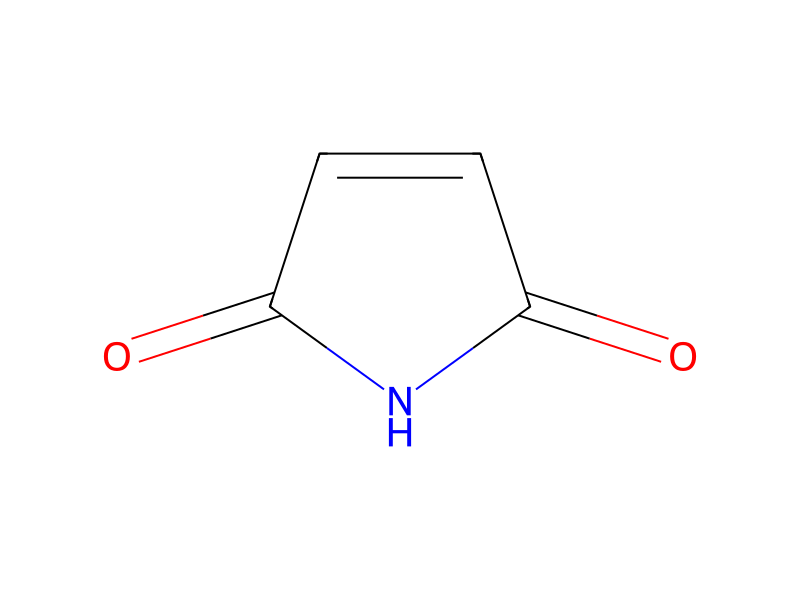
HCID 10935MaleimideHCID 607486(3-Bromopropoxy)(tert-butyl)dimethylsilaneHCID 219808902-[(e)-2-(2-Bromo-4-nitrophenyl)ethenyl]-5-methoxy-1h-indole

Product 1

HCID 867601996-(3-Hydroxypropyl)-9-methoxy-4-phenylpyrrolo[3,4-c]carbazole-1,3(2H,6H)-dioneYield 23%

Reagents, catalysts & solvents 3

HCID 313
Hydrochloric Acid
Solvent
HCID 887MethanolSolvent
HCID 962WaterSolvent

Procedure

5-Methoxy-2-[(E,Z)-2-phenylethenyl]-1H-indole (II; Ar=phenyl) (6.85 g, 27.5 mmol) was reacted with with 3-bromopropyl tert-butyl(dimethyl)silyl ether using the procedure described in example 38. The product isolated was reacted directly with maleimide (5.2 g) using the procedure described in example 68. Aromatisation of the crude Diels-Alder adduct using the procedure described in example 79 gave crude material that was then dissolved in methanol (300 mL) to which 1N hydrochloric acid (50 mL) was added. This solution was stirred at rt for 3h before being diluted with water and extracted with ethyl acetate. The organic layer was dried, the drying agent was removed and the solution was concentrated to dryness. The residue was adsorbed onto silica and chromatographed eluting with dichloromethane to ethyl acetate/dichloromethane (7:3). Trituration with diethyl ether gave alcohol (202) as a yellow powder (2.55 g, 23%), mp 241–243° C. 1H NMR δ [(CD3)2SO] 11.10 (br s, 1H), 8.56 (d, J=2.6 Hz, 1H), 7.82 (s, 1H), 7.67 (m, 3H), 7.47 (m, 3H), 7.30 (dd. J=9.0, 2.6 Hz, 1H), 4.66 (t, J=4.9 Hz, 1H), 4.55 (t, J=6.9 Hz, 2H), 3.90 (s, 3H), 3.39 (m. 2H), 1.93 (m, 2H). Found: C, 71.95; H, 5.09; N, 6.93. C24H20N2O4 requires: C, 71.99; H. 5.03; N. 6.99.

Workup

  1. customThe product isolated
  2. customgave crude material that
  3. additionwas added
  4. extractionextracted with ethyl acetate
  5. customThe organic layer was dried
  6. customthe drying agent was removed
  7. concentrationthe solution was concentrated to dryness
  8. customchromatographed
  9. washeluting with dichloromethane to ethyl acetate/dichloromethane (7:3)

Sources & evidence

ORD record
ord-f61fe06652e1483ba61e938ea5e32000
Source dataset
uspto-grants-2006_08
DOI
10.6084/m9.figshare.5104873.v1
Patent number
US07094798B1

Reaction notes

Loading…

On this pageParticipantsProcedureWorkupSources & evidenceReaction notes


