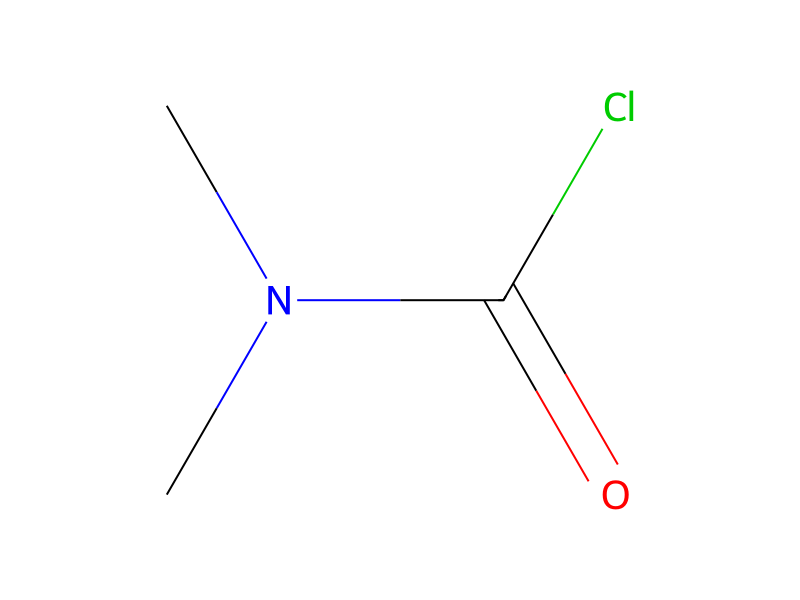
[C:1]([C:5]1[N:9]=[C:8]([S:10][CH2:11][C:12]([O:14][CH2:15][CH3:16])=[O:13])[NH:7][N:6]=1)([CH3:4])([CH3:3])[CH3:2].[CH3:17][N:18]([CH3:22])[C:19](Cl)=[O:20]>CN(C)C1C=CN=CC=1.N1C=CC=CC=1>[CH3:17][N:18]([CH3:22])[C:19]([N:7]1[C:8]([S:10][CH2:11][C:12]([O:14][CH2:15][CH3:16])=[O:13])=[N:9][C:5]([C:1]([CH3:4])([CH3:2])[CH3:3])=[N:6]1)=[O:20]To 100 g (0.411 mole) of 3-t-butyl-5-carboethoxymethylthio-1H-1,2,4-triazole, 6 g (0.05 mole) of 4-dimethylaminopyridine, and 200 ml of pyridine was added 54 g (0.50 mole) of dimethylcarbamoyl chloride. The resulting solution was refluxed for eight hours and allowed to cool overnight. The reaction mixture was concentrated under vacuum, partitioned between ether and dilute hydrochloric acid. The organic layer was washed with water, brine, dried over magnesium sulfate, and concentrated under vacuum. Distillation yielded a fraction boiling at 148°-160° C at 0.1 torr 100 g (0.35 mole) of 1-dimethylcarbamoyl-3-t-butyl-5-carboethoxymethylthio-1,2,4-triazole. m.p. 55° C.