Reaction equation
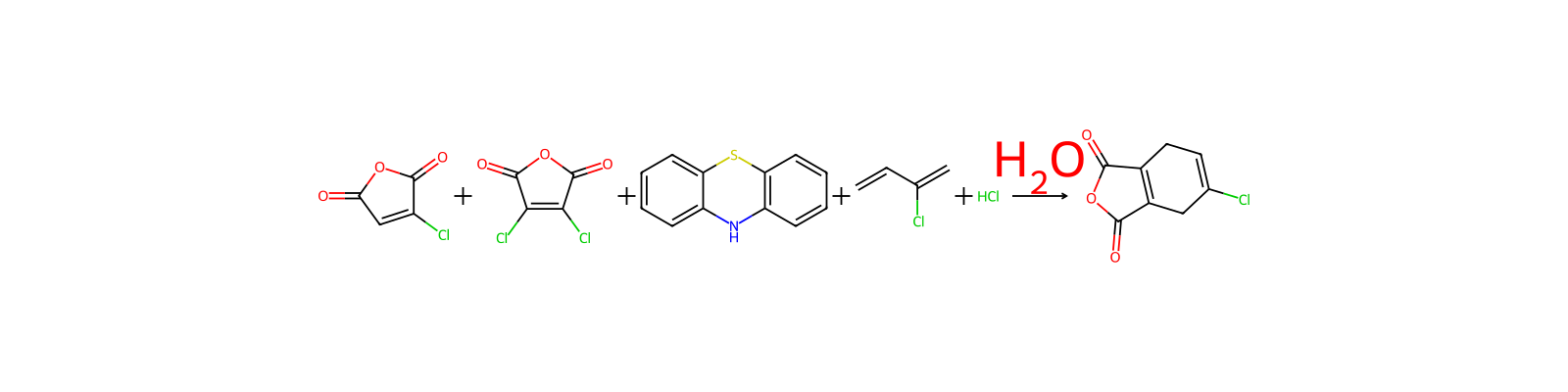
Cl[C:2]1[C:3]([O:5][C:6](=[O:8])[CH:7]=1)=[O:4].[Cl:9][C:10]1=[C:11](Cl)[C:12](O[C:15]1=O)=O.C1C2NC3C(=CC=CC=3)SC=2C=CC=1.C=CC(Cl)=C.Cl>O>[Cl:9][C:10]1[CH2:15][C:7]2[C:6](=[O:8])[O:5][C:3](=[O:4])[C:2]=2[CH2:12][CH:11]=1Participants
7


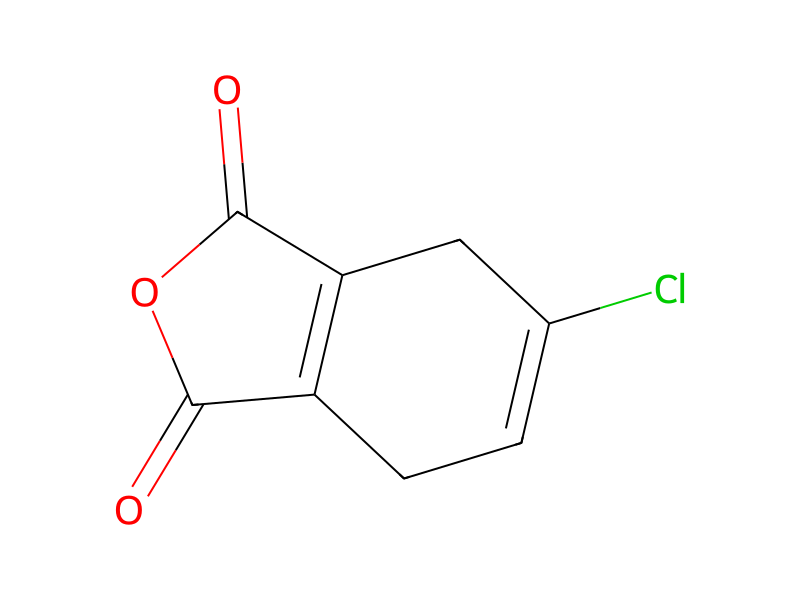

Conditions
- Temperature
- 105 °C
Procedure
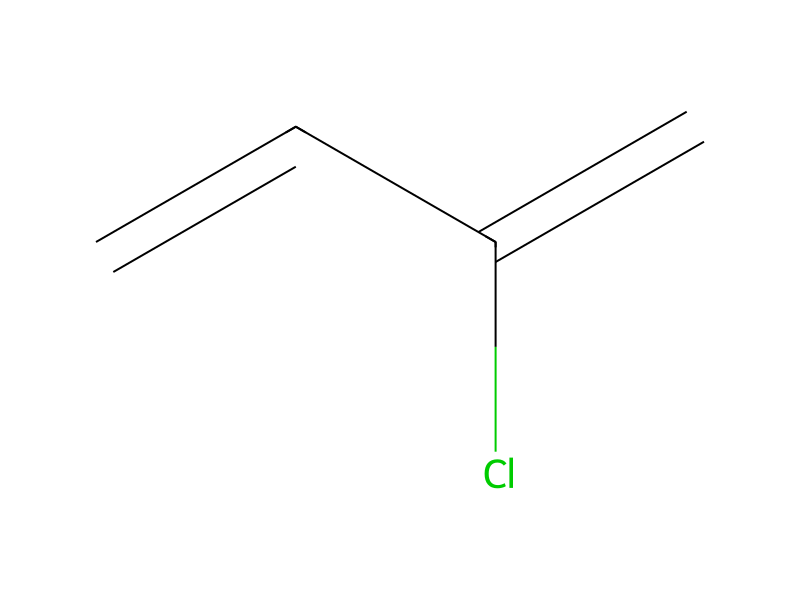
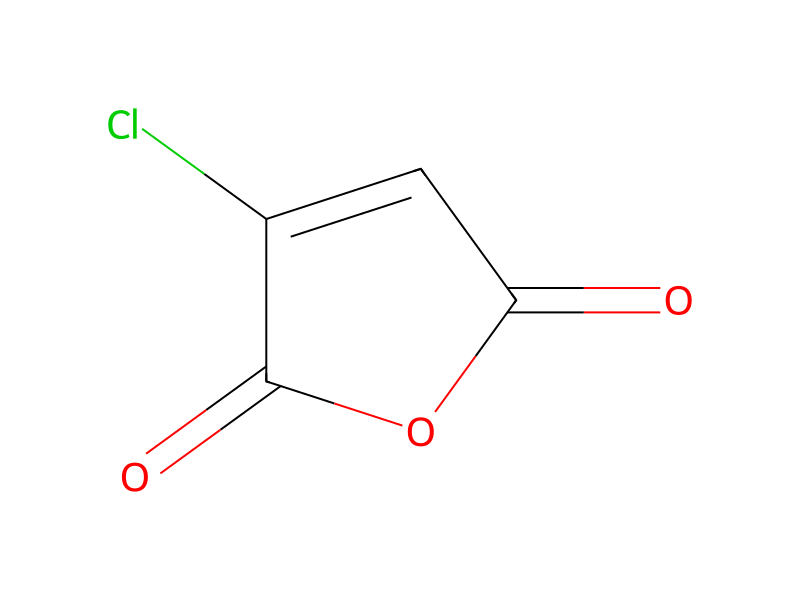
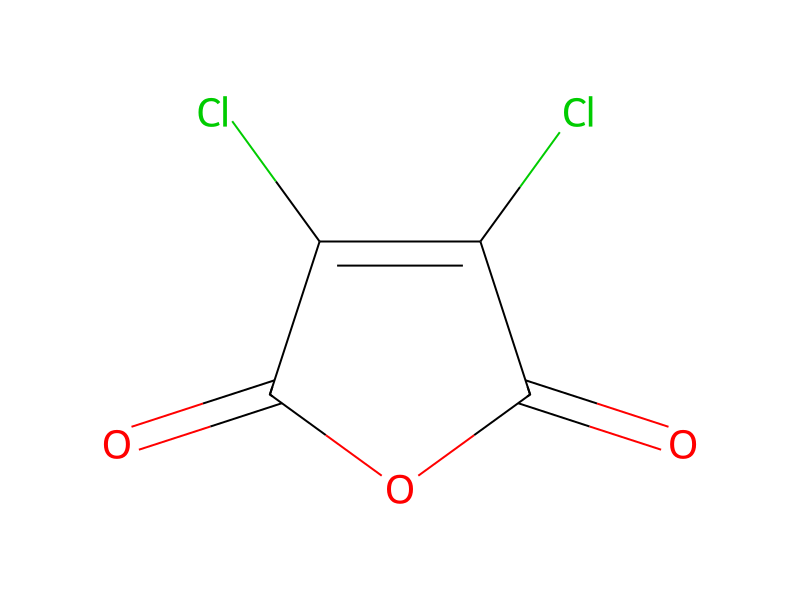
A 3-necked 50 mL flask was equipped with a pressure equalizing addition funnel, a thermocouple well with thermocouple, a water cooled condensor and a magnetic stir bar. The flask was charged with 13.2 g (0.10 mol) of a 90/10 GC area % mixture of monochloromaleic anhydride and dichloromaleic anhydride and 50 mg of phenothiazine. The contents of the flask were heated to 80 to 130° C. and 8.8 g (0.1 mol) of chloroprene was added over 15 to 30 minutes. HCl gas was observed evolving from the reactor. After 6 hours at 130° C. the contents of the flask were multiple distilled into two fractions resulting in the isolation of 12.08 g of 4-chloro-3,6-dihydrophthalic anhydride which was identified by 13C 1H NMR and MS.
Workup
- customA 3-necked 50 mL flask was equipped with a pressure
- additionaddition funnel
- distillationAfter 6 hours at 130° C. the contents of the flask were multiple distilled into two fractions
Sources & evidence
- ORD record
- ord-f5fff1231f7f429498d830b92d4add89
- Source dataset
- uspto-grants-1994_06
- Patent number
- US05322954
Linked notes
Loading…