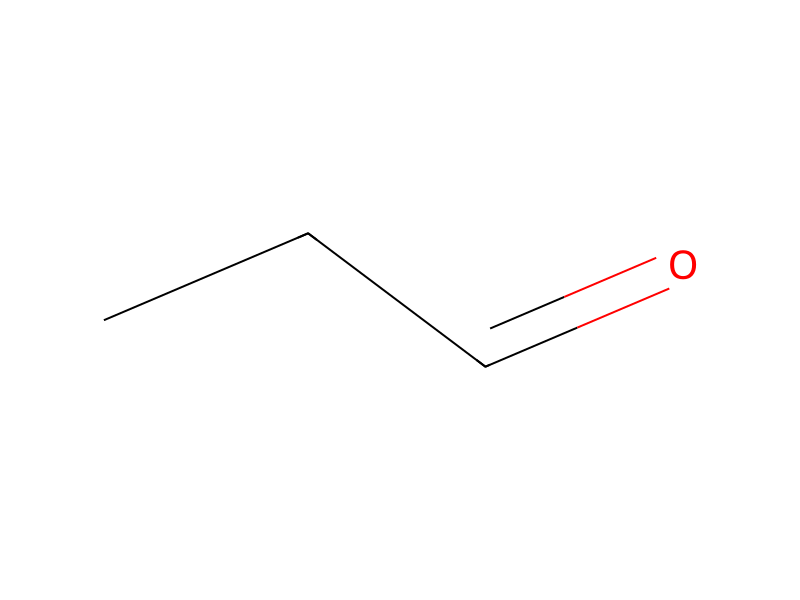
C(=[O:4])CC.[CH3:5][CH:6]1[CH2:11][CH:10]([O:12][CH2:13][C:14](Cl)=[O:15])[CH:9]([CH:17]([CH3:19])[CH3:18])[CH2:8][CH2:7]1.C1C=CC(P(C2C=CC=CC=2)C2C=CC=CC=2)=CC=1.CO>N1C=CC=CC=1.C1COCC1>[CH3:5][CH:6]1[CH2:11][CH:10]([O:12][CH2:13][C:14]([OH:4])=[O:15])[CH:9]([CH:17]([CH3:19])[CH3:18])[CH2:8][CH2:7]11-Propenyl L-menthoxyacetate is prepared from propionaldehyde, L-menthoxyacetyl chloride, and pyridine catalyst. A 70 mL stainless steel high pressure reactor fitted with a Pyrex glass liner and magnetic stir bar is charged with THF (5 mL), PPh3)2PdCl2 (0.05 mmol), CH3OH (0.5 mmol), and 1-propenyl L-menthoxyacetate (0.5 mmol). The reactor is sealed, pressurized to 1000 psig with CO, and stirred for 24 hours at 100° C. The product mixture, isolated after removal of gas from the reactor vessel, contains a diastereomeric mixture of methyl L-menthoxyacetyl-L-2-hydroxybutyrate and methyl L-menthoxyacetyl-D-2-hydroxybutyrate. The diastereomers are separated by preparative gas chromatography using an SE-30 liquid phase column. Each diastereomer is hydrolyzed separately by treatment with 2N HCl (aq) for 2 hours at 100° C. to give pure L- and D-2-hydroxybutyric acid, methanol, and L-menthoxyacetic acid.