HomeMCPWorkbenchSkills
HomeWorkbenchNotificationsMe
llms.txt · MCP GuidePrivacy Policy · Terms of Service · Supportv1.8.3
  1. Home
  2. /Reaction

Citric Acid → (2S)-4,4-difluoro-3,3-dimethyl-pyrrolidine-2-carboxylic acid (2,2,2-trifluoro-ethyl)-amide

HRID 11173
Print

Reaction equation

HRID 11173 reaction equation
CCN(CC)CC.C(OC([N:15]1[CH2:19][C:18]([F:21])([F:20])[C:17]([CH3:23])([CH3:22])[C@H:16]1[C:24]([OH:26])=O)=O)(C)(C)C.[F:27][C:28]([F:32])([F:31])[CH2:29][NH2:30].C(O)(=O)CC(CC(O)=O)(C(O)=O)O>C(OCC)(=O)C>[F:27][C:28]([F:32])([F:31])[CH2:29][NH:30][C:24]([C@@H:16]1[C:17]([CH3:22])([CH3:23])[C:18]([F:20])([F:21])[CH2:19][NH:15]1)=[O:26]
ParticipantsProcedureWorkupSources & evidenceReaction notes

Participants

6

Reactant 4

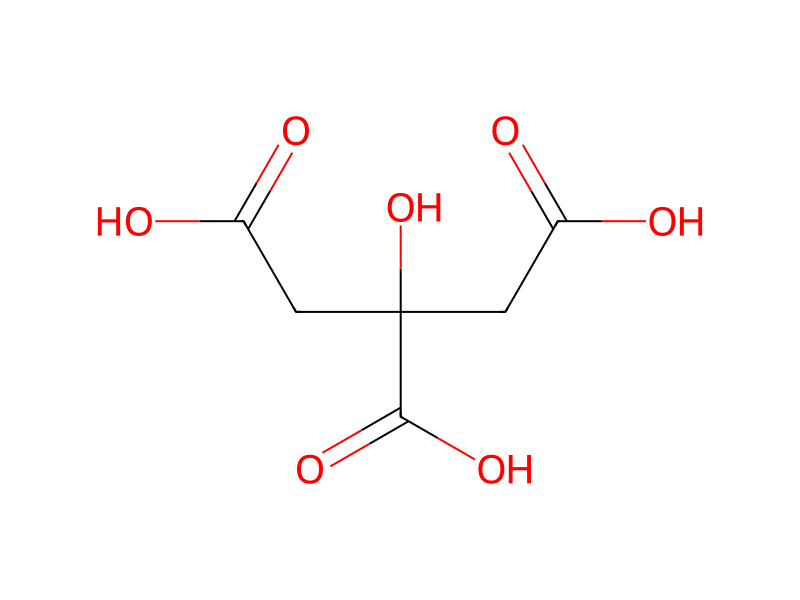
HCID 311Citric AcidHCID 8471TriethylamineHCID 9773Ethanamine, 2,2,2-trifluoro-HCID 11818299(S)-1-(tert-Butoxycarbonyl)-4,4-difluoro-3,3-dimethylpyrrolidine-2-carboxylic acid

Product 1

HCID 70335188(2S)-4,4-difluoro-3,3-dimethyl-pyrrolidine-2-carboxylic acid (2,2,2-trifluoro-ethyl)-amideYield 107%

Reagents, catalysts & solvents 1

HCID 8857Ethyl AcetateSolvent

Procedure

NEt3 (75.2 g, 743 mmol) was slowly added to a 10° C. solution of (2S)-4,4-difluoro-3,3-dimethyl-pyrrolidine-1,2-dicarboxylic acid 1-tert-butyl ester (98.3 g, 352 mmol), chlorodiphenylphosphate (101 g, 376 mmol), and ethyl acetate (1.0 L). The mixture was warmed to ambient temperature for 45 min., and was then cooled to 10° C. 2,2,2-Trifluoroethylamine (39.5 g, 399 mmol) was slowly added and the resultant mixture was stirred at ambient temperature for 2.75 h. 20% Aqueous citric acid (1.0 L) was added and the resulting layers were separated. The aqueous fraction was extracted with ethyl acetate (2×300 mL). The combined organic fractions were washed with saturated aqueous NaHCO3 (2×500 mL), and then with saturated aqueous NaCl (300 mL). The resulting organic fraction was concentrated to a weight of 900 g using a rotary evaporator. A 3 N HCl/ethyl acetate solution (500 mL) was added to the concentrate, and the mixture was stirred at ambient temperature for 24 h. The resulting solid was filtered, washed with ethyl acetate (100 mL), and was then dried in a vacuum oven at 55° C. to provide 98.0 g (93.9%) of (2S)-4,4-difluoro-3,3-dimethyl-pyrrolidine-2-carboxylic acid (2,2,2-trifluoro-ethyl)-amide; hydrochloride as a white solid: 1H NMR (300 MHz, DMSO-d6) δ 10.46 (br s, 2H), 9.50 (t, J=6.2Hz, 1H), 4.17–4.33 (m, 2H), 3.68–4.02 (m, 3H), 1.23 (app d, J=2.1 Hz, 3H), 0.97 (app d, J=2.0 Hz, 3H); 13C NMR (75 MHz, DMSO-d6) δ 165.6, 127.9 (dd, JCF=250.2, 257.2 Hz), 125.6 (q, JCF=279.0 Hz), 64.8, 48.2 (t, JCF=33.4 Hz), 45.7 (t, JCF=21.2 Hz), 18.2 (d, JCF=7.5Hz), 17.2 (app dd, JCF=2.3, 5.8 Hz); MS (CI) m/z 261.1015 (261.1026 calcd for C9H14N2OF5, M−HCl+H+).

Workup

  1. temperaturewas then cooled to 10° C
  2. customthe resulting layers were separated
  3. extractionThe aqueous fraction was extracted with ethyl acetate (2×300 mL)
  4. washThe combined organic fractions were washed with saturated aqueous NaHCO3 (2×500 mL)
  5. concentrationThe resulting organic fraction was concentrated to a weight of 900 g
  6. customa rotary evaporator
  7. additionA 3 N HCl/ethyl acetate solution (500 mL) was added to the concentrate
  8. filtrationThe resulting solid was filtered
  9. washwashed with ethyl acetate (100 mL)
  10. customwas then dried in a vacuum oven at 55° C.

Sources & evidence

ORD record
ord-5ddaf3aaea1c482daa89be5ed34bc6fa
Source dataset
uspto-grants-2006_08
DOI
10.6084/m9.figshare.5104873.v1
Patent number
US07094909B2

Reaction notes

On this pageParticipantsProcedureWorkupSources & evidenceReaction notes

