Reaction equation
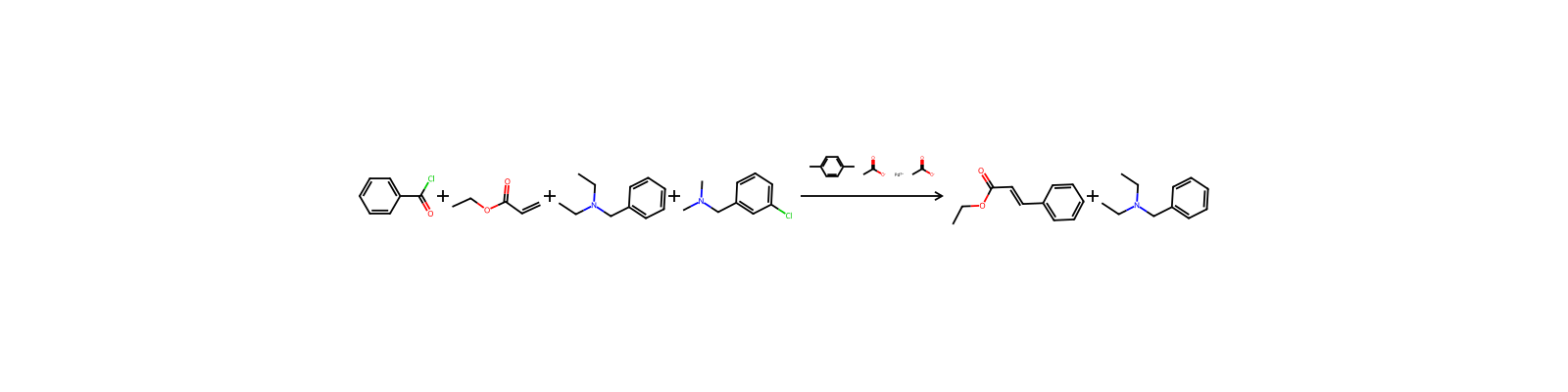
[C:1](Cl)(=O)[C:2]1[CH:7]=[CH:6][CH:5]=[CH:4][CH:3]=1.[C:10]([O:14][CH2:15][CH3:16])(=[O:13])[CH:11]=C.[CH2:17]([N:24]([CH2:27][CH3:28])[CH2:25][CH3:26])[C:18]1[CH:23]=[CH:22][CH:21]=[CH:20][CH:19]=1.ClC1C=C(C=CC=1)CN(C)C>CC1C=CC(C)=CC=1.C([O-])(=O)C.[Pd+2].C([O-])(=O)C>[C:10]([O:14][CH2:15][CH3:16])(=[O:13])[CH:11]=[CH:1][C:2]1[CH:7]=[CH:6][CH:5]=[CH:4][CH:3]=1.[CH2:17]([N:24]([CH2:27][CH3:28])[CH2:25][CH3:26])[C:18]1[CH:23]=[CH:22][CH:21]=[CH:20][CH:19]=1Participants
8
Reactant 4



Product 2

Reagents, catalysts & solvents 2


Conditions
- Temperature
- 130 °C
Procedure
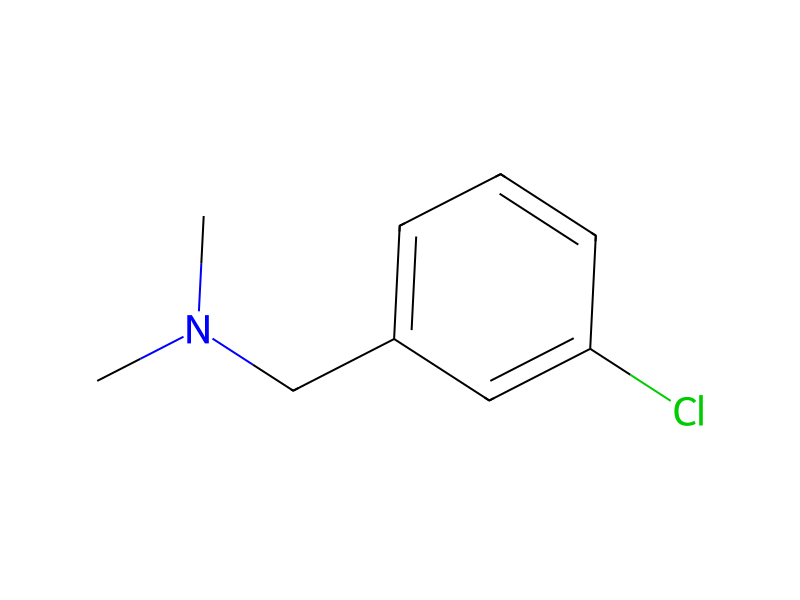
Ethyl cinnamate is prepared by the procedures described above, using different bases and the following reactants: 2.24 mg (10-5 mols) of palladium acetate, 5.77 ml (50 millimols) of benzoyl chloride, 5.42 ml (50 millimols) of ethyl acrylate and 50 millimols of N-benzyldiethylamine or N-(3-chlorobenzyl)-dimethylamine, in 100 ml of p-xylene. The reaction mixture is stirred for 4 hours at 130° C. Ethyl cinnamate is obtained in a yield of 67% of theory if N-benzyldiethylamine is used, and a yield of 56% of theory if N-(3-chlorobenzyl)-dimethylamine is used.
Workup
- customEthyl cinnamate is prepared by the procedures
Sources & evidence
- ORD record
- ord-7496f35003b84bafb24159c4480260bc
- Source dataset
- uspto-grants-1982_06
- Patent number
- US04335054
Linked notes
Loading…