Benzyl chloroformate → N-(4-bromo-3-fluorophenyl)carbamic acid phenylmethyl ester
HRID 1163340
Reaction equation

[Br:1][C:2]1[CH:8]=[CH:7][C:5]([NH2:6])=[CH:4][C:3]=1[F:9].C(=O)(O)[O-].[Na+].Cl[C:16]([O:18][CH2:19][C:20]1[CH:25]=[CH:24][CH:23]=[CH:22][CH:21]=1)=[O:17]>CC(C)=O>[CH2:19]([O:18][C:16](=[O:17])[NH:6][C:5]1[CH:7]=[CH:8][C:2]([Br:1])=[C:3]([F:9])[CH:4]=1)[C:20]1[CH:25]=[CH:24][CH:23]=[CH:22][CH:21]=1Participants
5
Reactant 3
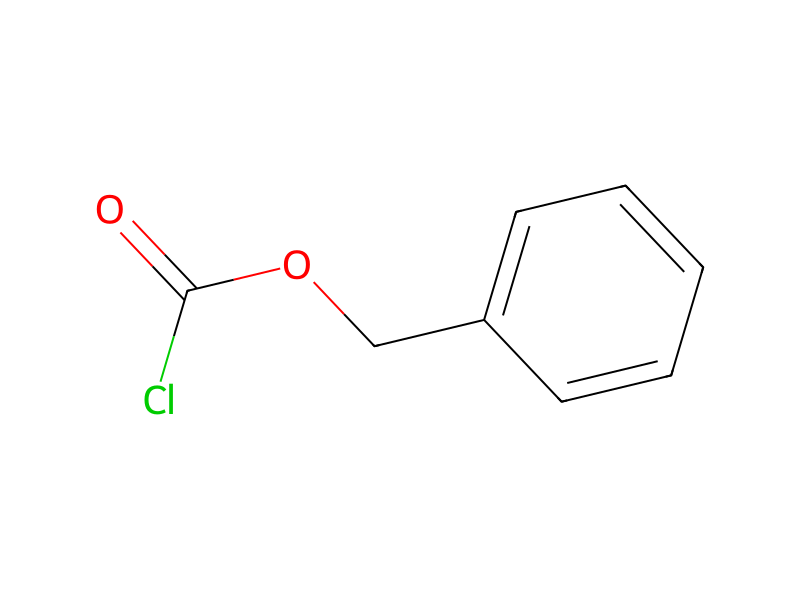


Product 1

Reagents, catalysts & solvents 1

Procedure
To a solution of 10 g of 4-bromo-3-fluoroaniline (52 mmol) in 300 ml acetone were added successively 150 ml of a saturated sodium bicarbonate solution and at 0° C. 9 ml of benzyl chloroformate (63 mmol). The reaction was monitored by TLC. The acetone was evaporated, the residue extracted twice with ethyl acetate, washed with water and brine, dried and evaporated. The residue was crystallized from an ethyl acetate/hexane mixture.