Reaction equation

[CH3:1][O:2][C:3]1[CH:8]=[C:7]([O:9][CH3:10])[N:6]=[C:5]([CH2:11][C:12](=O)[CH3:13])[N:4]=1.[C:15]1([NH:21]N)[CH:20]=[CH:19][CH:18]=[CH:17][CH:16]=1.C(OCC)(=O)C.O>C1(C)C=CC=CC=1.[Cl-].[Zn+2].[Cl-]>[CH3:1][O:2][C:3]1[CH:8]=[C:7]([O:9][CH3:10])[N:6]=[C:5]([C:11]2[C:20]3[C:15](=[CH:16][CH:17]=[CH:18][CH:19]=3)[NH:21][C:12]=2[CH3:13])[N:4]=1Participants
7

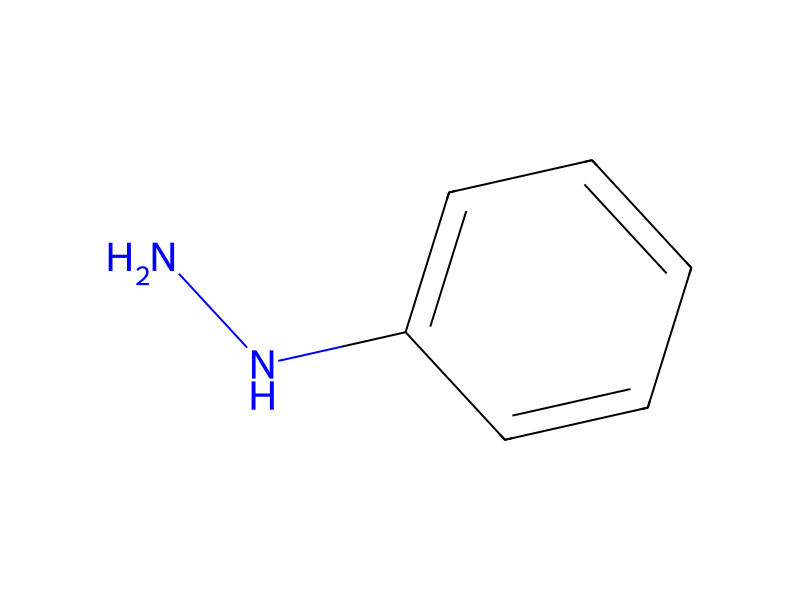





Procedure
In 10 ml of toluene were dissolved 1.61 g (8.2 m moles) of 1-(4,6-dimethoxypyrimidine-2-yl)-2-propanone and 1.08 g (10 m moles) of phenylhydrazine. Thereto was added 1.36 g (10 m moles) of zinc chloride, followed by refluxing for 1 hour. The reaction mixture was allowed to cool, and ethyl acetate and water were added to dissolve the whole reaction mixture. The oily layer was washed with water, separated and dried over Glauber's salt. The resulting oily layer was concentrated under reduced pressure to obtain an orange solid. The solid was recrystallized from methanol to obtain 1.37 g (5.1 m moles) of 3-(4,6-dimethoxypyrimidine-2-yl)-2-methylindole. Yield: 62% Melting point: 182 to 184° C.
Workup
- temperatureby refluxing for 1 hour
- temperatureto cool
- dissolutionto dissolve
- customthe whole reaction mixture
- washThe oily layer was washed with water
- customseparated
- dry with materialdried over Glauber's salt
- concentrationThe resulting oily layer was concentrated under reduced pressure
- customto obtain an orange solid
- customThe solid was recrystallized from methanol
Sources & evidence
- ORD record
- ord-4af464b6fbdb416b831efb491e917bd8
- Source dataset
- uspto-grants-2010_10
- Patent number
- US07820861B2
Linked notes
Loading…