HomeMCPWorkbenchSkills
HomeWorkbenchNotificationsMe
llms.txt · MCP GuidePrivacy Policy · Terms of Service · Supportv1.8.0
  1. Home
  2. /Reaction

Hydrochloric Acid → N-[2-(Cyclopentyl)ethyl]-N-phenylmethyl-1,3-propanediamine

HRID 1164942
Notes
Print preview

Reaction equation

HRID 1164942 reaction equation
[CH:1]1([CH2:6][CH2:7][NH:8][CH2:9][C:10]2[CH:15]=[CH:14][CH:13]=[CH:12][CH:11]=2)[CH2:5][CH2:4][CH2:3][CH2:2]1.Br[CH2:17][CH2:18][CH2:19][N:20]1C(=O)C2=CC=CC=C2C1=O.O.NN.Cl>C(#N)C.C(O)C>[CH:1]1([CH2:6][CH2:7][N:8]([CH2:9][C:10]2[CH:11]=[CH:12][CH:13]=[CH:14][CH:15]=2)[CH2:17][CH2:18][CH2:19][NH2:20])[CH2:2][CH2:3][CH2:4][CH2:5]1
ParticipantsProcedureWorkupSources & evidenceReaction notes

Participants

7

Reactant 4

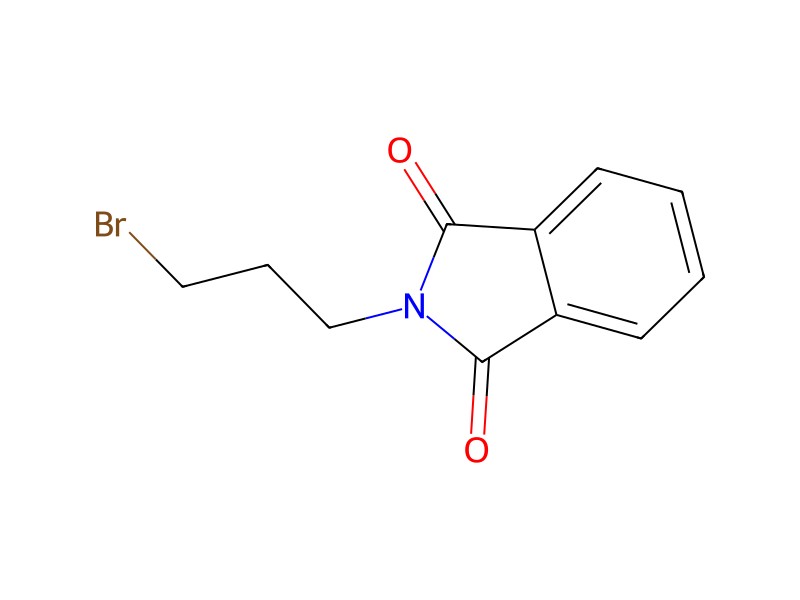
HCID 313Hydrochloric AcidHCID 21611N-3-BromopropylphthalimideHCID 24654Hydrazine hydrate (1:1)HCID 19863445N-[2-(Cyclopentyl)ethyl]benzenemethanamine

Product 1

HCID 19863409N-[2-(Cyclopentyl)ethyl]-N-phenylmethyl-1,3-propanediamine

Reagents, catalysts & solvents 2

HCID 702
Ethanol
Solvent
HCID 6342AcetonitrileSolvent

Procedure

Combine 20.3 g (0.1 mol) N-[2-(cyclopentyl)ethyl] benzenemethanamine and 26.8 g (0.1 mol) of N-(3-bromopropyl)phthalimide in 100 mL of acetonitrile. Heat the reaction mixture at reflux and monitor the progress of the reaction by thin-layer chromatography on silica gel. At the completion of the reaction remove the solvent in vacuo. To the residue add 100 mL of ethanol and 15 g (0.3 mol) of hydrazine hydrate. Reflux the reaction mixture and follow the progress of the reaction by thin-layer chromatography on silica gel. At the completion of the reaction, cool the mixture and add 50 mL of 4N hydrochloric acid. Reflux the mixture for ca. 15 min. then cool to room temperature. Filter the resulting solid. Evaporate the filtrate in vacuo, then add 100 mL of 4N sodium hydroxide solution (pH 11). Extract the aqueous mixture with four 100 mL portions of methylene chloride. Combine the organic extracts and dry over anhydrous sodium sulfate. Remove the drying agent by filtration and evaporate the solvent in vacuo to obtain the title compound.


Workup

  1. temperatureHeat the reaction mixture
  2. temperatureat reflux
  3. customthe progress of the reaction by thin-layer chromatography on silica gel
  4. customAt the completion of the reaction remove the solvent in vacuo
  5. temperatureReflux the reaction mixture
  6. customthe progress of the reaction by thin-layer chromatography on silica gel
  7. customAt the completion of the reaction
  8. temperaturecool the mixture
  9. temperatureReflux the mixture for ca. 15 min.
  10. filtrationFilter the resulting solid
  11. customEvaporate the filtrate in vacuo
  12. additionadd 100 mL of 4N sodium hydroxide solution (pH 11)
  13. extractionExtract the aqueous mixture with four 100 mL portions of methylene chloride
  14. dry with materialdry over anhydrous sodium sulfate
  15. customRemove the drying agent
  16. filtrationby filtration
  17. customevaporate the solvent in vacuo

Sources & evidence

ORD record
ord-87aff7c2910147b89df2682102b23d83
Source dataset
uspto-grants-1990_03
DOI
10.6084/m9.figshare.5104873.v1
Patent number
US04906634

Reaction notes

Loading…

On this pageParticipantsProcedureWorkupSources & evidenceReaction notes