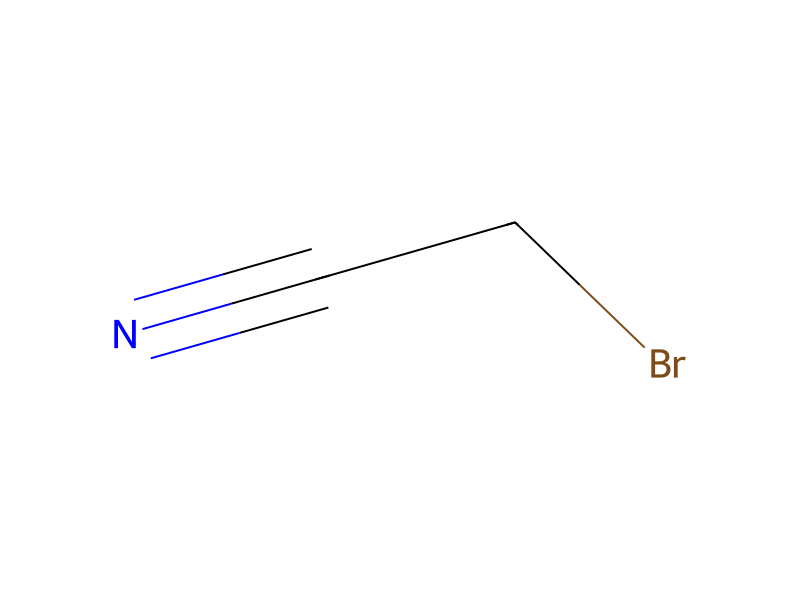
[CH3:1][O:2][C:3]1[CH:4]=[CH:5][C:6]2[O:11][CH2:10][CH2:9][NH:8][C:7]=2[CH:12]=1.C(=O)([O-])[O-].[K+].[K+].Br[CH2:20][C:21]#[N:22]>O.[Br-].C([N+](CCCC)(CCCC)CCCC)CCC>[CH3:1][O:2][C:3]1[CH:4]=[CH:5][C:6]2[O:11][CH2:10][CH2:9][N:8]([CH2:20][C:21]#[N:22])[C:7]=2[CH:12]=1The compound obtained in Step D (400 mg; 2.42 mmol) is suspended in 10 ml of water. Potassium carbonate (10 eq.; 24.2 mmol; 3.35 g), tetrabutylammonium bromide (0.05 eq.; 0.12 mmol; 40 mg) and bromoacetonitrile (8 eq.; 19.37 mmol; 1.35 ml) are then added. The mixture is stirred vigorously for 12 hours at 70° C. After returning to ambient temperature, the product formed is extracted with dichloromethane. The organic phase is dried over MgSO4, filtered, and then concentrated under reduced pressure. The residue obained is purified by flash chromatography on silica gel (eluant: PE/AcOEt (1/1)). The title product is obtained in the form of a solid.
Loading…