HomeMCPWorkbenchSkills
HomeWorkbenchNotificationsMe
llms.txt · MCP GuidePrivacy Policy · Terms of Service · Supportv1.8.3
  1. Home
  2. /Reaction

Hydrochloric Acid → (2-Bromophenyl)[di(1-naphthyl)]phosphine

HRID 1168636
Print

Reaction equation

HRID 1168636 reaction equation
[C:1]1([PH:11][C:12]2[C:21]3[C:16](=[CH:17][CH:18]=[CH:19][CH:20]=3)[CH:15]=[CH:14][CH:13]=2)[C:10]2[C:5](=[CH:6][CH:7]=[CH:8][CH:9]=2)[CH:4]=[CH:3][CH:2]=1.C(=CC(C=CC1C=CC=CC=1)=O)C1C=CC=CC=1.C1(P(CCC)C2C=CC=CC=2)C=CC=CC=1.FC(F)(F)S(O[C:62]1[CH:67]=[CH:66][CH:65]=[CH:64][C:63]=1[Br:68])(=O)=O.C(N(C(C)C)CC)(C)C.Cl>C1(C)C=CC=CC=1>[Br:68][C:63]1[CH:64]=[CH:65][CH:66]=[CH:67][C:62]=1[P:11]([C:12]1[C:21]2[C:16](=[CH:17][CH:18]=[CH:19][CH:20]=2)[CH:15]=[CH:14][CH:13]=1)[C:1]1[C:10]2[C:5](=[CH:6][CH:7]=[CH:8][CH:9]=2)[CH:4]=[CH:3][CH:2]=1


ParticipantsProcedureWorkupSources & evidenceReaction notes

Participants

8

Reactant 6

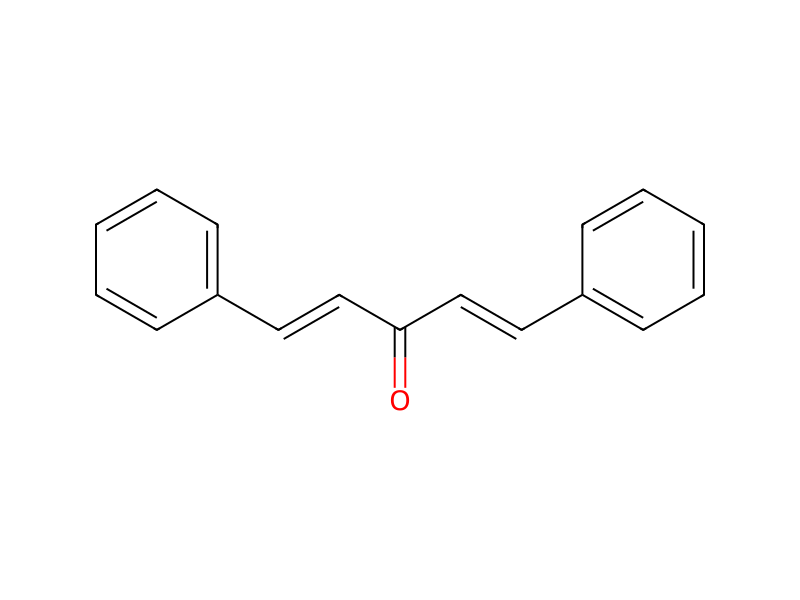
HCID 313Hydrochloric AcidHCID 81531DiisopropylethylamineHCID 82100DiphenylpropylphosphineHCID 95417Dibenzylidene acetoneHCID 11737740Di-1-naphthalenylphosphineHCID 149827202-Bromophenyl Trifluoromethanesulfonate

Product 1

HCID 11201532
(2-Bromophenyl)[di(1-naphthyl)]phosphine
Yield 49.2%

Reagents, catalysts & solvents 1

HCID 1140TolueneSolvent

Procedure

Into a four-neck flask were weighed 16.89 g (59.0 mmol) of di(1-naphthyl)phosphine, 1.27 g (2.5 mmol) of Pd2(dba)3CHCl3 (dba represents dibenzylideneacetone), and 1.01 g (2.5 mmol) of diphenylphosphinopropane. The atmosphere of the reaction vessel fitted with a thermometer, a condenser tube, and a dropping funnel with a pressure-equalizing tube was completely replaced with nitrogen. Thereto were added 150 mL of toluene, 15.00 g (49.2 mmol) of 2-(trifluoromethanesulfonyl)oxy-bromobenzene (5), and 9.53 g (73.8 mmol) of diisopropylethylamine, followed by 16 hours of heating at reflux. After the completion of the reaction, the reaction mixture was cooled to room temperature and poured into 150 mL of 5% hydrochloric acid aqueous solution. After 30 minutes of stirring, the layers were separated from each other. The organic layer was washed with water and saturated saline and dried over anhydrous magnesium sulfate. Toluene was removed by evaporation and the residue was purified by silica gel column chromatography to obtain the title compound (10.68 g, a pale yellow solid). Yield 49.2%.

Workup

  1. customInto a four-neck flask were weighed
  2. customThe atmosphere of the reaction vessel fitted with a thermometer, a condenser tube, and a dropping funnel with a pressure-equalizing tube
  3. temperatureof heating
  4. temperatureat reflux
  5. customAfter the completion of the reaction
  6. customthe layers were separated from each other
  7. washThe organic layer was washed with water and saturated saline
  8. dry with materialdried over anhydrous magnesium sulfate
  9. customToluene was removed by evaporation
  10. customthe residue was purified by silica gel column chromatography

Sources & evidence

ORD record
ord-07dbfbf7c09447ed8cd0df60b0e9718b
Source dataset
uspto-grants-2003_09
DOI
10.6084/m9.figshare.5104873.v1
Patent number
US06624320B2

Reaction notes

On this pageParticipantsProcedureWorkupSources & evidenceReaction notes