Reaction equation
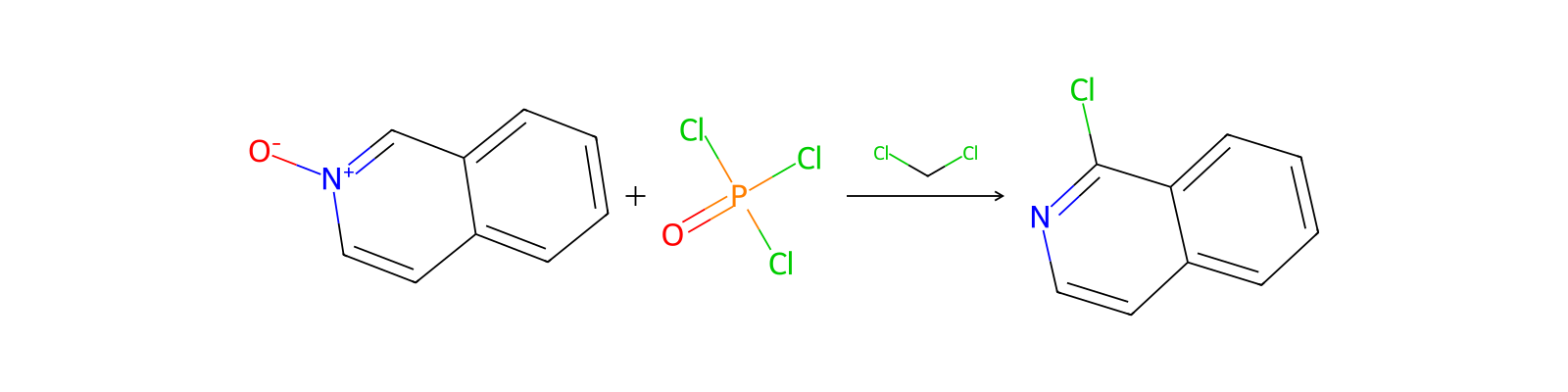
[CH:1]1[C:10]2[C:5](=[CH:6][CH:7]=[CH:8][CH:9]=2)[CH:4]=[CH:3][N+:2]=1[O-].P(Cl)(Cl)([Cl:14])=O>ClCCl>[Cl:14][C:1]1[C:10]2[C:5](=[CH:6][CH:7]=[CH:8][CH:9]=2)[CH:4]=[CH:3][N:2]=1Participants
4
Reactant 2

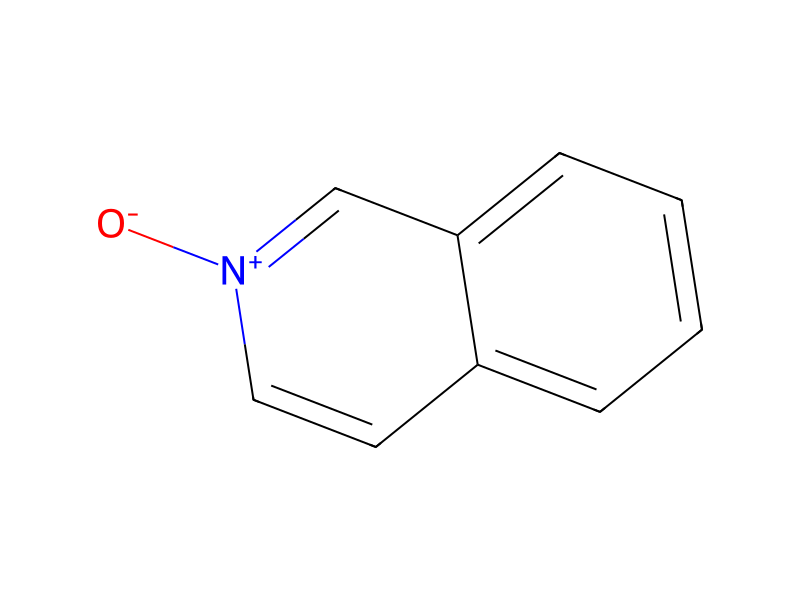
Product 1

Reagents, catalysts & solvents 1

Procedure
A solution of isoquinoline-N-oxide (5.52 g, 38 mmol) in dichloromethane (50 ml) was added over 15 minutes to a solution of phosphorus oxychloride (40 ml) in dichloromethane (50 ml) at room temperature. The mixture was stirred for 1 hour, then heated to reflux for 2 hours. After cooling to room temperature, the mixture was poured into ice water (500 ml). The mixture was then extracted with dichloromethane (2×250 ml) and the combined organic layers were washed with 10% aqueous potassium carbonate solution (200 ml), brine (200 ml) then dried (Na2SO4) and evaporated to give the title compound (5.0 g).
Workup
- temperatureheated
- temperatureto reflux for 2 hours
- extractionThe mixture was then extracted with dichloromethane (2×250 ml)
- washthe combined organic layers were washed with 10% aqueous potassium carbonate solution (200 ml), brine (200 ml)
- dry with materialthen dried (Na2SO4)
- customevaporated
Sources & evidence
- ORD record
- ord-b036090dc2e549a78f27e7912803a8ce
- Source dataset
- uspto-grants-2007_10
- Patent number
- US07285563B2
Linked notes
Loading…