HomeMCPWorkbenchSkills
HomeWorkbenchNotificationsMe
llms.txt · MCP GuidePrivacy Policy · Terms of Service · Supportv1.8.3
  1. Home
  2. /Reaction

Dimethylformamide → 5-bromo-1-methyl-3-(pyrimidin-4-ylamino)pyridin-2(1H)-one

HRID 1185056
Print

Reaction equation

HRID 1185056 reaction equation
Br[C:2]1[C:3](=[O:10])[N:4]([CH3:9])[CH:5]=[C:6]([Br:8])[CH:7]=1.N[C:12]1[N:17]=[CH:16][CH:15]=[CH:14][N:13]=1.C(=O)([O-])[O-].[Cs+].[Cs+].CC1(C)C2C(=C(P(C3C=CC=CC=3)C3C=CC=CC=3)C=CC=2)OC2C(P(C3C=CC=CC=3)C3C=CC=CC=3)=CC=CC1=2.C[N:67](C=O)C>C(Cl)Cl.CO.O.C1C=CC(/C=C/C(/C=C/C2C=CC=CC=2)=O)=CC=1.C1C=CC(/C=C/C(/C=C/C2C=CC=CC=2)=O)=CC=1.C1C=CC(/C=C/C(/C=C/C2C=CC=CC=2)=O)=CC=1.[Pd].[Pd].O1CCOCC1>[Br:8][C:6]1[CH:7]=[C:2]([NH:67][C:14]2[CH:15]=[CH:16][N:17]=[CH:12][N:13]=2)[C:3](=[O:10])[N:4]([CH3:9])[CH:5]=1
ParticipantsConditionsProcedureWorkupSources & evidenceReaction notes

Participants

10

Reactant 5

HCID 6228DimethylformamideHCID 79782-AminopyrimidineHCID 10796Cesium carbonateHCID 6360441,1'-(9,9-Dimethyl-9H-xanthene-4,5-diyl)bis(1,1-diphenylphosphine)HCID 36143503,5-Dibromo-1-methylpyridin-2(1H)-one

Product 1

HCID 58044094
5-bromo-1-methyl-3-(pyrimidin-4-ylamino)pyridin-2(1H)-one
Yield 58%

Reagents, catalysts & solvents 4

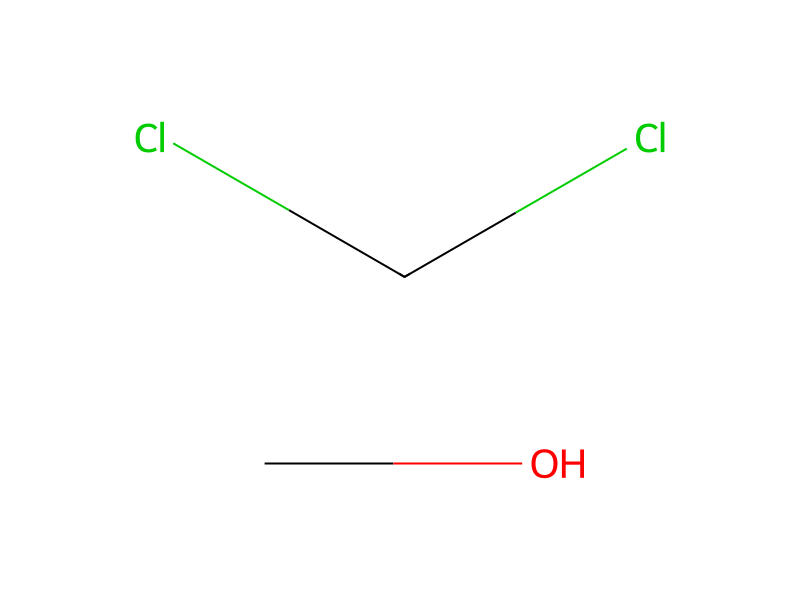
HCID 9811564Bis(dibenzylideneacetone)palladiumCatalystHCID 962WaterSolventHCID 312751,4-DioxaneSolventHCID 21226129Dichloromethane methanolSolvent

Conditions

Temperature
100 °C

Procedure

A 100-mL single-neck round-bottomed flask equipped with a magnetic stirrer and nitrogen inlet was charged with 3,5-dibromo-1-methylpyridin-2(1H)-one (2.00 g, 21.0 mmol), 2-aminopyrimidine (5.61 g, 21.0 mmol), cesium carbonate (13.7 g, 42.1 mmol), DMF (5 mL) and 1,4-dioxane (70 mL). After bubbling nitrogen through the resulting suspension for 30 min, Xantphos (1.10 g, 1.89 mmol) and tris(dibenzylideneacetone)dipalladium(0) (963 mg, 1.05 mmol) were added. A reflux condenser was attached to the flask, and the reaction mixture was heated at 100° C. for 4 h. After this time, the mixture was cooled to room temperature and diluted with 90:10 methylene chloride/methanol (150 mL) and water (100 mL), and the layers were separated. The aqueous layer was extracted with 90:10 methylene chloride/methanol (50 mL), and the combined organic layers were washed with brine and dried over sodium sulfate. The drying agent was removed by filtration. The filtrate was concentrated under reduced pressure, and the resulting residue was purified by flush column chromatography (silica, 90:10 methylene chloride/methanol) to afford 113a in 58% yield (3.42 g) as an amorphous light green solid: mp 217-219° C.; 1H NMR (500 MHz, CDCl3) δ 9.29 (s, 1H), 8.77 (s, 1H), 8.72 (d, J=2.5 Hz, 1H), 8.36 (d, J=6.0 Hz, 1H), 7.69 (d, J=2.5 Hz, 1H), 7.37 (dd, J=5.5, 1.0 Hz, 1H), 3.53 (s, 3H); MS (ESI+) m/z 281.0 (M+H).


Workup

  1. customA 100-mL single-neck round-bottomed flask equipped with a magnetic stirrer and nitrogen inlet
  2. customAfter bubbling nitrogen through the resulting suspension for 30 min
  3. customA reflux condenser was attached to the flask
  4. temperatureAfter this time, the mixture was cooled to room temperature
  5. customthe layers were separated
  6. extractionThe aqueous layer was extracted with 90:10 methylene chloride/methanol (50 mL)
  7. washthe combined organic layers were washed with brine
  8. dry with materialdried over sodium sulfate
  9. customThe drying agent was removed by filtration
  10. concentrationThe filtrate was concentrated under reduced pressure
  11. customthe resulting residue was purified
  12. customby flush column chromatography (silica, 90:10 methylene chloride/methanol)

Sources & evidence

ORD record
ord-06ffa627917e47628c0377729fdc19bf
Source dataset
uspto-grants-2014_03
DOI
10.6084/m9.figshare.5104873.v1
Patent number
US08669251B2

Reaction notes

On this pageParticipantsConditionsProcedureWorkupSources & evidenceReaction notes