1-Bromo-3-chloropropane → 4-(3-Chloropropoxy)-3-methoxybenzeneacetic acid ethyl ester
Reaction equation

[C:1]([O:13][CH2:14][CH3:15])(=[O:12])[CH2:2][C:3]1[CH:11]=[CH:10][C:8]([OH:9])=[C:5]([O:6][CH3:7])[CH:4]=1.Br[CH2:17][CH2:18][CH2:19][Cl:20].C(=O)([O-])[O-].[K+].[K+]>CC(C)=O>[CH2:14]([O:13][C:1](=[O:12])[CH2:2][C:3]1[CH:11]=[CH:10][C:8]([O:9][CH2:17][CH2:18][CH2:19][Cl:20])=[C:5]([O:6][CH3:7])[CH:4]=1)[CH3:15]Participants
5
Reactant 3


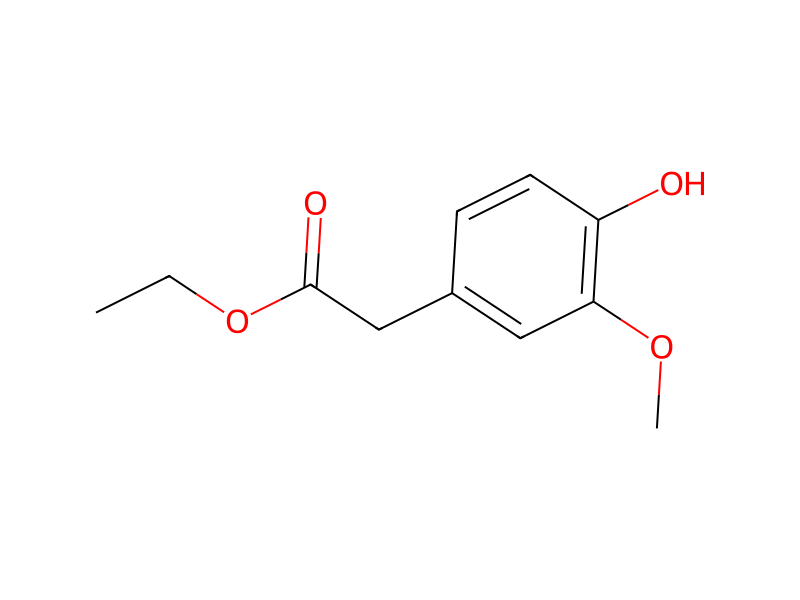
Product 1

Reagents, catalysts & solvents 1

Procedure
A mixture of 50 g (0.238 mole) of ethyl homovanillate, 75 g (0.476 mole) of 1-bromo-3-chloropropane and 98.7 g (0.71 mole) of anhydrous potassium carbonate in 1 liter of acetone was heated at reflux for 24 hr. The mixture was filtered and the filtrate was concentrated under reduced pressure to give an oil which gradually crystallized to a semi-solid. The solid was recrystallized from ethyl ether-petroleum ether (30°-60° C.) to yield 44.4 g (65%) of white solid, m.p. 36°-38° C.
Workup
- temperaturewas heated
- temperatureat reflux for 24 hr
- filtrationThe mixture was filtered
- concentrationthe filtrate was concentrated under reduced pressure
- customto give an oil which
- customgradually crystallized to a semi-solid
- customThe solid was recrystallized from ethyl ether-petroleum ether (30°-60° C.)
Sources & evidence
- ORD record
- ord-5fc14b69f2cf4e82b434f8b3c23df8ee
- Source dataset
- uspto-grants-1989_03
- Patent number
- US04810713
Reaction notes
Loading…