Reaction equation

[CH:1]1[C:14]2[C:13](=O)[C:12](=O)[C:11]3[C:6](=[CH:7][CH:8]=[CH:9][CH:10]=3)[C:5]=2[CH:4]=[CH:3][CH:2]=1.C[Si]([N-:21][Si:22]([CH3:25])([CH3:24])[CH3:23])(C)C.[Na+].C1(=O)C2C=CC3C(=CC=CC=3)C=2C=CC1=O.C1(=N)C2C=CC3C(=CC=CC=3)C=2C=CC1=N.[Cl-]>>[CH3:23][Si:22]([N:21]=[C:13]1[C:12](=[N:21][Si:22]([CH3:23])([CH3:24])[CH3:25])[C:11]2[CH:10]=[CH:9][CH:8]=[CH:7][C:6]=2[C:5]2[C:14]1=[CH:1][CH:2]=[CH:3][CH:4]=2)([CH3:25])[CH3:24]Participants
6


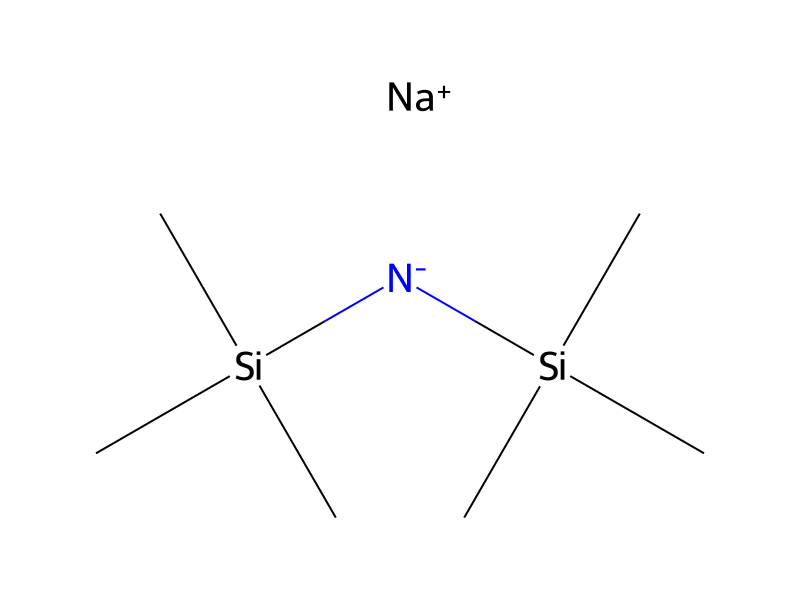


Procedure
Ligand Synthesis. 9,10-Phenanthrenequinone bis((trimethylsilyl)-imine) (silylphi) was synthesized from 9,10-phenanthrenequinone (Aldrich) and sodium bis(trimethylsilyl)amide (Fluka) as described by Tuchtenhagan and Ruhlmann. (11) Important modifications to this synthesis include a reaction temperature of no greater than 65° C. and a final phenanthrenequinone concentration of 0.08 M. Under these conditions, orange crystalline silylphi was obtained in 37% yield and stored under nitrogen. The phenanthrenequinone diimine ligand (phi) was generated and chelated in situ by combining the silylated imine ligand with an ethanolic solution of metal chloride by using a modificaiton of Schlosser's method. (12)
Workup
- customLigand Synthesis
- customa reaction temperature of no greater than 65° C.
- customUnder these conditions, orange crystalline silylphi was obtained in 37% yield
Sources & evidence
- ORD record
- ord-0f445a9289244094b55915f4cb38ef55
- Source dataset
- uspto-grants-1992_05
- Patent number
- US05112974
Linked notes
Loading…