Diphosgene → 4-Chloro-5-cyclopentyloxy-2-fluorophenylisocyanate
HRID 1198783
Reaction equation

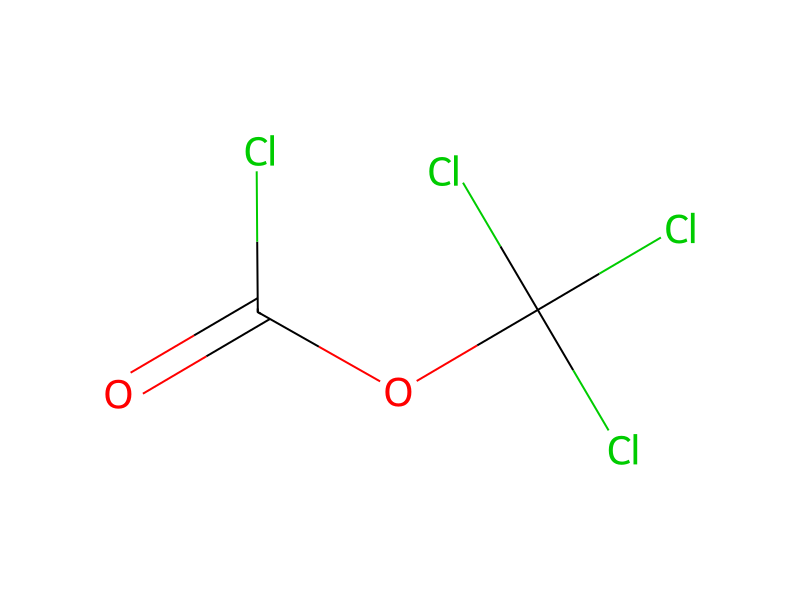
Cl[C:2](OC(Cl)(Cl)Cl)=[O:3].[F:9][C:10]1[CH:16]=[C:15]([Cl:17])[C:14]([O:18][CH:19]2[CH2:23][CH2:22][CH2:21][CH2:20]2)=[CH:13][C:11]=1[NH2:12]>C(OCC)(=O)C>[F:9][C:10]1[CH:16]=[C:15]([Cl:17])[C:14]([O:18][CH:19]2[CH2:23][CH2:22][CH2:21][CH2:20]2)=[CH:13][C:11]=1[N:12]=[C:2]=[O:3]Participants
4
Reactant 2

Product 1

Reagents, catalysts & solvents 1

Procedure
An ethyl acetate solution (5 ml) of trichloromethyl chloroformate (2.00 g, 10.0 mmol) was gradually dropwise added to an ethyl acetate solution (25 ml) of 2-fluoro-4-chloro-5-cyclopentyloxyaniline (2.30 g, 10.0 mmol) at room temperature. After addition, the whole was heated to remove ethyl acetate therefrom by distillation. As a result, 2-fluoro-4-chloro-5-cyclopentyloxyphenylisocyanate was obtained almost quantitatively.