tert-Butyl methyl ether → HCID 19867317, compound
Reaction equation

[Br:1][C:2]1[CH:7]=[CH:6][C:5]([C:8]2[CH:13]=[CH:12][C:11]([CH2:14][CH2:15][CH2:16][CH:17]=O)=[CH:10][N:9]=2)=[CH:4][CH:3]=1.[CH3:19]OC(C)(C)C>[Br-].C[P+](C1C=CC=CC=1)(C1C=CC=CC=1)C1C=CC=CC=1>[Br:1][C:2]1[CH:7]=[CH:6][C:5]([C:8]2[CH:13]=[CH:12][C:11]([CH2:14][CH2:15][CH2:16][CH:17]=[CH2:19])=[CH:10][N:9]=2)=[CH:4][CH:3]=1Participants
4
Reactant 2


Product 1

Reagents, catalysts & solvents 1
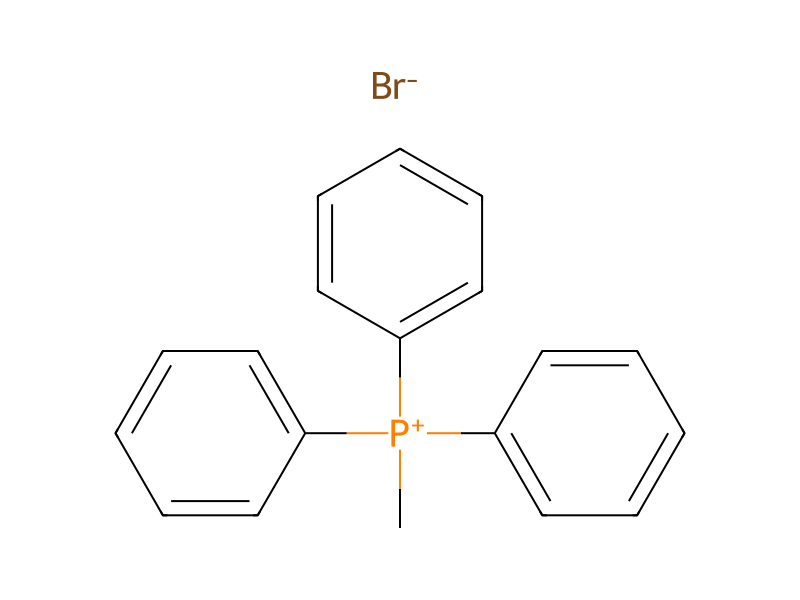
Procedure
A suspension of 6.64 g of methyltriphenylphosphonium bromide in 80 ml of t-butyl methyl ether in a sulphonation flask fitted with a mechanical stirrer is treated while gassing with argon at -10° C. within 3 minutes with 2.12 g of solid potassium t-butylate. The mixture is stirred at room temperature for a further 1 hour, then treated at 0° C. within 5 minutes with a solution of 3.61 g of 4-[2-(p-bromophenyl)- -5-pyridyl]butyraldehyde in 20 ml of t-butyl methyl ether and stirred at room temperature for a further 15 hours. The reaction mixture is subsequently partitioned three times in diethyl ether/water. The organic extracts are washed twice with water, dried over magnesium sulphate, filtered and evaporated. The residue is taken up in ethyl acetate and then the mixture is diluted with petroleum ether and filtered. Evaporation of the filtrate and purification of the residue by chromatography on silica gel gives 2-(p-bromophenyl)-5-(4-pentenyl)pyridine.