Chloroacetyl chloride → 2-Chloro-N-(2-(3,4-dimethoxy-phenyl)-ethyl)-acetamide
HRID 1198918
Reaction equation

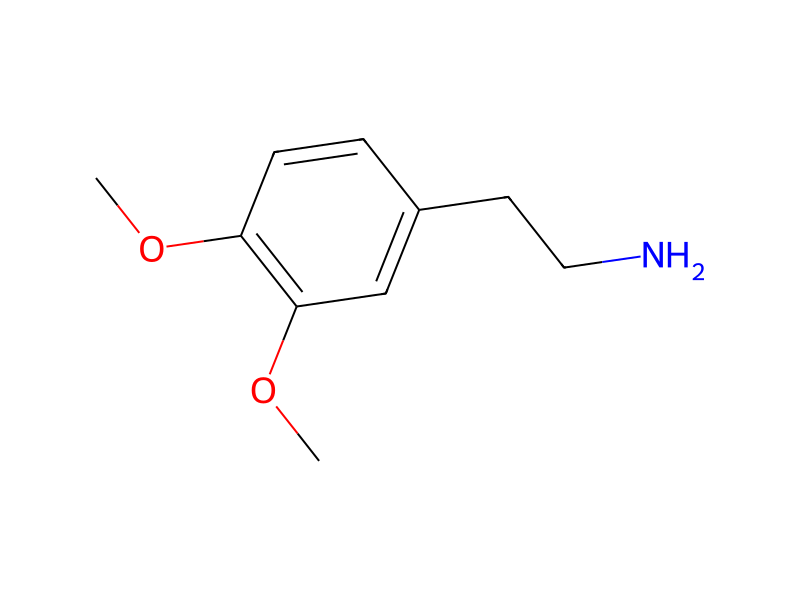
C(N(CC)CC)C.[CH3:8][O:9][C:10]1[CH:11]=[C:12]([CH2:18][CH2:19][NH2:20])[CH:13]=[CH:14][C:15]=1[O:16][CH3:17].[Cl:21][CH2:22][C:23](Cl)=[O:24]>C(Cl)Cl>[Cl:21][CH2:22][C:23]([NH:20][CH2:19][CH2:18][C:12]1[CH:13]=[CH:14][C:15]([O:16][CH3:17])=[C:10]([O:9][CH3:8])[CH:11]=1)=[O:24]Participants
5
Reactant 3


Product 1

Reagents, catalysts & solvents 1

Procedure
4.5 ml of triethylamine were added to a solution of 5.11 g of 2-(3,4-dimethoxyphenyl)ethylamine dissolved in 35 ml of methylene chloride, and the mixture was stirred, whilst ice-cooling. 2.4 ml of chloroacetyl chloride were then added dropwise to the mixture over a period of 5 minutes, after which the mixture was stirred for 15 minutes, whilst ice-cooling. The reaction mixture was then concentrated by evaporation under reduced pressure, and ethyl acetate was added to the resulting residue. The ethyl acetate solution was washed, in turn, with water, with a 5% w/v aqueous solution of sodium bicarbonate, with 10% w/v aqueous hydrochloric acid and with a saturated aqueous solution of sodium chloride. It was then dried, and the solvent was distilled off under reduced pressure. The residue was recrystallized from a mixture of ethyl acetate and hexane, to give 5.77 g of the title compound as pale yellow-brown, feather-like crystals melting at 92-94° C.