HomeMCPWorkbenchSkills
HomeWorkbenchNotificationsMe
llms.txt · MCP GuidePrivacy Policy · Terms of Service · Supportv1.8.0
  1. Home
  2. /Reaction

1-Heptyne → 1-Chloro-6-(1-pentynyl)-2-naphthol

HRID 11990
Notes
Print preview

Reaction equation

HRID 11990 reaction equation
[Cl:1][C:2]1[C:11]2[C:6](=[CH:7][C:8](Br)=[CH:9][CH:10]=2)[CH:5]=[CH:4][C:3]=1[OH:13].[CH:14]#[C:15][CH2:16][CH2:17][CH2:18]CC>Cl[Pd](Cl)([P](C1C=CC=CC=1)(C1C=CC=CC=1)C1C=CC=CC=1)[P](C1C=CC=CC=1)(C1C=CC=CC=1)C1C=CC=CC=1.[Cu](I)I.C(N(CC)CC)C>[Cl:1][C:2]1[C:11]2[C:6](=[CH:7][C:8]([C:14]#[C:15][CH2:16][CH2:17][CH3:18])=[CH:9][CH:10]=2)[CH:5]=[CH:4][C:3]=1[OH:13]
ParticipantsProcedureWorkupSources & evidenceReaction notes

Participants

6

Reactant 2

HCID 123501-HeptyneHCID 220481596-Bromo-1-chloronaphthalen-2-ol

Product 1

HCID 673574061-Chloro-6-(1-pentynyl)-2-naphtholYield 88.7%

Reagents, catalysts & solvents 3

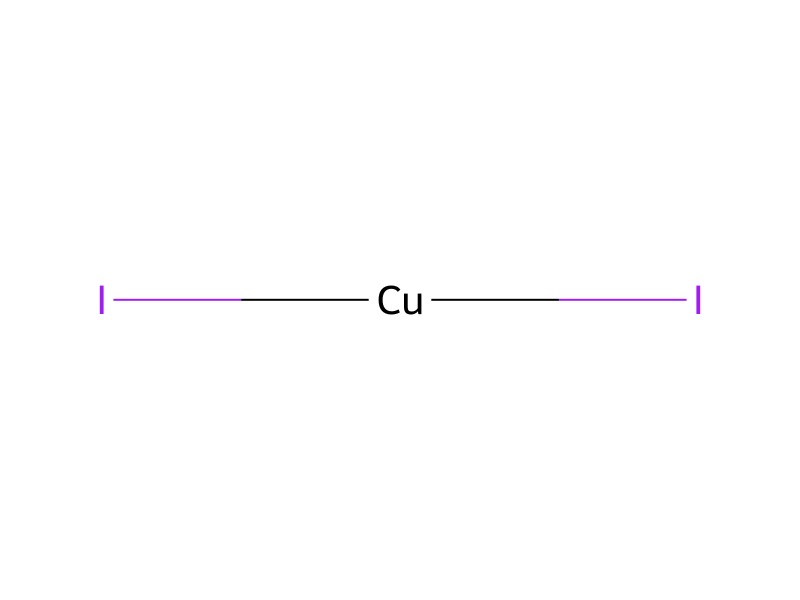
HCID 83717Copper iodideCatalystHCID 178418476HCID 178418476, compoundCatalyst
HCID 8471
Triethylamine
Solvent

Procedure

The synthesis of (S7-3) was carried out following the method described in Synthesis, No. 9, 1439 (2004). At first, 38.3 g of 1-chloro-6-bromo-2-naphthol (S1-2), 5.2 g of PdCl2(PPh3)2, 0.71 g of copper iodide and 400 ml of triethylamine were added to a reactor in nitrogen atmosphere, stirred at room temperature, added with 35.8 g of 1-heptyne (S7-2) and then refluxed for 6 hours. The reaction solution was cooled to room temperature and distilled under a reduced pressure to remove the solvent, and then the residue was added with ethyl acetate and filtered by celite. The resulting solution was washed with 1N HCl(aq) and water, and dried over anhydrous magnesium sulfate. The solvent was removed by distillation under a reduced pressure. The residue was purified by silica gel column chromatography using heptane/ethyl acetate=3/1 as an eluting solvent and dried under a reduced pressure to obtain 32.3 g of 1-chloro-6-(1-pentynyl)-2-naphthol (S7-3).

Workup

  1. customThe synthesis of (S7-3)
  2. customdescribed in Synthesis
  3. temperaturerefluxed for 6 hours
  4. temperatureThe reaction solution was cooled to room temperature
  5. distillationdistilled under a reduced pressure
  6. customto remove the solvent
  7. additionthe residue was added with ethyl acetate
  8. filtrationfiltered by celite
  9. washThe resulting solution was washed with 1N HCl(aq) and water
  10. dry with materialdried over anhydrous magnesium sulfate
  11. customThe solvent was removed by distillation under a reduced pressure
  12. customThe residue was purified by silica gel column chromatography
  13. customdried under a reduced pressure

Sources & evidence

ORD record
ord-36825357a8654c3ebe21c8be8ba058ad
Source dataset
uspto-grants-2010_06
DOI
10.6084/m9.figshare.5104873.v1
Patent number
US07727417B2

Reaction notes

Loading…

On this pageParticipantsProcedureWorkupSources & evidenceReaction notes