Reaction equation
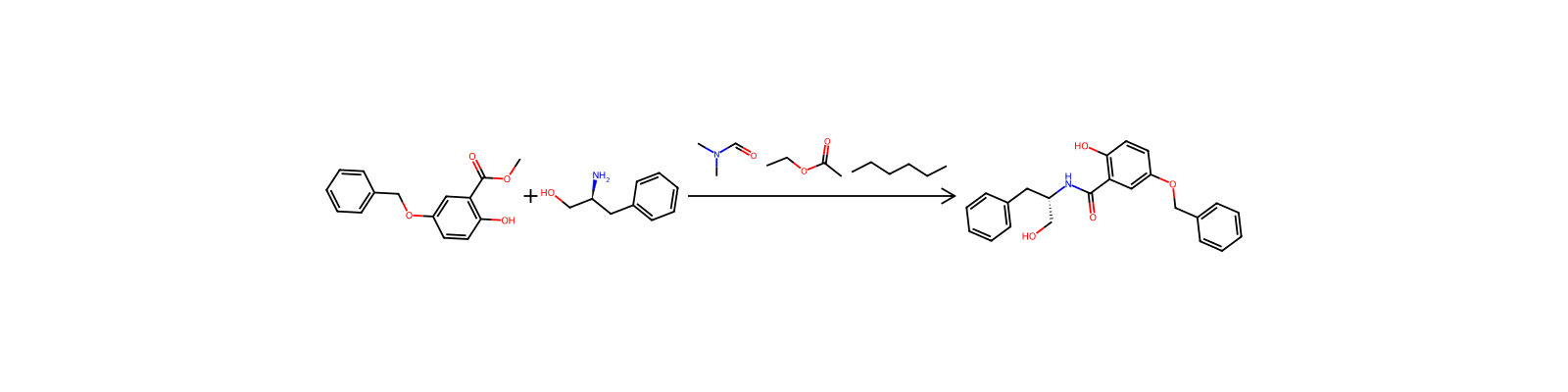
[CH2:1]([O:8][C:9]1[CH:10]=[CH:11][C:12]([OH:19])=[C:13]([CH:18]=1)[C:14]([O:16]C)=O)[C:2]1[CH:7]=[CH:6][CH:5]=[CH:4][CH:3]=1.[NH2:20][C@@H:21]([CH2:24][C:25]1[CH:30]=[CH:29][CH:28]=[CH:27][CH:26]=1)[CH2:22][OH:23]>CN(C)C=O.C(OCC)(=O)C.CCCCCC>[OH:23][CH2:22][C@@H:21]([NH:20][C:14](=[O:16])[C:13]1[CH:18]=[C:9]([O:8][CH2:1][C:2]2[CH:3]=[CH:4][CH:5]=[CH:6][CH:7]=2)[CH:10]=[CH:11][C:12]=1[OH:19])[CH2:24][C:25]1[CH:26]=[CH:27][CH:28]=[CH:29][CH:30]=1Participants
6




Procedure
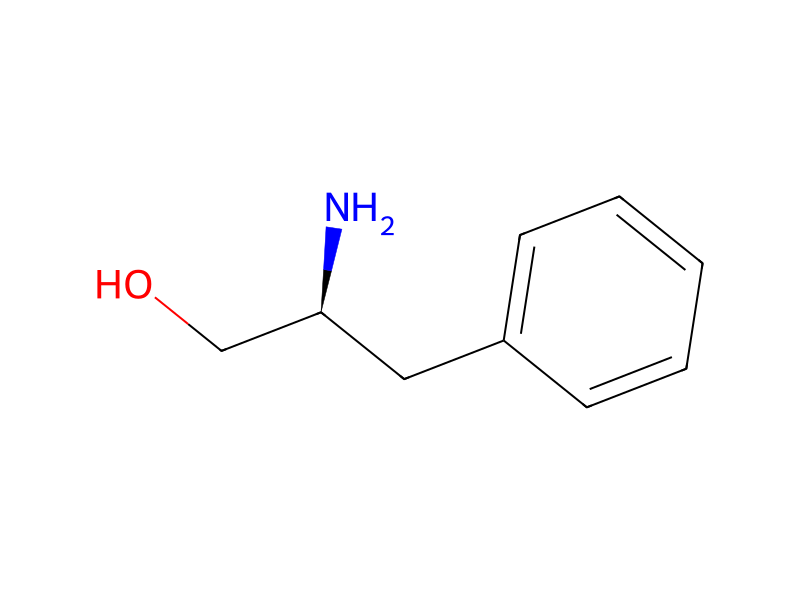
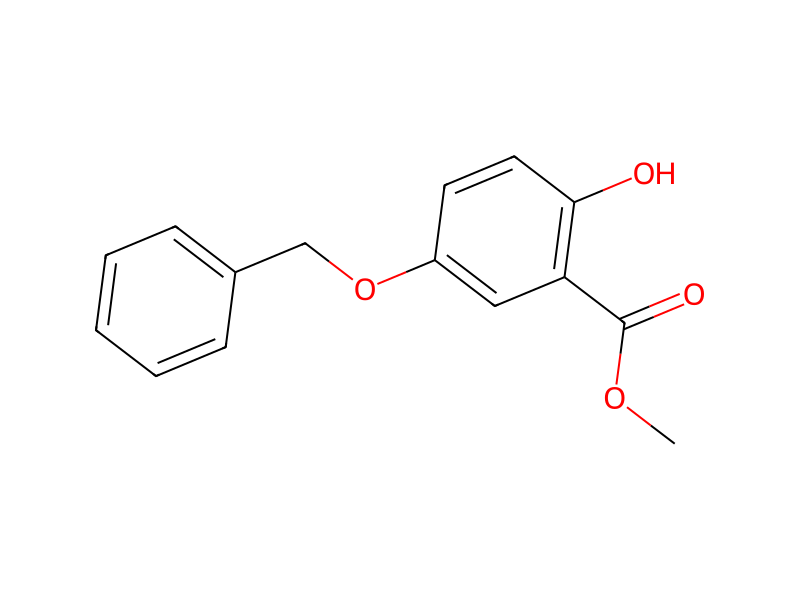
In a flask equipped with a reflux condenser and a magnetic stirring bar are dissolved the methyl 5-benzyloxy-2-hydroxybenzoate and one equivalent of 2-(S)-amino-3-phenyl-1-propanol in dry dimethyl formamide. The flask is immersed in an oil bath at 75° C. and left to stir for 72 hours. The solvent is evaporated and the residue is isolated through the use of a silica gel column using a mixture of ethyl acetate and hexane as eluent. In this fashion is obtained in 50% yield, N-{(S)-1-hydroxy-3-phenyl-2-propyl}-5-benzyloxy-2-hydroxybenzamide.
Workup
- customIn a flask equipped with a reflux condenser and a magnetic stirring bar
- customThe flask is immersed in an oil bath at 75° C.
- waitleft
- customThe solvent is evaporated
- customthe residue is isolated through the use of a silica gel column
Sources & evidence
- ORD record
- ord-e69800c873b74ff8b817a59654fbcfe9
- Source dataset
- uspto-grants-2006_10
- Patent number
- US07119068B2
Linked notes
Loading…