HomeMCPWorkbenchSkills
HomeWorkbenchNotificationsMe
llms.txt · MCP GuidePrivacy Policy · Terms of Service · Supportv1.8.0
  1. Home
  2. /Reaction

Potassium Phosphate, Tribasic → (1,1'-Biphenyl)-3-ol, 4-nitro-

HRID 1244176
Notes
Print preview

Reaction equation

HRID 1244176 reaction equation
Cl[C:2]1[CH:7]=[CH:6][C:5]([N+:8]([O-:10])=[O:9])=[C:4]([O:11]COCC)[CH:3]=1.[C:16]1(OB(O)O)[CH:21]=[CH:20][CH:19]=[CH:18][CH:17]=1.C1(P(C2CCCCC2)C2C=CC=CC=2C2C=CC=CC=2)CCCCC1.P([O-])([O-])([O-])=O.[K+].[K+].[K+]>C1(C)C=CC=CC=1.C([O-])(=O)C.[Pd+2].C([O-])(=O)C.C(OCC)(=O)C>[N+:8]([C:5]1[CH:6]=[CH:7][C:2]([C:16]2[CH:21]=[CH:20][CH:19]=[CH:18][CH:17]=2)=[CH:3][C:4]=1[OH:11])([O-:10])=[O:9]
ParticipantsConditionsProcedureWorkupSources & evidenceReaction notes

Participants

8

Reactant 4

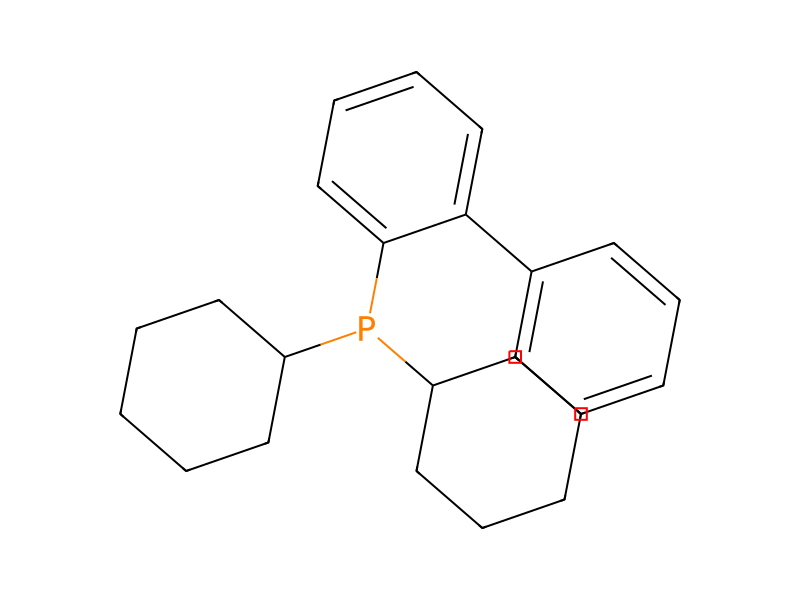
HCID 62657Potassium Phosphate, TribasicHCID 78412Phenyl dihydrogen orthoborateHCID 27342162-(Dicyclohexylphosphino)biphenylHCID 129947144-Chloro-2-(ethoxymethoxy)-1-nitrobenzene

Product 1

HCID 87437(1,1'-Biphenyl)-3-ol, 4-nitro-

Reagents, catalysts & solvents 3

HCID 167845
palladium(II) acetate
Catalyst
HCID 1140TolueneSolvent
HCID 8857Ethyl AcetateSolvent

Conditions

Temperature
80 °C

Procedure

9.3 g (40 mmol) of 4-chloro-2-(ethoxymethoxy)-1-nitrobenzene from step A and 7.3 g (60 mmol) of phenylboric acid were dissolved in 170 mL of toluene under nitrogen. Then, 0.1 g (0.5 mmol) of palladium acetate, 0.35 g (1 mmol) of 2-(dicyclohexylphosphino)biphenyl and 15 g of tripotassium phosphate were added, and the reaction mixture was heated to 80° C. At the end of the reaction, the reaction mixture was poured into 100 mL of ethyl acetate and the organic phase was extracted with dilute sodium hydroxide solution and then dried over magnesium sulfate. The solvent was distilled off in a rotary evaporator, and the residue was purified on silica gel with hexane/ethyl acetate (9:1). The resulting product dissolved in 50 mL of ethanol was heated to 50° C. 80 mL of a 2.9-molar ethanolic hydrochloric acid solution was then added dropwise after which the reaction mixture was cooled to 0° C. The precipitate was filtered off, washed twice with 20-mL portions of ethanol and then dried. This gave 9.35 g of 4-nitro-1,1′-biphenyl-3-ol.


Workup

  1. customAt the end of the reaction
  2. extractionthe organic phase was extracted with dilute sodium hydroxide solution
  3. dry with materialdried over magnesium sulfate
  4. distillationThe solvent was distilled off in a rotary evaporator
  5. customthe residue was purified on silica gel with hexane/ethyl acetate (9:1)
  6. dissolutionThe resulting product dissolved in 50 mL of ethanol
  7. temperaturewas heated to 50° C
  8. addition80 mL of a 2.9-molar ethanolic hydrochloric acid solution was then added dropwise after which the reaction mixture
  9. temperaturewas cooled to 0° C
  10. filtrationThe precipitate was filtered off
  11. washwashed twice with 20-mL portions of ethanol
  12. customdried

Sources & evidence

ORD record
ord-dfa6d512d5ba496cb4854a7d3ae7b3e8
Source dataset
uspto-grants-2006_10
DOI
10.6084/m9.figshare.5104873.v1
Patent number
US07122061B2

Reaction notes

Loading…

On this pageParticipantsConditionsProcedureWorkupSources & evidenceReaction notes