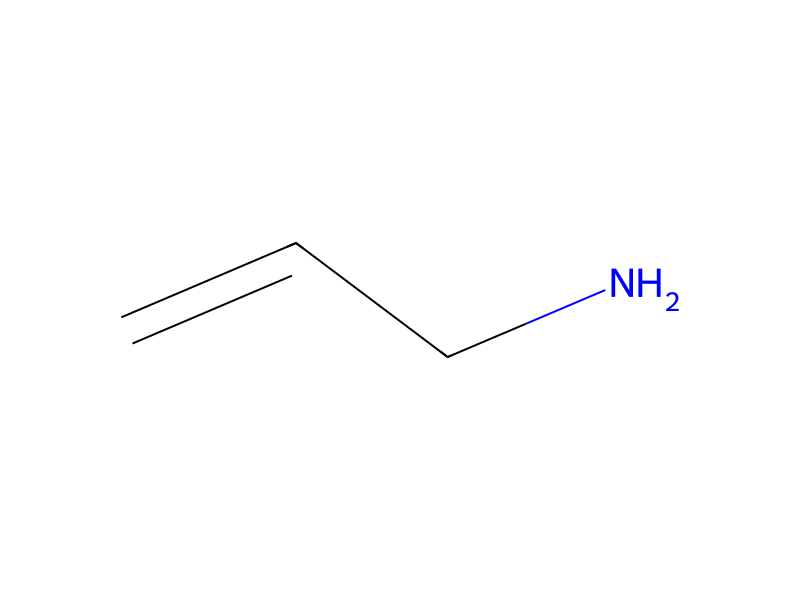
To 311 mg (1.50 mmol) of 6-nitroquinazoline-2,4 (1H,3H)-dione was added 12.80 g (83.47 mmol) of phosphorus oxychloride to effect reaction in the same manner as in Example 10. Next, to the reaction mixture was added dropwise 151 mg (3.00 mmol) of a 70% aqueous ethylamine solution under ice cooling, and the resulting mixture was stirred under ice cooling for 2 hours. Water was added to the reaction mixture, followed by extraction with ethyl acetate, washing with brine and drying over anhydrous sodium sulfate. The solvent was distilled off to obtain 2-chloro-4-ethylamino-6-niroquinazoline. To the compound thus obtained was added 761 mg (13.33 mmol) of allylamine, and the resulting mixture was stirred at room temperature for 3 hours. Water was added to the reaction mixture, followed by extraction with ethyl acetate, washing with brine and drying over anhydrous sodium sulfate. After the solvent was distilled off, the residue was purified by a silica gel column to give 180 mg (yield: 44.1%) of the title compound.