HomeMCPWorkbenchSkills
HomeWorkbenchNotificationsMe
llms.txt · MCP GuidePrivacy Policy · Terms of Service · Supportv1.8.0
  1. Home
  2. /Reaction

5-Bromoindole → N-(2-bromo-4-(1-methylethyl)phenyl)-N-ethyl-4-(5-indolylcarbonyl)-6-methylpyrimidinamine

HRID 1251502
Notes
Print preview

Reaction equation

HRID 1251502 reaction equation
[H-].[K+].Br[C:4]1[CH:5]=[C:6]2[C:10](=[CH:11][CH:12]=1)[NH:9][CH:8]=[CH:7]2.C([Li])(C)(C)C.[Br:18][C:19]1[CH:24]=[C:23]([CH:25]([CH3:27])[CH3:26])[CH:22]=[CH:21][C:20]=1[N:28]([C:31]1[N:36]=[C:35]([C:37](OC)=[O:38])[CH:34]=[C:33]([CH3:41])[N:32]=1)[CH2:29][CH3:30]>CCOCC.C(OCC)(=O)C>[Br:18][C:19]1[CH:24]=[C:23]([CH:25]([CH3:26])[CH3:27])[CH:22]=[CH:21][C:20]=1[N:28]([CH2:29][CH3:30])[C:31]1[N:36]=[C:35]([C:37]([C:4]2[CH:5]=[C:6]3[C:10](=[CH:11][CH:12]=2)[NH:9][CH:8]=[CH:7]3)=[O:38])[CH:34]=[C:33]([CH3:41])[N:32]=1
ParticipantsConditionsProcedureWorkupSources & evidenceReaction notes

Participants

7

Reactant 4

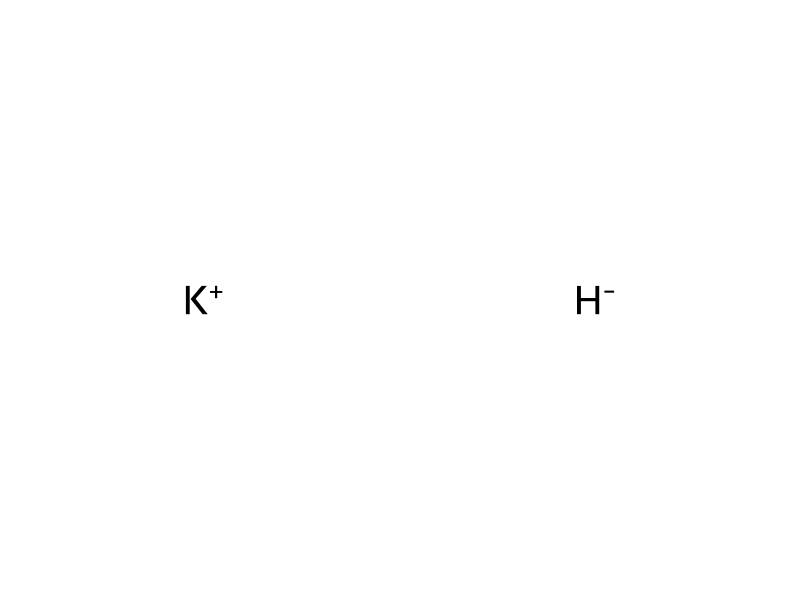
HCID 249055-BromoindoleHCID 82127Potassium hydrideHCID 183237072-(N-(2-bromo-4-(2-propyl)phenyl)-N-ethylamino)-4-carbomethoxy-6-methyl-pyrimidineHCID 178418306HCID 178418306, compound

Product 1

HCID 18323781N-(2-bromo-4-(1-methylethyl)phenyl)-N-ethyl-4-(5-indolylcarbonyl)-6-methylpyrimidinamineYield 24%

Reagents, catalysts & solvents 2

HCID 3283Diethyl EtherSolvent3×HCID 8857Ethyl AcetateSolvent

Conditions

Temperature
0 °C

Procedure

To a suspension of potassium hydride (35% in oil, 0.16 g, 1.4 mmol), washed with hexanes and decanted twice, in anhydrous ether (5 mL), cooled to 0° C. under a nitrogen atmosphere was added a solution of 5-bromoindole (0.27 g, 1.4 mmol) in anhydrous ether. After being stirred for 30 min., the reaction mixture was cooled to −78° C. and transferred via cannula to a pre-cooled (−78° C.) mixture of t-butyl lithium (1.7 M in pentane, 1.6 mL, 2.7 mmol) in dry ether (5 mL). The resulting white suspension was stirred at −78° C. for 30 min and a solution of methyl 2-(N-(2-bromo-4-(1-methylethyl)-phenyl)-N-ethylamino)-6-methyl-4-pyrimidinecarboxylate (Example 18) (0.5 g, 1.25 mmol) in anhydrous ether (5 mL) was added dropwise. After quenching the reaction mixture as in Example 87; it was extracted three times with ethyl acetate, followed by two washings of the combined organic layers with a saturated NaHCO3 solution, drying over MgSO4, filtration and concentration in vacuo to give a dark brown oil. Column chromatography (ethyl acetate: hexanes::1:4) afforded the title product, a light brown solid (140 mg, 24% yield, Rf 0.2): mp 77-79° C.; NMR (DMSO-d6, 400 MHz, 90° C.): 11.6-11.35 (br s, 1H), 8.30 (s, 1H), 7.75 (dd, 1H, J=8, 1), 7.55 (d, 1H, J=1), 7.4-7.35 (m, 2H), 7.35-7.25 (m, 2H), 6.9 (s, 1H), 6.60-6.55 (m, 1H), 4.1-3.7 (m, 2H), 2.95-2.8 (m, 1H), 2.4 (br s, 3H), 1.25-1.1 (m, 9H); Anal (C25H25BrN4O): C, 62.90; H, 5.28; N, 11.74; Br, 16.74; Found: C, 63.13; H, 5.60; N, 11.37; Br, 16.80.

Workup

  1. washwashed with hexanes
  2. customdecanted twice, in anhydrous ether (5 mL)
  3. temperaturethe reaction mixture was cooled to −78° C.
  4. temperaturea pre-cooled
  5. stirringThe resulting white suspension was stirred at −78° C. for 30 min
  6. customAfter quenching the reaction mixture as in Example 87
  7. extractionit was extracted three times with ethyl acetate
  8. dry with materialdrying over MgSO4, filtration and concentration in vacuo
  9. customto give a dark brown oil

Sources & evidence

ORD record
ord-bbbce212ee084037951001db741cf53b
Source dataset
uspto-grants-2002_01
DOI
10.6084/m9.figshare.5104873.v1
Patent number
US06342503B1

Reaction notes

Loading…

On this pageParticipantsConditionsProcedureWorkupSources & evidenceReaction notes