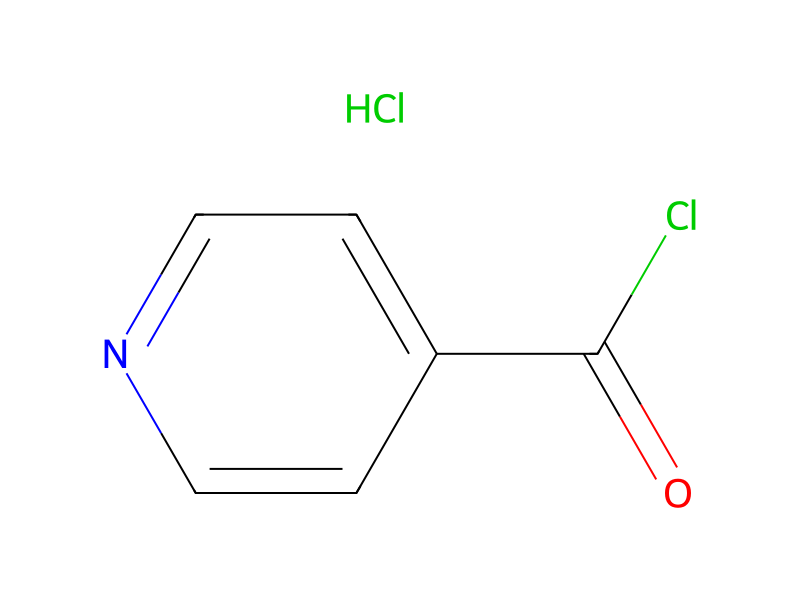
Isonicotinoyl chloride hydrochloride (1.44 g, 8.09 mmol) was stirred in dry dichloromethane (20 ml) and triethylamine (4.0 ml, 2.9 g, 20 mmol) was added. The mixture was stirred at 25° C. for 5-10 minutes, then cooled in an ice bath. 1-Amino-3-phenyl-2-propanone hydrochloride (1.00 g, 5.39 mmol) was added in portions over 4 minutes. The reaction was stirred 0.5 hour while warming to 25° C., then 0.5 hour at 25° C. Water (5-10 ml) was added and the mixture was stirred 5 minutes before being extracted with ethyl acetate (75 ml). The organic layer was washed with saturated aqueous sodium bicabonate (2×35 ml) and saturated aqueous sodium chloride (35 ml), dried (sodium sulfate), decanted, and evaporated. The residue was purified by flash column chromatography on silica gel (50 g) eluted with 5% isopropanol in dichloromethane, yielding N-(3-phenyl-2-oxopropyl)isonicotinamide (1.23 g, 89% yield) as an orange oil which crystallized (m.p. 85°-86° C.) upon standing. Recrystallization of a portion of this material from toluene raised the m.p. to 86°-88° C.