HomeMCPWorkbenchSkills
HomeWorkbenchNotificationsMe
llms.txt · MCP GuidePrivacy Policy · Terms of Service · Supportv1.8.3
  1. Home
  2. /Reaction

Potassium Fluoride → 4-(benzyloxy)-6-(1-methyl-1H-pyrazol-4-yl)pyrazolo[1,5-a]pyridine

HRID 1253541
Print

Reaction equation

HRID 1253541 reaction equation
[CH2:1]([O:8][C:9]1[C:10]2[N:11]([N:16]=[CH:17][CH:18]=2)[CH:12]=[C:13](Br)[CH:14]=1)[C:2]1[CH:7]=[CH:6][CH:5]=[CH:4][CH:3]=1.[CH3:19][N:20]1[CH:24]=[C:23](B2OC(C)(C)C(C)(C)O2)[CH:22]=[N:21]1.[F-].[K+].F[B-](F)(F)F.C([PH+](C(C)(C)C)C(C)(C)C)(C)(C)C>CN(C=O)C.C1C=CC(/C=C/C(/C=C/C2C=CC=CC=2)=O)=CC=1.C1C=CC(/C=C/C(/C=C/C2C=CC=CC=2)=O)=CC=1.C1C=CC(/C=C/C(/C=C/C2C=CC=CC=2)=O)=CC=1.[Pd].[Pd]>[CH2:1]([O:8][C:9]1[C:10]2[N:11]([N:16]=[CH:17][CH:18]=2)[CH:12]=[C:13]([C:23]2[CH:22]=[N:21][N:20]([CH3:19])[CH:24]=2)[CH:14]=1)[C:2]1[CH:7]=[CH:6][CH:5]=[CH:4][CH:3]=1
ParticipantsConditionsProcedureWorkupSources & evidenceReaction notes

Participants

7

Reactant 4

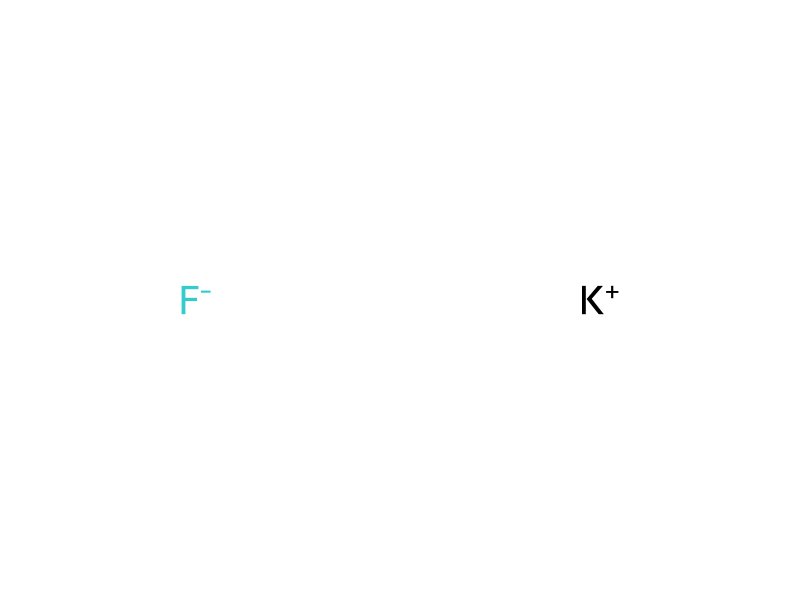
HCID 522689Potassium FluorideHCID 2734635Tri-tert-butylphosphine tetrafluoroborateHCID 27739871-Methyl-4-(4,4,5,5-tetramethyl-1,3,2-dioxaborolan-2-yl)-1H-pyrazoleHCID 673757094-(Benzyloxy)-6-bromopyrazolo[1,5-a]pyridine

Product 1

HCID 673749564-(benzyloxy)-6-(1-methyl-1H-pyrazol-4-yl)pyrazolo[1,5-a]pyridine

Reagents, catalysts & solvents 2

HCID 9811564Bis(dibenzylideneacetone)palladiumCatalystHCID 6228DimethylformamideSolvent

Conditions

Temperature
100 °C

Procedure

4-(benzyloxy)-6-bromopyrazolo[1,5-a]pyridine (1.27 g, 4.19 mmol), 1-methyl-4-(4,4,5,5-tetramethyl-1,3,2-dioxaborolan-2-yl)-1H-pyrazole (1.74 g, 8.38 mmol), tris(dibenzylideneacetone)dipalladium (0) (192 mg, 0.209 mmol), potassium fluoride (803 mg, 13.8 mmol), and tri-t-butylphosphonium tetrafluoroborate (122 mg, 0.419 mmol) were suspended in DMF (21 mL), sparged with argon for 10 minutes, then heated to 100° C. After 2 h, the reaction mixture was cooled to ambient temperature, diluted in ethyl acetate, washed with saturated aqueous sodium hydrogen carbonate and brine. The combined aqueous layers were saturated with NaCl and extracted with ethyl acetate (5×50 ml). The combined organic layers were dried over sodium sulfate, filtered and concentrated. The residue was purified by column chromatography on silica gel (methanol/ethyl acetate gradient). Fractions containing pure 4-(benzyloxy)-6-(1-methyl-1H-pyrazol-4-yl)pyrazolo[1,5-a]pyridine were set aside and fractions that were impure by TLC analysis were combined and repurified in a similar manner to afford a second batch of pure 4-(benzyloxy)-6-(1-methyl-1H-pyrazol-4-yl)pyrazolo[1,5-a]pyridine.

Workup

  1. customsparged with argon for 10 minutes
  2. temperaturethe reaction mixture was cooled to ambient temperature
  3. additiondiluted in ethyl acetate
  4. washwashed with saturated aqueous sodium hydrogen carbonate and brine
  5. extractionextracted with ethyl acetate (5×50 ml)
  6. dry with materialThe combined organic layers were dried over sodium sulfate
  7. filtrationfiltered
  8. concentrationconcentrated
  9. customThe residue was purified by column chromatography on silica gel (methanol/ethyl acetate gradient)
  10. additionFractions containing pure 4-(benzyloxy)-6-(1-methyl-1H-pyrazol-4-yl)pyrazolo[1,5-a]pyridine
  11. customrepurified in a similar manner

Sources & evidence

ORD record
ord-91ea2a394efd4cabb42e93b7689a8181
Source dataset
uspto-grants-2013_06
DOI
10.6084/m9.figshare.5104873.v1
Patent number
US08455477B2

Reaction notes

On this pageParticipantsConditionsProcedureWorkupSources & evidenceReaction notes