HomeMCPWorkbenchSkills
HomeWorkbenchNotificationsMe
llms.txt · MCP GuidePrivacy Policy · Terms of Service · Supportv1.8.3
  1. Home
  2. /Reaction

Triethylamine → HCID 86739453, compound

HRID 1262533
Print

Reaction equation

HRID 1262533 reaction equation
[CH2:1]([O:4][C:5]1[CH:10]=[CH:9][C:8]([CH2:11][C:12]([NH:14][CH:15]([C:18]([OH:20])=O)[CH2:16][Cl:17])=[O:13])=[CH:7][CH:6]=1)[CH:2]=[CH2:3].Cl.[CH3:22][O:23][C:24](=[O:28])[CH:25]([CH3:27])[NH2:26].C(N(CC)CC)C.C1CCC(N=C=NC2CCCCC2)CC1>O1CCCC1.C(Cl)Cl>[CH3:22][O:23][C:24](=[O:28])[CH:25]([CH3:27])[NH:26][C:18](=[O:20])[CH:15]([CH2:16][Cl:17])[NH:14][C:12](=[O:13])[CH2:11][C:8]1[CH:7]=[CH:6][C:5]([O:4][CH2:1][CH:2]=[CH2:3])=[CH:10][CH:9]=1
ParticipantsProcedureWorkupSources & evidenceReaction notes

Participants

7

Reactant 4

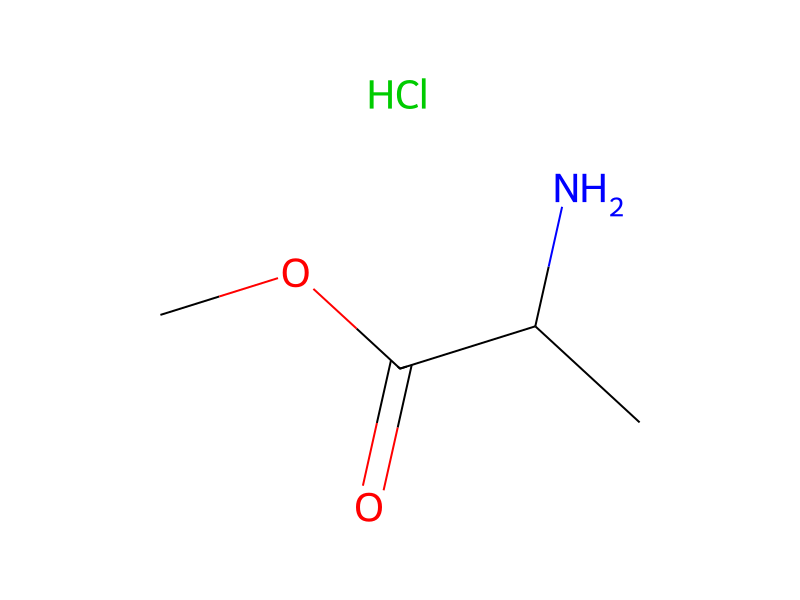
HCID 8471TriethylamineHCID 10868DicyclohexylcarbodiimideHCID 2756298Alanine, methyl ester, hydrochloride (1:1)HCID 867394524-Allyloxy-3-chloro-phenylacetyl-(DL)-alanine

Product 1

HCID 86739453HCID 86739453, compoundYield 50%

Reagents, catalysts & solvents 2

HCID 6344
Dichloromethane
Solvent
HCID 8028TetrahydrofuranSolvent

Procedure

4-Allyloxy-3-chloro-phenylacetyl-(DL)-alanine (0.622 g) was dissolved in dry tetrahydrofuran (10 ml). To the solution was added (DL)-alanine methyl ester hydrochloride (0.3 g) in dry methylene chloride (3.0 ml) containing dry triethylamine (0.3 ml). DCC (0.413 g) was added and the reaction mixture was stirred at room temperature. After being stirred overnight, the reaction mixture was worked up. DCU was filtered off. The volatile material was evaporated at reduced pressure. The semi-solid residue was dissolved in chloroform (20 ml). The chloroform solution was washed with aqueous hydrochloric acid (0.5 M, 2×20 ml), saturated aqueous sodium bicarbonate solution (2×20 ml) and finally with water (2×20 ml). The extract was dried (anhydrous sodium sulphate). The solvent was evaporated at reduced pressure to leave a small volume of material. Light petroleum (b.p. 60°-80° C.) was added to obtain a solid product (400 mg) of m.p. 100°-105° C. After recrystallisation from chloroform/light petroleum (b.p. 60°-80° C.) the above-named product, (200 mg), m.p. 105°-107° C., was obtained.


Workup

  1. stirringAfter being stirred overnight
  2. filtrationDCU was filtered off
  3. customThe volatile material was evaporated at reduced pressure
  4. dissolutionThe semi-solid residue was dissolved in chloroform (20 ml)
  5. washThe chloroform solution was washed with aqueous hydrochloric acid (0.5 M, 2×20 ml), saturated aqueous sodium bicarbonate solution (2×20 ml) and finally with water (2×20 ml)
  6. dry with materialThe extract was dried (anhydrous sodium sulphate)
  7. customThe solvent was evaporated at reduced pressure
  8. customto leave a small volume of material

Sources & evidence

ORD record
ord-460a2fca7a5e44f9812c621c19b80b13
Source dataset
uspto-grants-1984_06
DOI
10.6084/m9.figshare.5104873.v1
Patent number
US04452783

Reaction notes

On this pageParticipantsProcedureWorkupSources & evidenceReaction notes