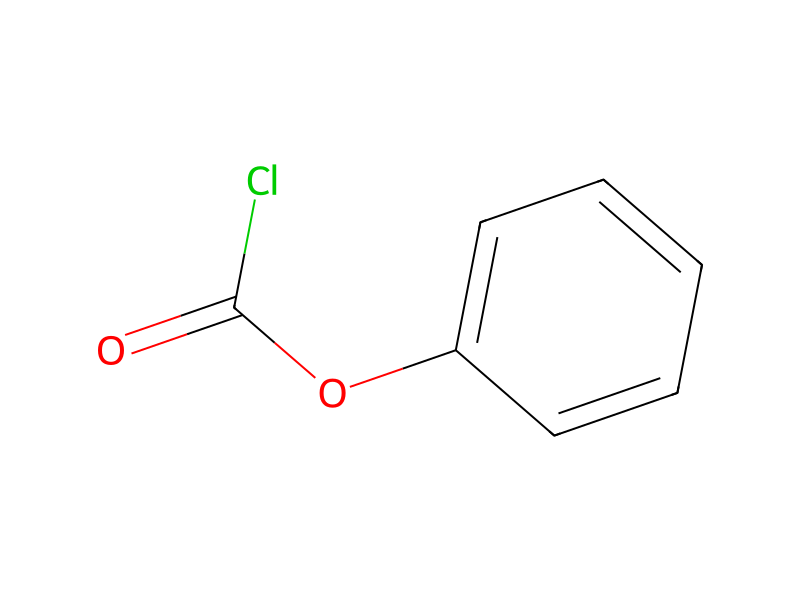
[Cl:1][C:2]1[C:11]2[C:6](=[CH:7][CH:8]=[CH:9][CH:10]=2)[C:5]([OH:12])=[CH:4][CH:3]=1.[Cl-].[Al+3].[Cl-].[Cl-].Cl[C:18]([O:20][C:21]1[CH:26]=[CH:25][CH:24]=[CH:23][CH:22]=1)=[O:19].Cl>C(OCC)(=O)C.O.C(Cl)Cl>[Cl:1][C:2]1[C:11]2[C:6](=[CH:7][CH:8]=[CH:9][CH:10]=2)[C:5]([OH:12])=[C:4]([C:18]([O:20][C:21]2[CH:26]=[CH:25][CH:24]=[CH:23][CH:22]=2)=[O:19])[CH:3]=1To a 500-mL, three-neck, nitrogen-purged flask was added 17.9 g (0.10 mole) of 4-chloro-1-naphthol, 100 mL of methylene chloride, 15 g (0.11 mole) of anhydrous aluminum chloride, and 15 mL (0.12 mole) of phenyl chloroformate. This mixture was heated to reflux. After 48 hours, the mixture was cooled to 10° C. and 200 mL of water and 15 mL of 37% hydrochloric acid were added. To this mixture was added 100 mL of ethyl acetate. The layers were separated and the organic layer was washed with two 100-mL portions of 5N hydrochloric acid. The organic layer was dried with anhydrous magnesium sulfate, filtered, then the solvent stripped off under vacuum. The resulting oil solidified and the crude product was recrystallized from isopropyl alcohol. The yield of phenyl 4-chloro-1-hydroxy-2-naphthoate (off-white, m.p. 102°-104° C.) obtained was 54%.