HomeMCPSkillsWorkbenchOpenChem
HomeWorkbenchNotificationsMe
llms.txt · skill.md · MCP GuidePrivacy Policy · Terms of Service · Supportv1.8.4
  1. Home
  2. /Reaction

Propargyl alcohol → N-[(4-chlorophenyl)methyl]-8-(3-hydroxyprop-1-ynyl)-1-methyl-4-oxo-6-(tetrahydropyran-4-ylmethyl)quinoline-3-carboxamide

HRID 1264984
Print

Reaction equation

[Cl:1][C:2]1[CH:31]=[CH:30][C:5]([CH2:6][NH:7][C:8]([C:10]2[C:19](=[O:20])[C:18]3[C:13](=[C:14](I)[CH:15]=[C:16]([CH2:21][CH:22]4[CH2:27][CH2:26][O:25][CH2:24][CH2:23]4)[CH:17]=3)[N:12]([CH3:29])[CH:11]=2)=[O:9])=[CH:4][CH:3]=1.[CH2:32]([OH:35])[C:33]#[CH:34]>N(CC)CC.C(Cl)Cl.Cl[Pd](Cl)([P](C1C=CC=CC=1)(C1C=CC=CC=1)C1C=CC=CC=1)[P](C1C=CC=CC=1)(C1C=CC=CC=1)C1C=CC=CC=1.[Cu]I>[Cl:1][C:2]1[CH:31]=[CH:30][C:5]([CH2:6][NH:7][C:8]([C:10]2[C:19](=[O:20])[C:18]3[C:13](=[C:14]([C:34]#[C:33][CH2:32][OH:35])[CH:15]=[C:16]([CH2:21][CH:22]4[CH2:27][CH2:26][O:25][CH2:24][CH2:23]4)[CH:17]=3)[N:12]([CH3:29])[CH:11]=2)=[O:9])=[CH:4][CH:3]=1
ParticipantsProcedureWorkupSources & evidenceReaction notes

Participants

7

Reactant 2

HCID 7859Propargyl alcoholHCID 22724547N-(4-chlorobenzyl)-8-iodo-1-methyl-4-oxo-6-(tetrahydro-2H-pyran-4-ylmethyl)-1,4-dihydro-3-quinolinecarboxamide

Product 1

HCID 5278407N-[(4-chlorophenyl)methyl]-8-(3-hydroxyprop-1-ynyl)-1-methyl-4-oxo-6-(tetrahydropyran-4-ylmethyl)quinoline-3-carboxamideYield 66%

Reagents, catalysts & solvents 4

HCID 24350
Copper(1+) iodide; Copper(I) iodide; Cuprous iodide; Cuprous iodide (CuI)
Catalyst
HCID 178418476HCID 178418476, compoundCatalyst
HCID 6344DichloromethaneSolvent
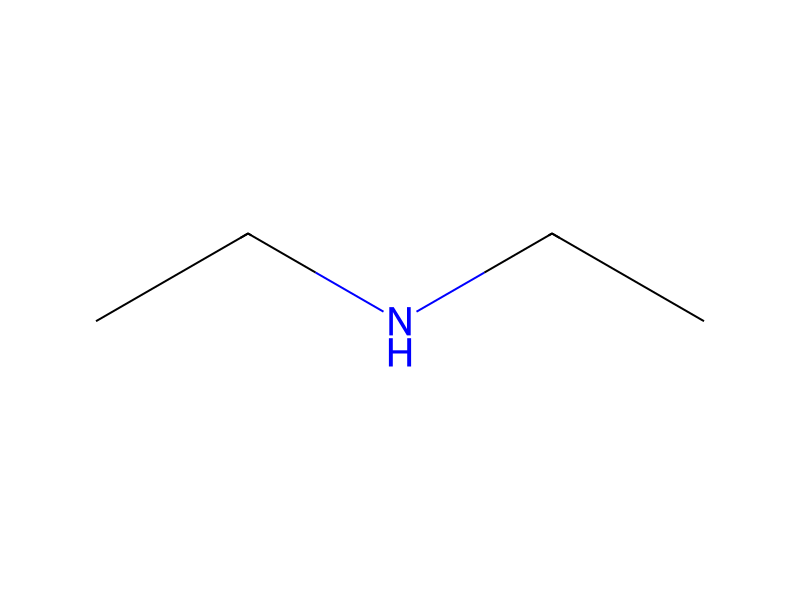
HCID 8021DiethylamineSolvent

Procedure

To a solution of N-(4-chlorobenzyl)-8-iodo-1-methyl-4-oxo-6-(tetrahydro-2H-pyran-4-ylmethyl)-1,4-dihydro-3-quinolinecarboxamide (0.200 g), PdCl2(PPh3)2 (0.012 g) and CuI (0.029 g) in 10 mL Et2NH and 5 mL CH2Cl2 is added propargyl alcohol (0.021 g). The mixture is allowed to stir overnight at room temperature. The solvents are evaporated and the residue is partitioned between CH2Cl2 and water. The aqueous layer is extracted with CH2Cl2 (3×). The combined organic layers are washed with brine, dried and condensed. The crude product is chromatographed (Biotage flash 40S, eluent 1% MeOH/CH2Cl2 then 2% MeOH/CH2Cl2). Fractions homogeneous by TLC are combined and concentrated. The resulting solid is recrystallized from CH2Cl2/Et20 to yield 0.114 g (66%) of the desired product as a white solid.

Workup

  1. customThe solvents are evaporated
  2. customthe residue is partitioned between CH2Cl2 and water
  3. extractionThe aqueous layer is extracted with CH2Cl2 (3×)
  4. washThe combined organic layers are washed with brine
  5. customdried
  6. customcondensed
  7. customThe crude product is chromatographed (Biotage flash 40S, eluent 1% MeOH/CH2Cl2
  8. concentrationconcentrated
  9. customThe resulting solid is recrystallized from CH2Cl2/Et20

Sources & evidence

ORD record
ord-acf41478a54442158624b84c1aa041b4
Source dataset
uspto-grants-2003_04
DOI
10.6084/m9.figshare.5104873.v1
Patent number
US06544990B2

Reaction notes

On this pageParticipantsProcedureWorkupSources & evidenceReaction notes