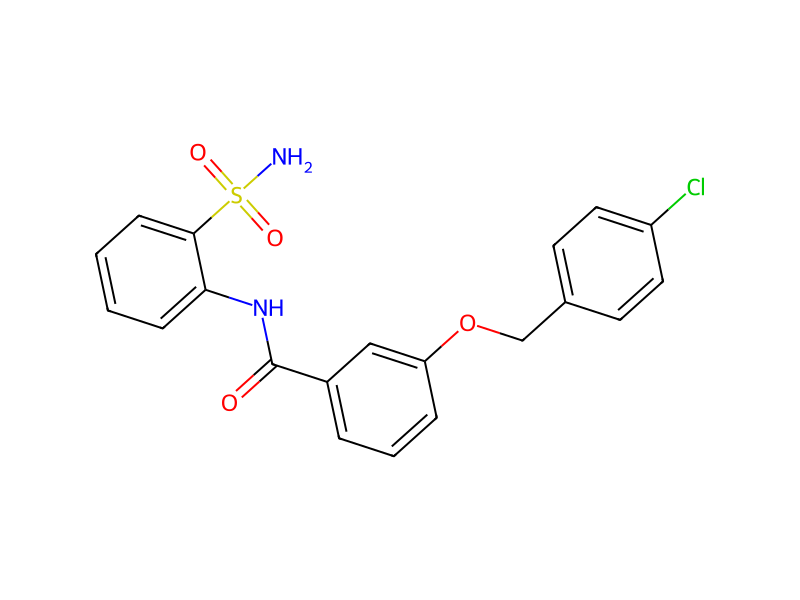
[C:1](OC(=O)C)(=[O:3])[CH3:2].[Cl:8][C:9]1[CH:35]=[CH:34][C:12]([CH2:13][O:14][C:15]2[CH:16]=[C:17]([CH:31]=[CH:32][CH:33]=2)[C:18]([NH:20][C:21]2[CH:26]=[CH:25][CH:24]=[CH:23][C:22]=2[S:27](=[O:30])(=[O:29])[NH2:28])=[O:19])=[CH:11][CH:10]=1>CN(C)C1C=CN=CC=1.O1CCCC1>[Cl:8][C:9]1[CH:10]=[CH:11][C:12]([CH2:13][O:14][C:15]2[CH:16]=[C:17]([CH:31]=[CH:32][CH:33]=2)[C:18]([NH:20][C:21]2[CH:26]=[CH:25][CH:24]=[CH:23][C:22]=2[S:27]([NH:28][C:1](=[O:3])[CH3:2])(=[O:30])=[O:29])=[O:19])=[CH:34][CH:35]=1In a stream of nitrogen and at 0° C., 0.12 ml (1.30 mmol) of acetic anhydride was added to an anhydrous tetrahydrofuran (10 ml) solution containing 500 mg (1.20 mmol) of 3-(4-chlorobenzyloxy)-N-(2-sulfamoylphenyl)benzamide produced in Reference Example 4 and 293 mg (2.40 mmol) of 4-dimethylaminopyridine, the mixture was stirred at room temperature for 1 hour and then the solvent was evaporated under a reduced pressure. The resulting residue was dissolved in ethyl acetate, washed with water, a potassium hydrgensulfate aqueous solution and saturated brine in that order and dried over anhydrous sodium sulfate, and then the solvent was evaporated under a reduced pressure. The resulting residue was recrystallized from an ethyl acetate-diethyl ether mixed solvent to obtain 290 mg (yield: 52.7%) of the title compound.
Loading…