Reaction equation

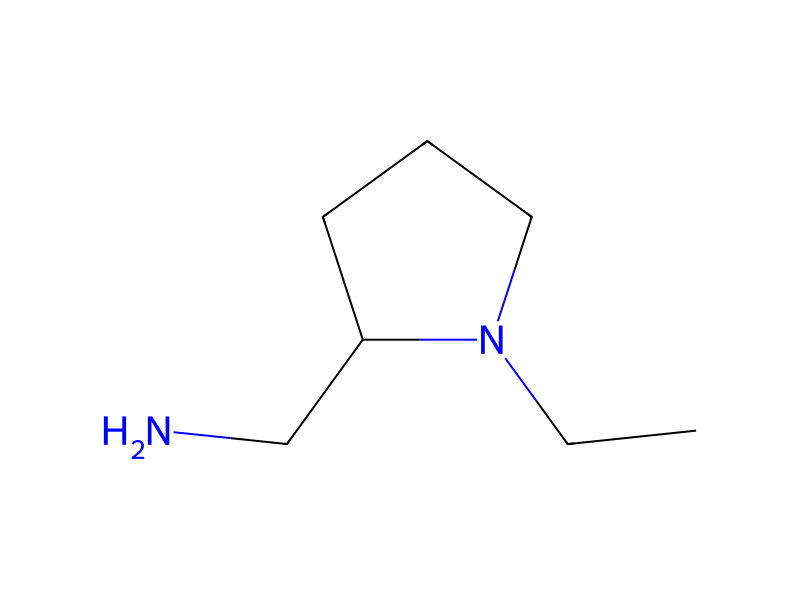
[CH2:1]([S:3]([C:6]1[CH:7]=[C:8]([C:16]([OH:18])=O)[C:9]2[O:14][CH2:13][CH2:12][O:11][C:10]=2[CH:15]=1)(=[O:5])=[O:4])[CH3:2].C(N1C=CN=C1)(N1C=CN=C1)=O.[CH2:31]([N:33]1[CH2:37][CH2:36][CH2:35][CH:34]1[CH2:38][NH2:39])[CH3:32]>O1CCCC1>[CH2:31]([N:33]1[CH2:37][CH2:36][CH2:35][CH:34]1[CH2:38][NH:39][C:16]([C:8]1[C:9]2[O:14][CH2:13][CH2:12][O:11][C:10]=2[CH:15]=[C:6]([S:3]([CH2:1][CH3:2])(=[O:4])=[O:5])[CH:7]=1)=[O:18])[CH3:32]Participants
5




Procedure
13 g of 7-ethylsulfonyl-1,4-benzodioxane-5-carboxylic acid, 300 ml of tetrahydrofuran and 13 g of carbonyldiimidazole were introduced into a balloon flask provided with an agitator, a thermometer and a condenser. The mixture was agitated at ambient temperature and then 9.5 g of 1-ethyl-2-aminomethylpyrrolidine was added. Agitation was maintained at ambient temperature and then the solvent was evaporated under vacuum. The crystals produced were washed with water and then dried. 14 g of N-(1-ethyl-2-pyrrolidylmethyl)-7-ethylsulfonyl-1,4-benzodioxane-5-carboxamide was produced (M.P.: 118°-119° C.; yield: 73.8%)
Workup
- customprovided with an agitator
- temperatureAgitation was maintained at ambient temperature
- customthe solvent was evaporated under vacuum
- customThe crystals produced
- washwere washed with water
- customdried
Sources & evidence
- ORD record
- ord-9a5a643d93394373bc0f9a3d0e24ae3c
- Source dataset
- uspto-grants-1981_03
- Patent number
- US04255580
Linked notes
Loading…