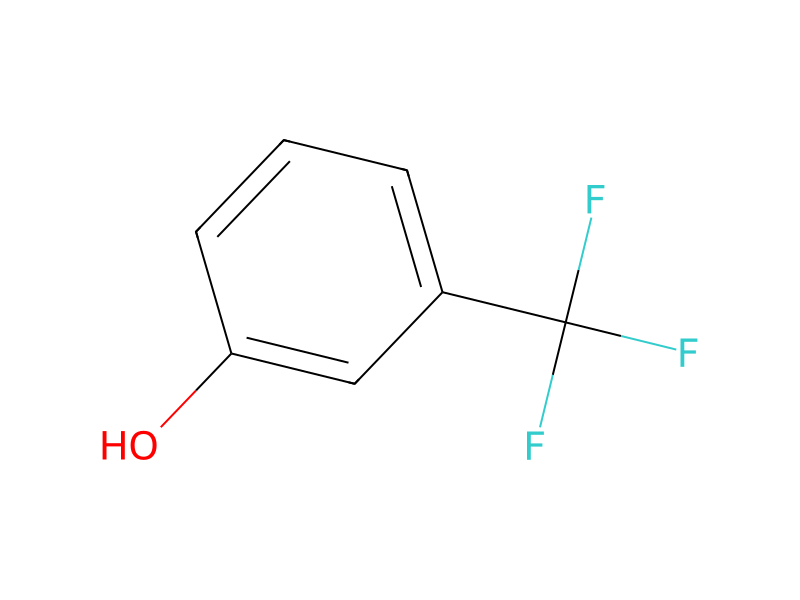
<Production of 4-chloro-6-[3-(trifluoromethyl)phenoxy] picolinic acid methyl ester as an intermediate product>3-(trifluoromethyl) phenol (3.15 g, 0.0019 mol) was dissolved in 50 ml of dried dioxane. Sodium hydride (0.8 g (ca. 60% in mineral oil), 0.0019×1.05 mol) was added to the obtained solution at room temperature. After completion of the foaming, a solution obtained by dissolving 4,6-dichloro picolinic acid methyl ester (4.0 g, 0.0019 mol) in 5 ml of dried dioxane, was dropped into the above solution. Successively, copper iodide (3.7 g, 0.0019×1.0 mol) was added to the obtained solution. The resultant mixture was heated and stirred at a temperature of 120 to 130° C. for 10 hours. Thereafter, the obtained reaction solution was cooled, mixed with 10 ml of water, and then filtered through a glass filter provided with Hyflo Super-Cell. The obtained filtrate was extracted with 100 ml of ethyl acetate two times, thereby separating an organic phase therefrom. The obtained organic phase was dried with sodium anhydride. After the dried organic phase was subjected to distillation to remove the solvent therefrom, the obtained distillation residues were purified by silica gel column chromatography (eluting solution: ethyl acetate/hexane), thereby obtaining an aimed product.