Reaction equation

Br[CH2:2][CH2:3][CH2:4][N:5]1[C:9](=[O:10])[C:8]2=[CH:11][CH:12]=[CH:13][CH:14]=[C:7]2[C:6]1=[O:15].[C:16]1([N:22]2[CH2:27][CH2:26][NH:25][CH2:24][CH2:23]2)[CH:21]=[CH:20][CH:19]=[CH:18][CH:17]=1.C(=O)([O-])[O-].[K+].[K+]>CC(C)=O>[C:16]1([N:22]2[CH2:27][CH2:26][N:25]([CH2:2][CH2:3][CH2:4][N:5]3[C:9](=[O:10])[C:8]4=[CH:11][CH:12]=[CH:13][CH:14]=[C:7]4[C:6]3=[O:15])[CH2:24][CH2:23]2)[CH:21]=[CH:20][CH:19]=[CH:18][CH:17]=1Participants
5
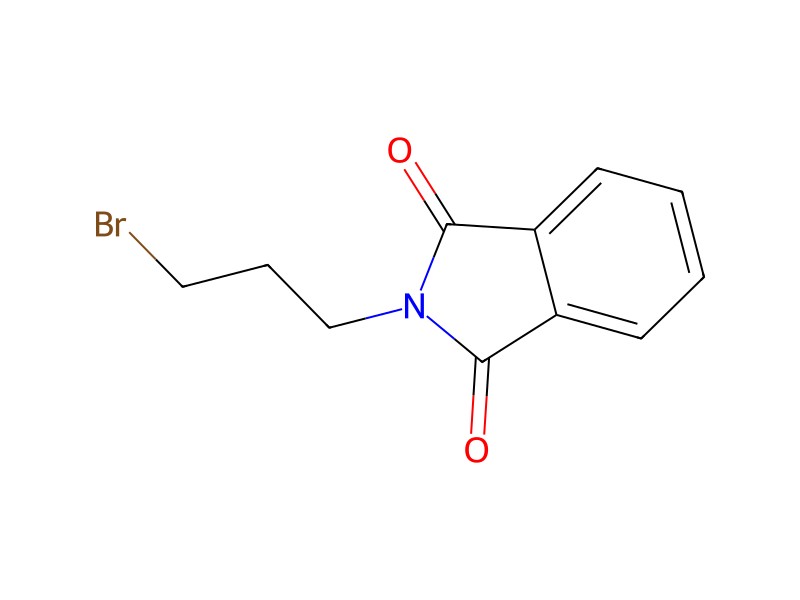
Reactant 3


Product 1

Reagents, catalysts & solvents 1

Procedure
To the solution of N-(3-bromopropyl)phthalimide (15.6 g) in acetone (150 ml) were added 1-phenylpiperazine (10.4 g) and potassium carbonate (12.0 g). The resulting mixture was refluxed with stirring for 4.5 hours. The reaction mixture was cooled and then filtered. The filter cake was washed with acetone. The filtrate and washing were combined and evaporated under reduced pressure. The residue was recrystallized from ethanol to give an oil of N-[3-(4-phenyl-1-piperazinyl)propyl]phthalimide (18.3 g), mp 129° to 134° C.
Workup
- temperatureThe resulting mixture was refluxed
- temperatureThe reaction mixture was cooled
- filtrationfiltered
- washThe filter cake was washed with acetone
- washThe filtrate and washing
- customevaporated under reduced pressure
- customThe residue was recrystallized from ethanol
Sources & evidence
- ORD record
- ord-4e6c4edf18264675b7f9d656e5be5178
- Source dataset
- uspto-grants-1986_01
- Patent number
- US04563524
Linked notes
Loading…