Oxalyl chloride → Benzeneacetyl chloride, 4-bromo-
HRID 128511
Reaction equation

[Br:1][C:2]1[CH:3]=[C:4]2[C:9](=[CH:10][CH:11]=1)[CH2:8][C:7](=[O:12])CC2.BrC1C=CC(CC(O)=O)=CC=1.C(Cl)(=O)C([Cl:27])=O>C(Cl)Cl.CN(C)C=O>[Br:1][C:2]1[CH:3]=[CH:4][C:9]([CH2:8][C:7]([Cl:27])=[O:12])=[CH:10][CH:11]=1Participants
6
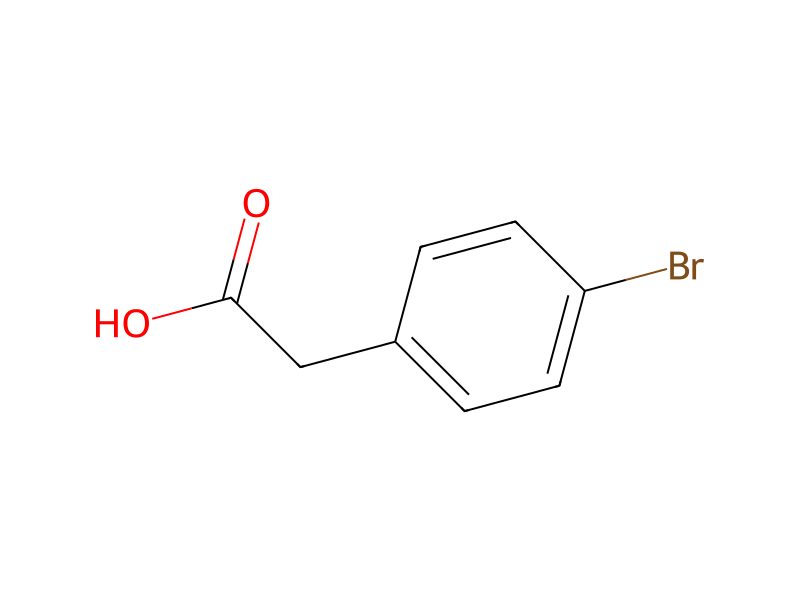
Reactant 3


Product 1

Reagents, catalysts & solvents 2


Procedure
The synthesis of 6-bromo-2-tetralone is accomplished by dissolving 4-bromophenylacetic acid in methylene chloride and dimethyl formamide, under nitrogen. Oxalyl chloride is added and the mixture is stirred under a positive nitrogen atmosphere to produce the 4-bromo-phenylacetyl chloride, at a yield which typically is better than 99%.
Sources & evidence
- ORD record
- ord-76ffd24e304642158af2cc014d8e9207
- Source dataset
- uspto-grants-1995_11
- Patent number
- US05464762