Reaction equation

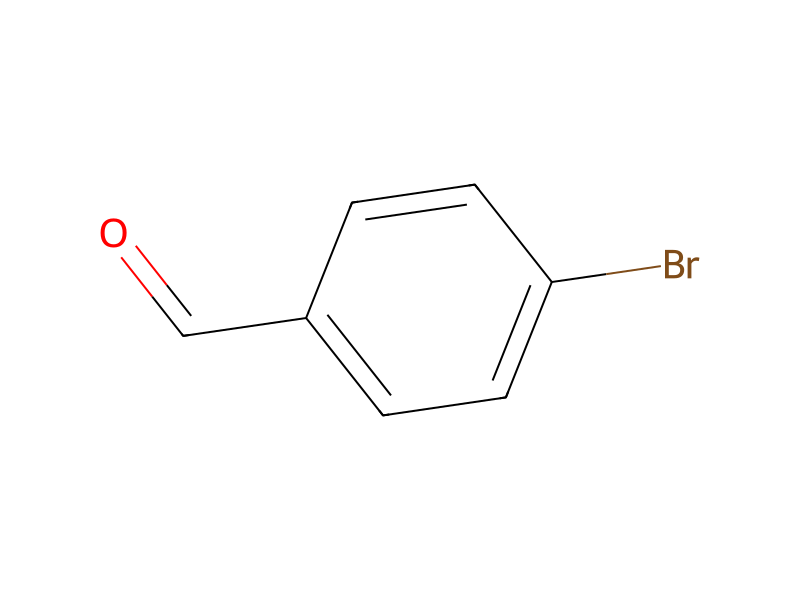
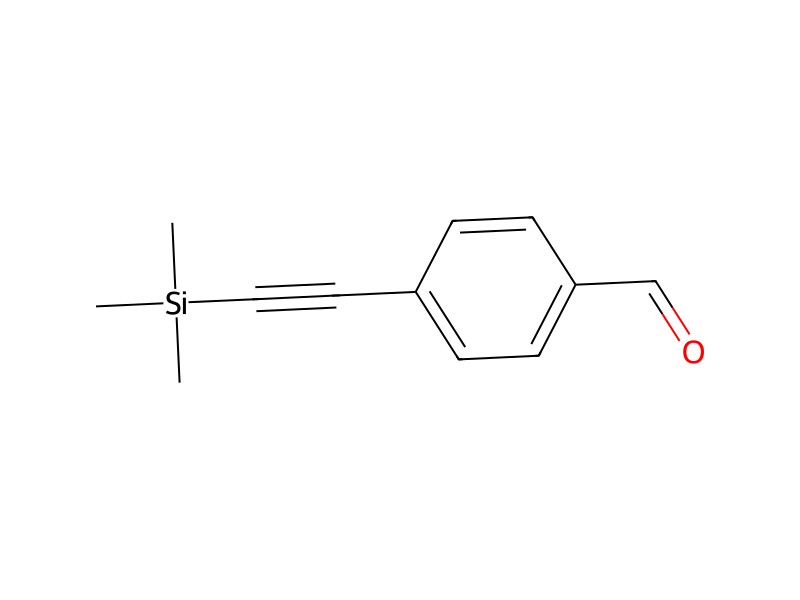
Br[C:2]1[CH:9]=[CH:8][C:5]([CH:6]=[O:7])=[CH:4][CH:3]=1.[CH3:10][Si:11]([C:14]#[CH:15])([CH3:13])[CH3:12]>>[CH3:10][Si:11]([CH3:13])([CH3:12])[C:14]#[C:15][C:2]1[CH:9]=[CH:8][C:5]([CH:6]=[O:7])=[CH:4][CH:3]=1Participants
3

Procedure
By the method of example 53(A), 4-bromobenzaldehyde is coupled with (trimethylsilyl)acetylene to provide 4-(2-(trimethylsilyl)ethynyl)benzaldehyde as a pale yellow solid after sublimation in vacuo. This material (5.8 g) is desilylated by stirring with potassium carbonate (0.4 g) in methanol (20 ml) for two hours. The solution is evaporated, and the product dissolved in methylene chloride, washed with water, dried, and concentrated to provide 4-ethynylbenzaldehyde as a yellow solid (3.45 g, 90%). By the Wittig reaction of example 1(A), this is chain-extended to provide 1-ethynyl-4-(2-methoxyethenyl)benzene, obtained as a colorless oil after distillation in vacuo (3.10 g, 77%).
Sources & evidence
- ORD record
- ord-95221e74419c4ae68a3338a64b69b627
- Source dataset
- uspto-grants-1995_11
- Patent number
- US05464865
Linked notes
Loading…