Phenylacetylene → 4-(Phenylethynyl)benzaldehyde
HRID 128809
Reaction equation

[C:1]1([C:7]#[CH:8])[CH:6]=[CH:5][CH:4]=[CH:3][CH:2]=1.Br[C:10]1[CH:17]=[CH:16][C:13]([CH:14]=[O:15])=[CH:12][CH:11]=1>CC([O-])=O.CC([O-])=O.C1C=CC(P(C2C=CC=CC=2)C2C=CC=CC=2)=CC=1.C1C=CC(P(C2C=CC=CC=2)C2C=CC=CC=2)=CC=1.[Pd+2]>[C:1]1([C:7]#[C:8][C:10]2[CH:17]=[CH:16][C:13]([CH:14]=[O:15])=[CH:12][CH:11]=2)[CH:6]=[CH:5][CH:4]=[CH:3][CH:2]=1Participants
4
Reactant 2

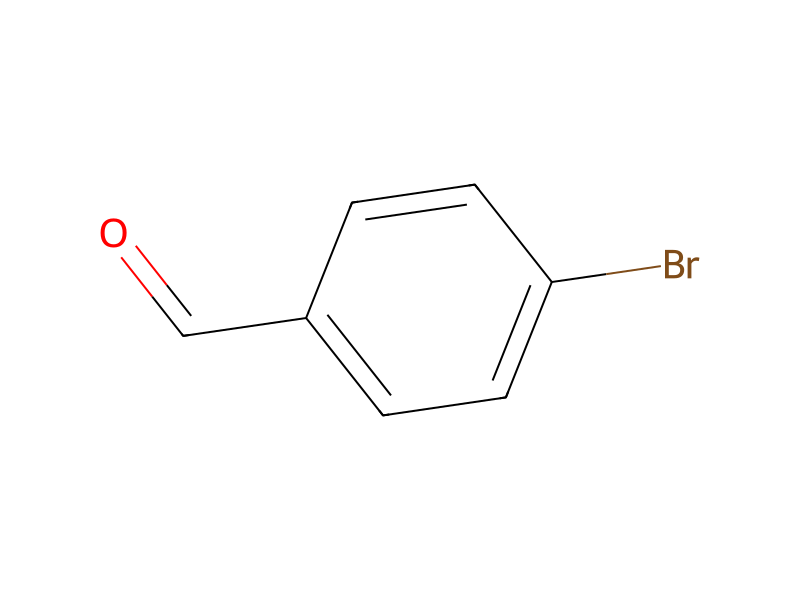
Product 1

Reagents, catalysts & solvents 1

Procedure
By the method of example 53(A), but using bis(triphenylphosphine)palladium(II) acetate as catalyst (3 mol %), phenylacetylene and 4-bromobenzaldehyde are coupled to give 4-(2-phenylethynyl)benzaldehyde in 70% yield after distillation. By the methods of example 1, this is converted into the title compound, obtained as a colorless solid, mp 190°-191° after recrystallization from hexane-ethyl acetate.