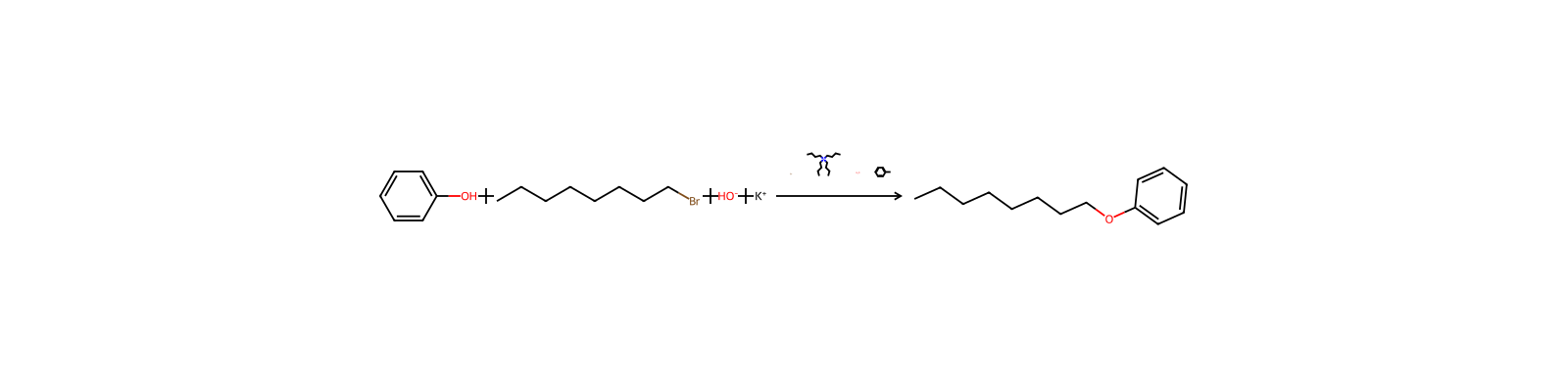
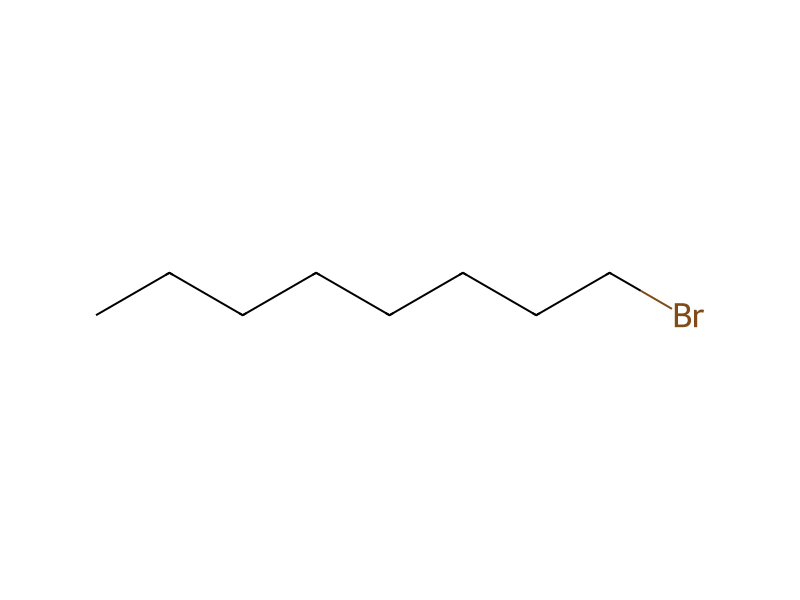
44.8 g (or 0.477 mol) of phenol, 38.6 g (or 0.2 mol) of n-bromooctane, 6 g of tetrabutylammonium bromide, 26.8 g of potassium hydroxide, 100 ml of water and 100 ml of toluene were charged into a 500 ml, three-necked, round-bottom flask equipped with a mechanical stirrer, a thermometer and water-cooled reflux condenser. This medium was stirred and was then heated to reflux for 20 hours. The reaction mixture was then cooled to room temperature. The phases were settled and separated. The organic phase was washed with 100 ml of a 0.5N sodium hydroxide solution and then with five 100 ml fractions of water. It was then dried over magnesium sulfate and the solvent was then driven off under reduced pressure at a temperature of 85° C.