Reaction equation

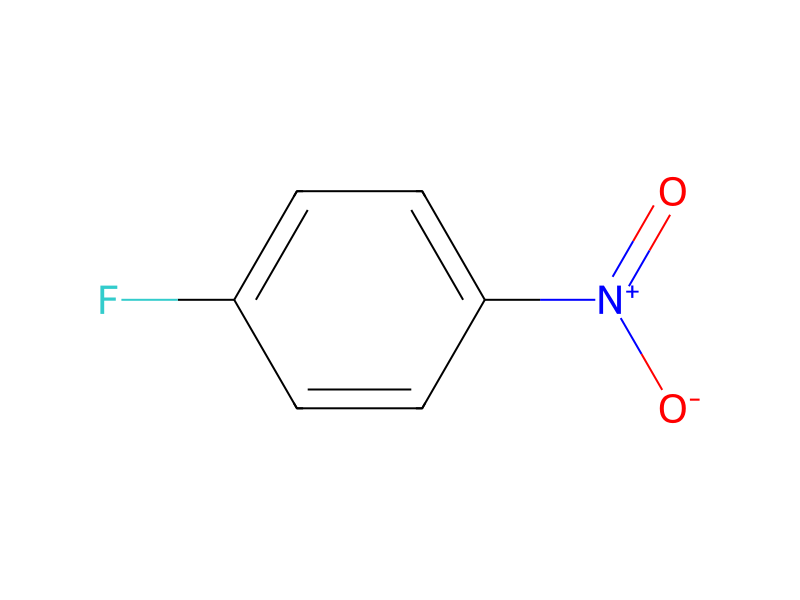
F[C:2]1[CH:7]=[CH:6][C:5]([N+:8]([O-:10])=[O:9])=[CH:4][CH:3]=1.[CH2:11]([O:13][C:14](=[O:20])[C@H:15]([CH:17]([CH3:19])[CH3:18])[NH2:16])[CH3:12].CCN(CC)CC.CN1CCCC1=O>O>[N+:8]([C:5]1[CH:6]=[CH:7][C:2]([NH:16][CH:15]([CH:17]([CH3:19])[CH3:18])[C:14]([O:13][CH2:11][CH3:12])=[O:20])=[CH:3][CH:4]=1)([O-:10])=[O:9]Participants
6
Reactant 4



Product 1

Reagents, catalysts & solvents 1

Conditions
- Temperature
- 70 °C
Procedure
162 mg of 4-fluoronitrobenzene, 200 mg of L-valine ethyl ester and 0.4 ml of Et3N were added to a solution of 10 ml of N-methylpyrrolidinone (NMP). The reaction medium was heated at 70° C. for 8 hours and, after cooling to room temperature, then poured into a water and ice mixture. The yellow precipitate formed was filtered off, re-slurried in water and then dried over P2O5. 100 mg of ethyl 2-(4-nitrophenylamino)-3-methylbutyrate (8) were obtained.
Workup
- temperatureafter cooling to room temperature
- customThe yellow precipitate formed
- filtrationwas filtered off, re-slurried in water
- dry with materialdried over P2O5
Sources & evidence
- ORD record
- ord-a406a4bad6cf4634999741d2ef7864de
- Source dataset
- uspto-grants-2008_06
- Patent number
- US07384432B2
Linked notes
Loading…