HomeMCPWorkbenchSkills
HomeWorkbenchNotificationsMe
llms.txt · MCP GuidePrivacy Policy · Terms of Service · Supportv1.8.3
  1. Home
  2. /Reaction

Triphenylmethane → (S)-4-Benzyl-2-oxazolidinone

HRID 133841
Print

Reaction equation

HRID 133841 reaction equation
C[C:2](C)([C:7]1[CH:12]=[CH:11][CH:10]=[CH:9][CH:8]=1)[CH2:3][C:4](O)=[O:5].C(Cl)(=O)C(C)(C)C.C1(C(C2C=CC=CC=2)C2C=CC=CC=2)C=CC=CC=1.C([Li])CCC.[O:45]1CC[NH:47][C:46]1=O>O1CCCC1.C(N(CC)CC)C>[CH2:2]([C@H:3]1[CH2:4][O:5][C:46](=[O:45])[NH:47]1)[C:7]1[CH:12]=[CH:11][CH:10]=[CH:9][CH:8]=1
ParticipantsConditionsProcedureWorkupSources & evidenceReaction notes

Participants

8

Reactant 5

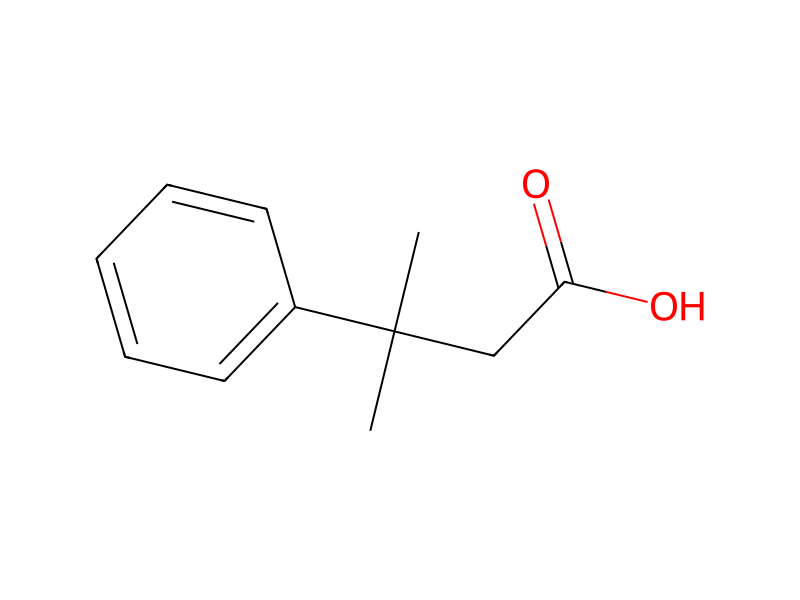
HCID 10614TriphenylmethaneHCID 13890beta-Phenylisovaleric acidHCID 62493Pivaloyl chlorideHCID 739492-OxazolidinoneHCID 178418339Butyllithium

Product 1

HCID 736225(S)-4-Benzyl-2-oxazolidinone

Reagents, catalysts & solvents 2

HCID 8028TetrahydrofuranSolvent2×HCID 8471TriethylamineSolvent

Conditions

Temperature
-78 °C

Procedure

To a solution of 3,3-dimethyl-3-phenyl propionic acid (10 g, 57 mmol, from Reference Example 22) in anhydrous tetrahydrofuran (120 mL) is added under inert atmosphere triethylamine (10 mL) and the mixture is cooled to −78° C. in a dry-ice acetone bath. Pivaloyl chloride (7.4 mL, 60 mmol) is added dropwise, causing the immediate formation of a white precipitate. The reaction mixture is allowed to sit for 15 minutes at −78° C. and is then stirred at 0° C. in an ice-water bath. In a separate flask, a solution of (S)-4-benzyl-2-oxazolidinone (9.9 g, 56 mmol) in anhydrous tetrahydrofuran (130 mL) is prepared under inert atmosphere and cooled to −35° C. in a dry-ice/acetone bath. A small amount of triphenylmethane (<5 mg) is added as an indicator of deprotonation. n-Butyllithium (1.6 M solution in hexanes, 40 mL, 64 mmol) is added dropwise via syringe. After 30 minutes of stirring at 0° C., the flask containing the mixed anhydride is re-cooled to −78° C. in a dry-ice/acetone bath. The solution of the lithium anion of the oxazolidinone is added to the mixed anhydride solution via cannula. The source flask is washed twice with tetrahydrofuran (4 mL×2) and these washings are also transferred via cannula to the mixed anhydride solution. The reaction mixture is stirred at −78° C. for 1 hour and at 0° C. for 1 hour. Water (100 mL) is added and stirring is continued for 15 minutes. The aqueous phase is extracted thrice with diethyl ether. The combined extracts are washed with saturated aqueous sodium bicarbonate and saturated aqueous sodium chloride, dried over sodium sulfate, decanted, and concentrated under reduced pressure to afford 20 g of a white paste. The crude material is purified by flash chromatography (ethyl acetate/hexanes) to afford 11 g (56%) of a flocculent white solid. MS (ES+): (M+H)=338.1

Workup

  1. temperaturecooled to −35° C. in a dry-ice/acetone bath
  2. stirringAfter 30 minutes of stirring at 0° C.
  3. temperatureis re-cooled to −78° C. in a dry-ice/acetone bath
  4. washThe source flask is washed twice with tetrahydrofuran (4 mL×2)
  5. stirringThe reaction mixture is stirred at −78° C. for 1 hour and at 0° C. for 1 hour
  6. additionWater (100 mL) is added
  7. stirringstirring
  8. waitis continued for 15 minutes
  9. extractionThe aqueous phase is extracted thrice with diethyl ether
  10. washThe combined extracts are washed with saturated aqueous sodium bicarbonate and saturated aqueous sodium chloride
  11. dry with materialdried over sodium sulfate
  12. customdecanted
  13. concentrationconcentrated under reduced pressure
  14. customto afford 20 g of a white paste
  15. customThe crude material is purified by flash chromatography (ethyl acetate/hexanes)

Sources & evidence

ORD record
ord-f9eb2646d7d54d078eba20a2c18d6832
Source dataset
uspto-grants-2008_06
DOI
10.6084/m9.figshare.5104873.v1
Patent number
US07390910B2

Reaction notes

On this pageParticipantsConditionsProcedureWorkupSources & evidenceReaction notes