HomeMCPWorkbenchSkills
HomeWorkbenchNotificationsMe
llms.txt · MCP GuidePrivacy Policy · Terms of Service · Supportv1.8.3
  1. Home
  2. /Reaction

2-Bromopyridine → 2-[3-({4-[(E)-2-(2,4-difluorophenyl)vinyl]phenyl}sulfonyl)phenyl]pyridine

HRID 1351658
Print

Reaction equation

HRID 1351658 reaction equation
C([Li])CCC.Br[C:7]1[CH:12]=[CH:11][CH:10]=[CH:9][N:8]=1.Br[C:14]1[CH:15]=[C:16]([S:20]([C:23]2[CH:28]=[CH:27][C:26](/[CH:29]=[CH:30]/[C:31]3[CH:36]=[CH:35][C:34]([F:37])=[CH:33][C:32]=3[F:38])=[CH:25][CH:24]=2)(=[O:22])=[O:21])[CH:17]=[CH:18][CH:19]=1>O1CCCC1.[Cl-].[Zn+2].[Cl-].C1C=CC([P]([Pd]([P](C2C=CC=CC=2)(C2C=CC=CC=2)C2C=CC=CC=2)([P](C2C=CC=CC=2)(C2C=CC=CC=2)C2C=CC=CC=2)[P](C2C=CC=CC=2)(C2C=CC=CC=2)C2C=CC=CC=2)(C2C=CC=CC=2)C2C=CC=CC=2)=CC=1>[F:38][C:32]1[CH:33]=[C:34]([F:37])[CH:35]=[CH:36][C:31]=1/[CH:30]=[CH:29]/[C:26]1[CH:27]=[CH:28][C:23]([S:20]([C:16]2[CH:17]=[C:18]([C:7]3[CH:12]=[CH:11][CH:10]=[CH:9][N:8]=3)[CH:19]=[CH:14][CH:15]=2)(=[O:22])=[O:21])=[CH:24][CH:25]=1
ParticipantsProcedureWorkupSources & evidenceReaction notes

Participants

7

Reactant 3

HCID 79732-BromopyridineHCID 21099399HCID 21099399, compoundHCID 178418339Butyllithium

Product 1

HCID 210994152-[3-({4-[(E)-2-(2,4-difluorophenyl)vinyl]phenyl}sulfonyl)phenyl]pyridineYield 10%

Reagents, catalysts & solvents 3

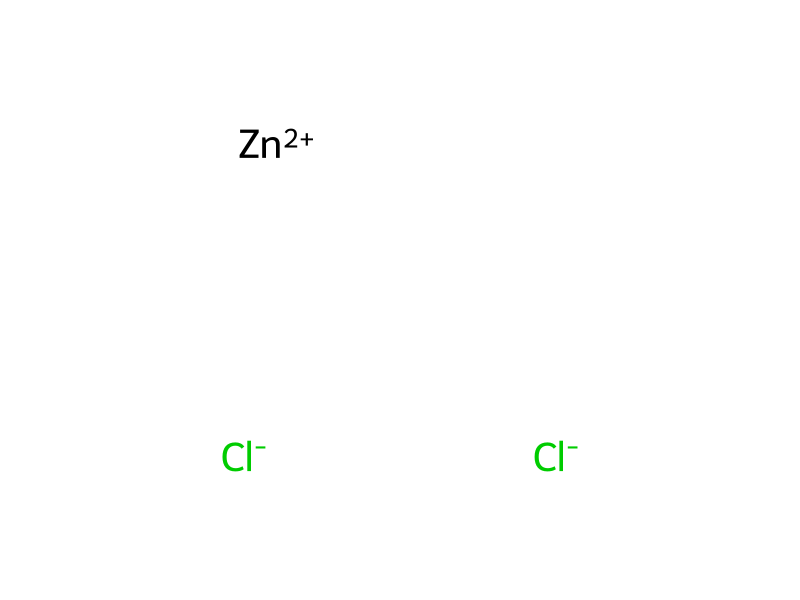
HCID 3007855SinkkikloridiCatalyst
HCID 178418397
HCID 178418397, compound
Catalyst
HCID 8028TetrahydrofuranSolvent

Procedure

Butyllithium (1.6M in hexanes, 0.3 mL, 0.48 mmol) was added to a rapidly stirred solution of 2-bromopyridine (44 μL, 0.46 mmol) in tetrahydrofuran (1.2 mL) at −78° C. After 45 minutes, zinc chloride (1.0M in diethyl ether, 1.38 mL, 1.38 mmol) was added. The mixture was warmed to room temperature, tetrakis(triphenylphosphine)palladium(0) (27 mg) and 1-((E)-2-{4-[(3-bromophenyl)sulfonyl]phenyl}vinyl)-2,4-difluorobenzene (Example 109; 100 mg, 0.23 mmol) were added and the reaction heated to reflux overnight. The cooled reaction mixture was partitioned between ethyl acetate and 10% aqueous ethylenediaminetetraacetic acid, disodium salt. The organic layer was dried over Na2SO4 and concentrated in vacuo. The residue was purified by flash column chromatography on silica, eluting with 35% ethyl acetate/isohexane, to yield the title compound as a white solid (10 mg, 10%). δH (400 MHz, CDCl3): 8.69 (1H, d, J=4.7 Hz), 8.56 (1H, t, J=1.7 Hz), 8.23 (1H, d, J=7.8 Hz), 7.98–7.94 (3H, m), 7.80–7.74 (2H, m), 7.62–7.50 (4H, m), 7.29–7.23 (2H, m), 7.07 (1H, d, J=16.5 Hz), 6.90–6.80 (2H, m). m/z (ES+) 434 [MH+].

Workup

  1. temperaturethe reaction heated
  2. temperatureto reflux overnight
  3. customThe cooled reaction mixture
  4. customwas partitioned between ethyl acetate and 10% aqueous ethylenediaminetetraacetic acid, disodium salt
  5. dry with materialThe organic layer was dried over Na2SO4
  6. concentrationconcentrated in vacuo
  7. customThe residue was purified by flash column chromatography on silica
  8. washeluting with 35% ethyl acetate/isohexane

Sources & evidence

ORD record
ord-637f6128040f4f9a9c6c936c9375cb2a
Source dataset
uspto-grants-2007_05
DOI
10.6084/m9.figshare.5104873.v1
Patent number
US07217740B2

Reaction notes

On this pageParticipantsProcedureWorkupSources & evidenceReaction notes