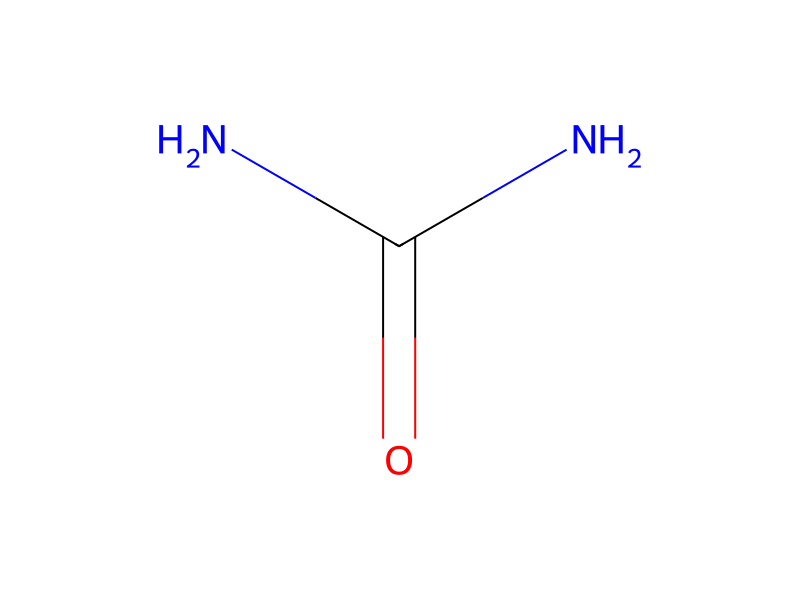
Urea → 4-iodo-1H-Isoindole-1,3(2H)-dione
HRID 1351700
Reaction equation

[I:1][C:2]1[C:10]2[C:9](=[O:11])[O:8][C:7](=O)[C:6]=2[CH:5]=[CH:4][CH:3]=1.[NH2:13]C(N)=O>C1(C)C(C)=CC=CC=1>[I:1][C:2]1[CH:3]=[CH:4][CH:5]=[C:6]2[C:10]=1[C:9](=[O:11])[NH:13][C:7]2=[O:8]Participants
4
Reactant 2

Product 1

Reagents, catalysts & solvents 1

Procedure
A solution of 4-iodo-2-benzofuran-1,3-dione (0.55 g, 2.01 mmol) and urea (0.24 g, 3.99 mmol) in xylene (5 mL) was heated to reflux overnight. After cooling, the solvent was removed in vacuo and the residue partitioned between water and ethyl acetate. The aqueous phase was extracted with ethyl acetate and the combined organic layers washed with brine, dried over MgSO4 and concentrated in vacuo while loading onto silica. Dry flash column chromatography using 5–10% ethyl acetate/isohexane gave 4-iodo-1H-isoindole-1,3 (2H)-dione as a pale yellow solid (330 mg, 60%).