Tetrahydrofuran → 2-Benzyl-5-(2-ethoxybenzamido)-1-n-propylimidazole-4-carboxamide
HRID 1355558
Reaction equation

[H-].[Na+].[NH2:3][C:4]1[N:8]([CH2:9][CH2:10][CH3:11])[C:7]([CH2:12][C:13]2[CH:18]=[CH:17][CH:16]=[CH:15][CH:14]=2)=[N:6][C:5]=1[C:19]([NH2:21])=[O:20].[O:22]1[CH2:26][CH2:25][CH2:24][CH2:23]1>>[CH2:12]([C:7]1[N:8]([CH2:9][CH2:10][CH3:11])[C:4]([NH:3][C:26](=[O:22])[C:25]2[CH:11]=[CH:10][CH:9]=[CH:23][C:24]=2[O:20][CH2:19][CH3:5])=[C:5]([C:19]([NH2:21])=[O:20])[N:6]=1)[C:13]1[CH:14]=[CH:15][CH:16]=[CH:17][CH:18]=1Participants
4


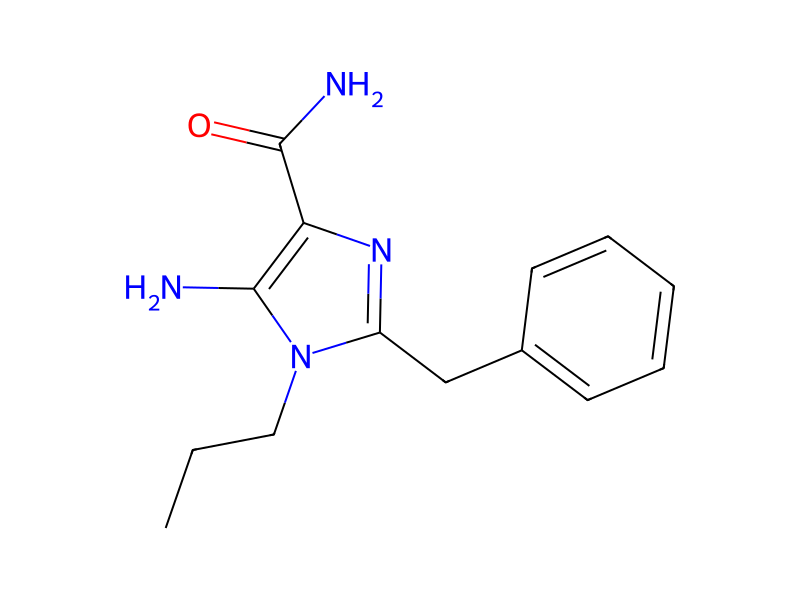

Procedure
Sodium hydride (48 mg, 60% dispersion in mineral oil, 1.2 mmol) was added to a solution of 5-amino-2-benzyl-1-n-propylimidazole-4-carboxamide (Preparation 2; 200 mg, 0.77 mmol) in tetrahydrofuran (5 mL), and the mixture stirred for 3 hours at room temperature. The prepared solution of acid chloride (from (i) above) was then added and the reaction stirred at room temperature for 2 days. The mixture was concentrated under reduced pressure, the residue partitioned between dichloromethane and water, and the layers separated. The organic phase was dried (MgSO4) and evaporated under reduced pressure. The crude product was purified by column chromatography on silica gel twice, using an elution gradient of dichloromethane: methanol (100:0 to 95:5) to afford the title compound (114 mg, 36%).