HomeMCPWorkbenchSkills
HomeWorkbenchNotificationsMe
llms.txt · MCP GuidePrivacy Policy · Terms of Service · Supportv1.8.3
  1. Home
  2. /Reaction

Hydrochloric Acid → HCID 23160670, compound

HRID 1360396
Print

Reaction equation

HRID 1360396 reaction equation
[Cl:1][C:2]1[CH:7]=[CH:6][N:5]=[CH:4][C:3]=1[CH2:8][OH:9].C(OC([N:17]1[CH2:22][CH2:21][NH:20][CH2:19][CH2:18]1)=O)(C)(C)C.C(N(CC)CC)C.Cl>C(O)C.O1CCOCC1>[ClH:1].[N:17]1([C:2]2[CH:7]=[CH:6][N:5]=[CH:4][C:3]=2[CH2:8][OH:9])[CH2:22][CH2:21][NH:20][CH2:19][CH2:18]1
ParticipantsConditionsProcedureWorkupSources & evidenceReaction notes

Participants

7

Reactant 4

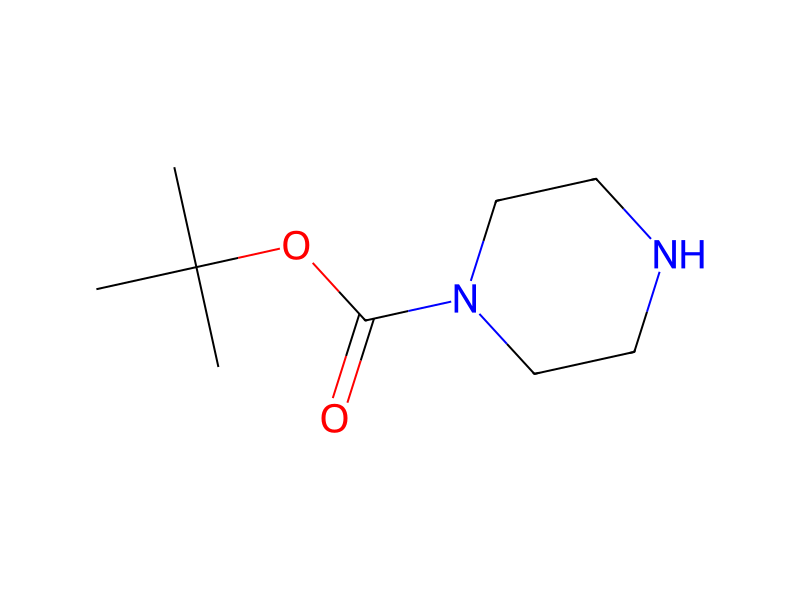
HCID 313Hydrochloric AcidHCID 8471TriethylamineHCID 143452tert-Butyl piperazine-1-carboxylateHCID 435084(4-Chloropyridin-3-yl)methanol

Product 1

HCID 23160670HCID 23160670, compound

Reagents, catalysts & solvents 2

HCID 702Ethanol
Solvent
HCID 312751,4-DioxaneSolvent

Conditions

Temperature
130 °C

Procedure

4-Chloro-3-hydroxymethylpyridine (J. Med. Chem., 49 (13), 2832-2840 (2002))(143 mg, 1 mmol), 1-(tert-butoxycarbonyl)piperazine (186 mg, 1 mmol) and triethylamine (1 mL, 7 mmol) were dissolved in ethanol(3 mL), and the mixture was stirred overnight in a threaded test tube at 130° C. The solvent was evaporated and work-up according to a conventional method gave a crude product. The obtained crude product was dissolved in a dioxane solution (5 mL) containing 4 N hydrogen chloride, and the mixture was stirred for 2 hrs. The solvent was evaporated to give the title compound, which was used for the synthesis of C-22 and C-37.

Workup

  1. customThe solvent was evaporated
  2. customgave a crude product
  3. customThe obtained crude product
  4. stirringthe mixture was stirred for 2 hrs
  5. customThe solvent was evaporated

Sources & evidence

ORD record
ord-ff7a6b0ad58b4f9a86e1c0a18387242d
Source dataset
uspto-grants-2011_02
DOI
10.6084/m9.figshare.5104873.v1
Patent number
US07879863B2

Reaction notes

On this pageParticipantsConditionsProcedureWorkupSources & evidenceReaction notes