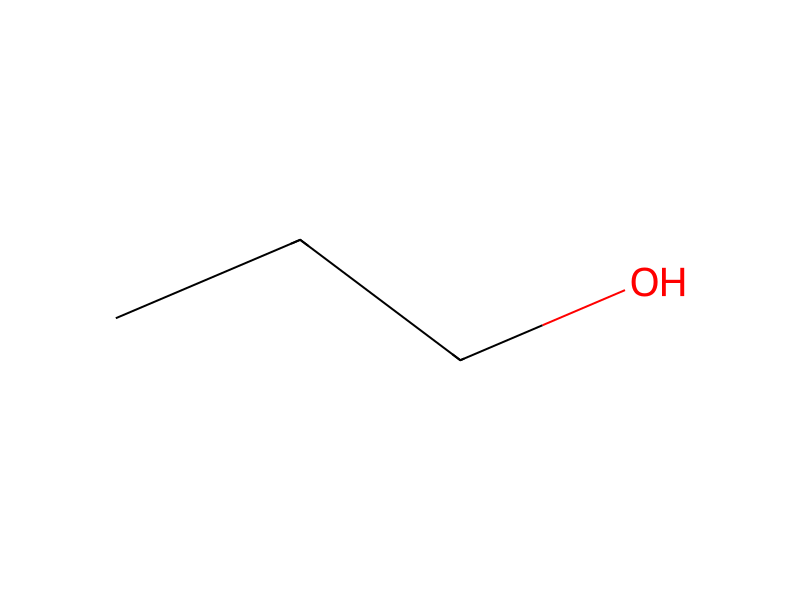
[F:1][C:2]1[CH:13]=[C:12]([O:14][C:15]2[CH:24]=[N:23][C:22]3[C:17](=[CH:18][CH:19]=[C:20]([Cl:25])[CH:21]=3)[N:16]=2)[CH:11]=[CH:10][C:3]=1[O:4][CH:5]([CH3:9])[C:6](Cl)=[O:7].[CH2:26]([OH:29])[CH2:27][CH3:28].C(N(CC)CC)C>ClCCl>[F:1][C:2]1[CH:13]=[C:12]([O:14][C:15]2[CH:24]=[N:23][C:22]3[C:17](=[CH:18][CH:19]=[C:20]([Cl:25])[CH:21]=3)[N:16]=2)[CH:11]=[CH:10][C:3]=1[O:4][CH:5]([CH3:9])[C:6]([O:29][CH2:26][CH2:27][CH3:28])=[O:7]2-[2-Fluoro-4-(6-chloroquinoxalin-2-yloxy)phenoxy]propionyl chloride (0.9 g; 2.3 mmole) was dissolved in dry dichloromethane and the solution was added slowly with stirring to a cooled mixture of n-propanol (5 ml) and triethylamine (1 ml). The mixture was stirred at room temperature for a period of 4 hours and then the solvent was evaporated under vacuum and the residue was dissolved in dichloromethane. The solution was washed with water and the organic phase was dried over magnesium sulfate. The solution was filtered and the solvent was removed under vacuum to give a light brown oil (0.92 g; 95.3%). The product was crystallised from ethanol to give the title compound as a crystalline solid (0.58 g; 60.4%); mp 70°-72° C. The assigned structure was confirmed by nuclear magnetic resonance spectroscopy.