Water → 1,3-Cyclopentadiene, octyl-
Reaction equation

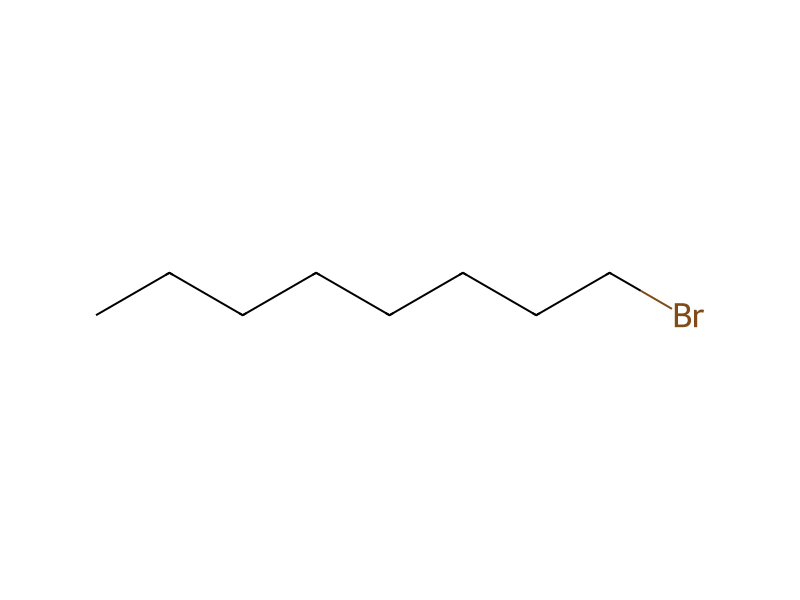
Br[CH2:2][CH2:3][CH2:4][CH2:5][CH2:6][CH2:7][CH2:8][CH3:9].[CH-:10]1[CH:14]=[CH:13][CH:12]=[CH:11]1.[Na+].O.C(OCC)C>O1CCCC1>[CH2:2]([C:14]1[CH2:13][CH:12]=[CH:11][CH:10]=1)[CH2:3][CH2:4][CH2:5][CH2:6][CH2:7][CH2:8][CH3:9]Participants
6
Reactant 4



Product 1

Reagents, catalysts & solvents 1

Procedure
Under a high purity nitrogen atmosphere, 5.8 ml (30 mmol) of 1-bromooctane was introduced into a Schlenck flask and 50 ml of tetrahydrofuran (THF) was added thereto. To the resulting mixture, 18 ml of 2N sodium cyclopentadienide in THF was added at 0° C. The resultant was stirred for 5 hours at room temperature, 100 ml of water and 100 ml of diethyl ether were added thereto, followed by agitation. The diethyl ether layer was dried over anhydrous magnesium sulfate. After filtering magnesium sulfate, the organic solvent was distilled off under a reduced pressure and the residue was subjected to silica gel column chromatography (eluent:hexane) to obtain 4.21 g of n-octylcyclopentadiene (yield: 79%).
Workup
- additionwas added
- dry with materialThe diethyl ether layer was dried over anhydrous magnesium sulfate
- filtrationAfter filtering magnesium sulfate
- distillationthe organic solvent was distilled off under a reduced pressure
Sources & evidence
- ORD record
- ord-d425dc7d3c004fe48575805f4eb968c1
- Source dataset
- uspto-grants-2001_07
- Patent number
- US06255417B1
Reaction notes
Loading…