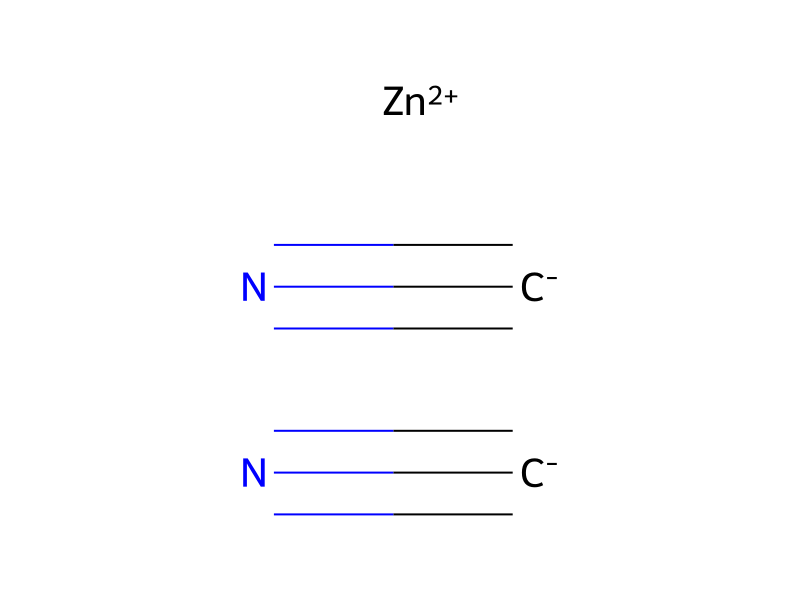
Br[C:2]1[CH:3]=[CH:4][C:5]2[N:9]=[CH:8][N:7]([C:10]3[CH:15]=[CH:14][N:13]=[C:12]([NH2:16])[N:11]=3)[C:6]=2[CH:17]=1.[Cl-].[NH4+].[CH3:20][N:21](C=O)C>[C-]#N.[Zn+2].[C-]#N.C1C=CC([P]([Pd]([P](C2C=CC=CC=2)(C2C=CC=CC=2)C2C=CC=CC=2)([P](C2C=CC=CC=2)(C2C=CC=CC=2)C2C=CC=CC=2)[P](C2C=CC=CC=2)(C2C=CC=CC=2)C2C=CC=CC=2)(C2C=CC=CC=2)C2C=CC=CC=2)=CC=1>[NH2:16][C:12]1[N:11]=[C:10]([N:7]2[C:6]3[CH:17]=[C:2]([C:20]#[N:21])[CH:3]=[CH:4][C:5]=3[N:9]=[CH:8]2)[CH:15]=[CH:14][N:13]=1To a round bottom flask equipped with a condenser and nitrogen bubbler attached to a bleach scrubber bath was added 4-(6-bromo-1H-1,3-benzodiazol-1-yl)pyrimidin-2-amine (90% purity, 83 mg, 0.26 mmol) and zinc cyanide (30.23 mg, 0.26 mmol) in de-gassed DMF (2 mL). Tetrakis(triphenylphosphine)palladium (29.75 mg, 0.03 mmol) was then added and the reaction heated stirred at 100° C. under nitrogen for 30 min. The reaction mixture was allowed to cool to RT and poured into saturated aqueous ammonium chloride (6 mL) and extracted into DCM (×2). The combined organics were dried over Na2SO4, filtered and concentrated in vacuo. The residue was combined with the precipitate formed during the aqueous work up process and was purified by flash chromatography (Isolute column, 10% MeOH in DCM) to afford the title compound as a pale beige solid; 1H NMR (500 MHz, DMSO) δ 6.90-7.42 (3H, m), 7.76 (1H, dd, J=8.35, 1.58 Hz), 7.94 (1H, d, J=8.04 Hz), 8.40 (1H, d, J=5.52 Hz), 9.20 (1H, d, J=0.95 Hz), 9.33 (1H, s); LC-MS: m/z=+236.95 (M+H)+.